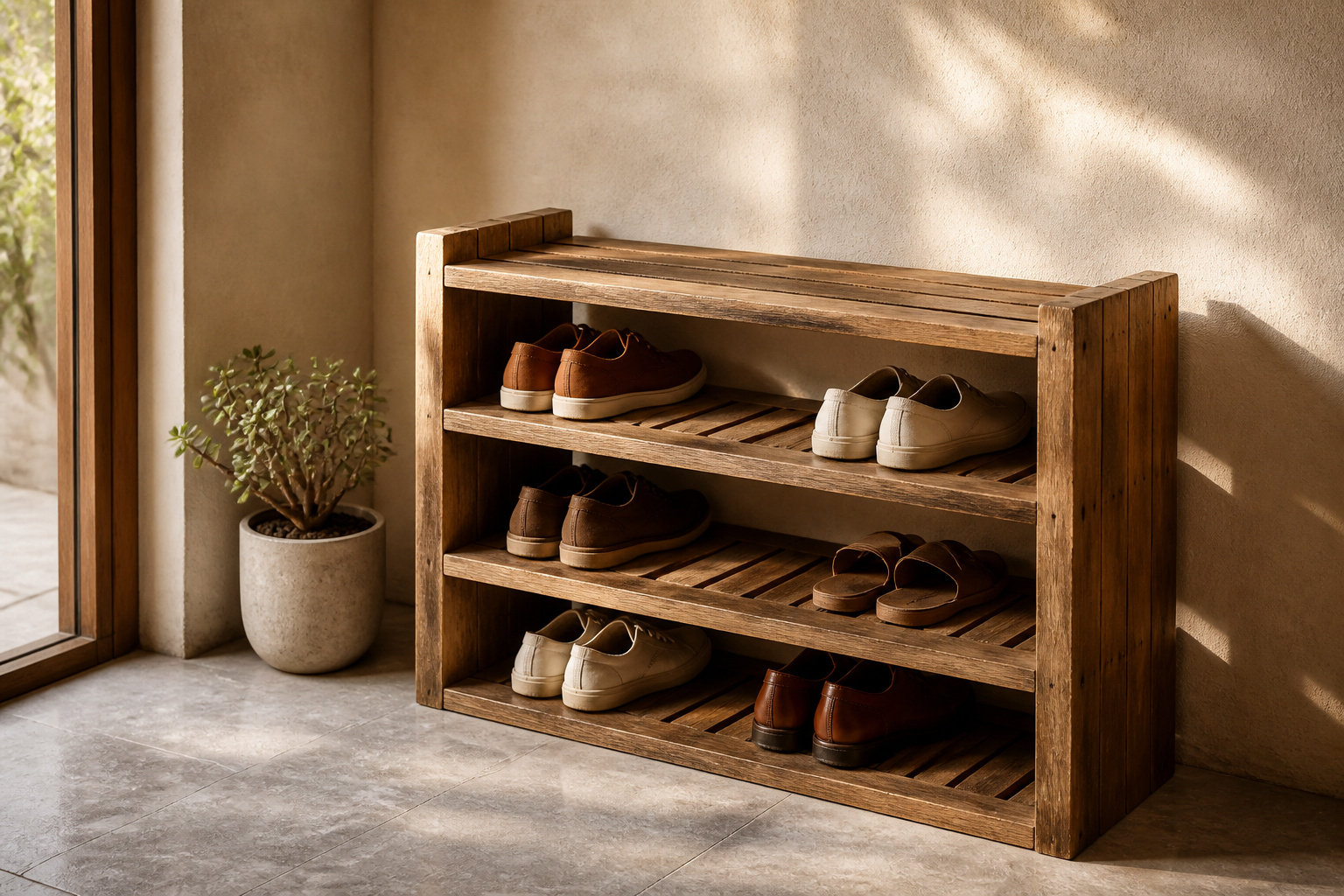
A wood shoe rack is a slatted or shelved frame that holds footwear in open view. The catch is the discipline it demands: every pair left out reads as clutter faster than anything else in a room. Most designs run narrower than closed cabinets, about 15.7 inches deep, which is the difference between fitting an apartment hallway and blocking it.
Shoe Storage Cabinets
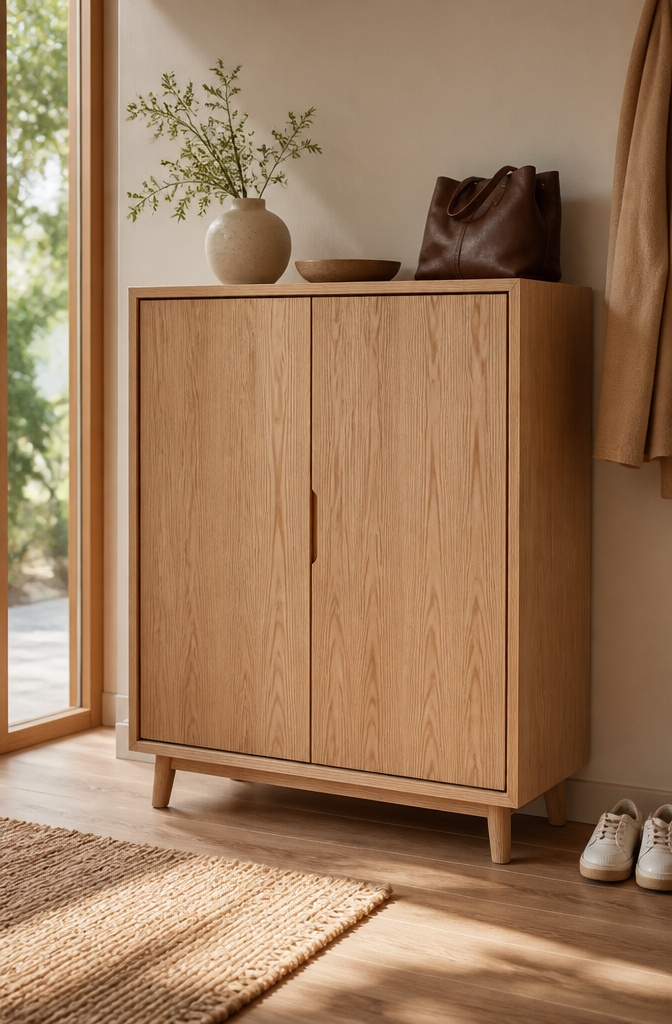
A cabinet with doors changes the whole feel of an entryway. Shoes disappear behind panels, and the space reads as furniture rather than storage. The trade is a larger footprint and a higher price: the Sabina 48" Ash Wood Shoe Storage runs $1,219–$1,299, which puts it well past weekend-project territory for most renters. Dimensions stay fairly consistent across this style, about 47–48 inches wide and 15.7 inches deep. That depth matters; it is slim enough for a hallway but still demands a wall with clearance for the door swing and your own path through.
Before choosing shoe storage, measure the wall near your front door and leave enough clearance for walking, door swings, and cabinet access. Hernest’s current designs are about 47–48 inches wide and 15.7 inches deep, making them better suited to hallways and entry areas where a deep wardrobe would feel bulky.
— Hernest
What this means in practice: a 48-inch cabinet wants at least 54 inches of wall, and you still need walking space in front. I would not squeeze one into a landing narrower than 36 inches clear. If the hall is tight, open shelving or a bench with cubbies wins on footprint, though you lose the visual quiet.
Shoe Racks

Open racks keep pairs at eye level and grab-ready, which matters on mornings when you are already late. The slats or dowels let air move through, so damp sneakers dry faster than they would in a box. Most wood shoe rack designs run narrower front-to-back than cabinets, a difference that counts in apartment entryways where every inch of floor space is spoken for.
The catch is what you are choosing to look at. Shoes left out read as clutter faster than almost anything else in a room, and an open rack does not forgive a messy pile. In my own place, the rack lives in a closet niche where the door frames it like a shallow shelf. Out in the open, I would need the discipline to face every pair toe-out, or the tolerance to let them look lived-in.
Shoe Benches
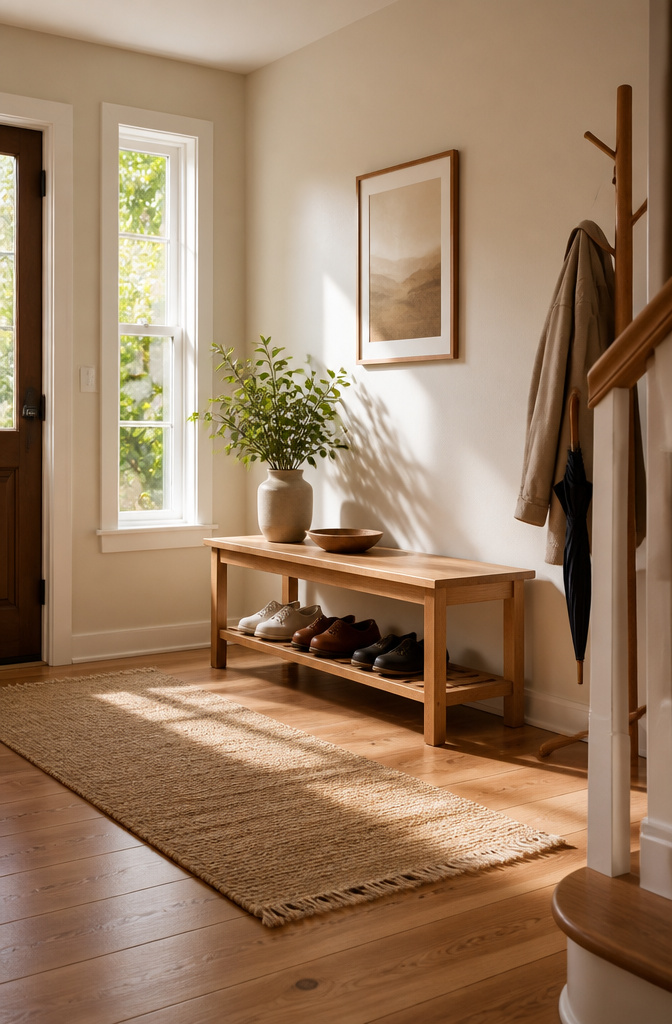
A shoe bench is the one piece that earns its floor space twice over. The top gives you a place to sit while you wrestle off boots or lace up sneakers, and the cavity underneath holds the shoes you just took off. In an entryway with no closet and no room for both a stool and a rack, that dual role matters.
The surface needs to feel finished enough for daily use. A smooth, sealed wood top wipes clean after wet coats or muddy paws, and a height around 18 inches lets most adults sit without dropping too low. The storage below varies: some benches open like a chest, others use slatted shelves that let air circulate around damp shoes. Slats beat solid bins in humid climates, since trapped moisture turns wood musty over time.
For renters, the real advantage is replacement value. A bench that handles two jobs means one less piece to buy, move, or squeeze through a narrow doorway when the lease ends. A wood shoe bench in a light oak or pine also reads as furniture first, storage second, which helps when the entryway opens straight into the living room and you would rather not greet guests with a wall of shoes.
Oak and Ash Wood Types
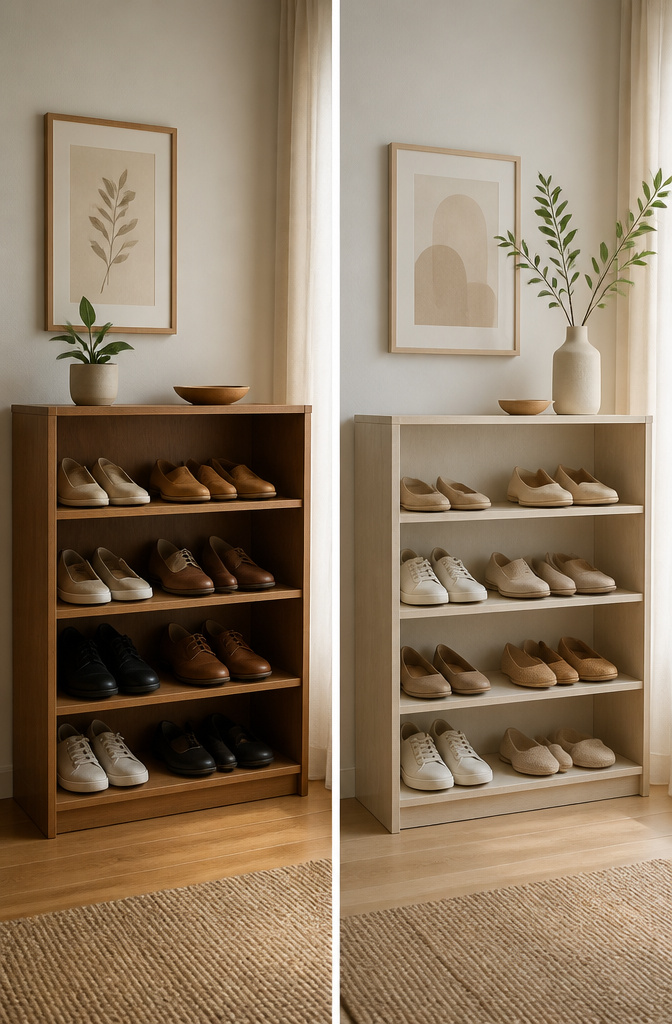
Oak reads heavier than it weighs. In a rental with beige carpet or honey-toned laminate, a warm brown oak shoe rack settles in like it was already there, grounding the entry without shouting for attention. Natural ash wood takes the opposite path: paler, cleaner, almost Scandinavian in feel, and the better choice when your walls are white or gray and you want the storage to fade into the architecture rather than anchor it.
The practical difference shows up at the threshold. Oak plays well with mid-century lines and darker floors where you need the mass; ash keeps things airy in a compact entry that opens straight into the living room. Both woods take stain if you change your mind later, but starting with the tone that already matches your flooring saves a weekend of sanding. Coordinate any nearby cabinets in a similar tone and the shoe rack reads as furniture, not an organizer you settled for.
Measuring Your Space

A wood shoe rack that looks right in the photo and blocks your door in real life is a mistake you pay for twice. I learned to pull out the tape measure before pulling out the credit card.
The 47–48 inch width and 15.7 inch depth that work for narrow hallways come from the same constraint: you need to move through the space after the rack is in it. That depth leaves enough floor for a natural stride; anything deeper and you are sidestepping around your own shoes. The width fills a standard hallway wall without crowding the door frame.
Door swing is the measurement most people skip. Stand where the door opens and mark the arc. The rack needs to sit clear of that sweep, plus about a foot of buffer for traffic passing someone who has stopped to tie a shoe. If your entry is a straight shot from the living room, traffic flow matters more than wall length; a full-width rack becomes a bottleneck when two people leave at the same time.
I mark the wall with painter’s tape in the exact footprint before I buy. Walking through the taped box for a morning tells me whether I am solving storage or creating an obstacle.
Adjustable Shelves
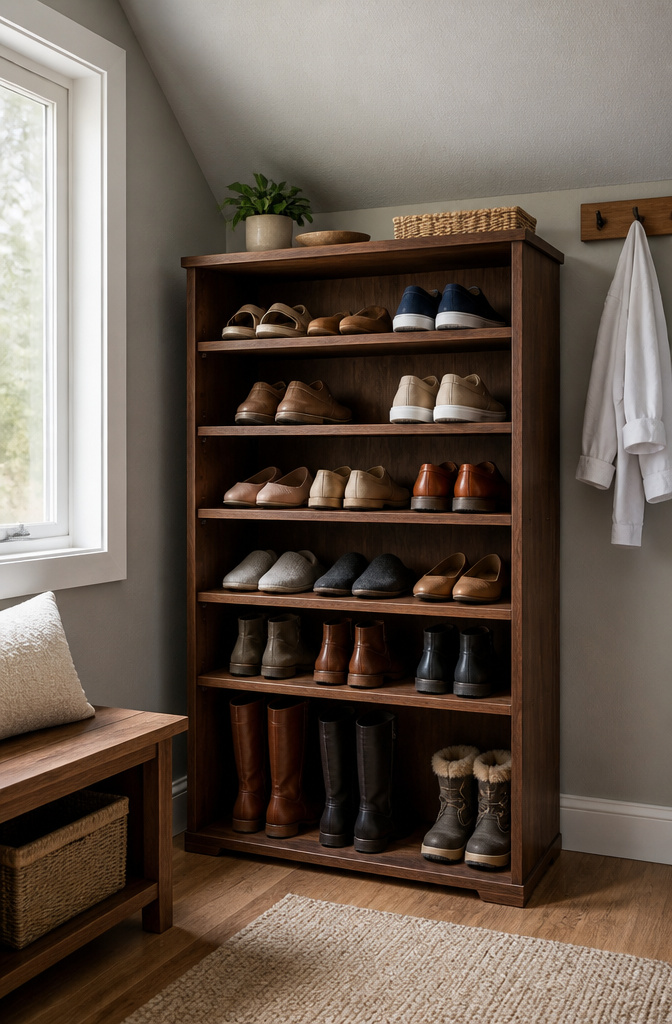
A fixed-shelf wood shoe rack looks tidy until you try to stand a pair of boots in it and the shaft folds against the shelf above. Adjustable shelves fix this by letting you set the height where you need it: three to four inches of clearance for flats and sandals, five to six for sneakers and low boots, eight or more for taller styles. The difference in usable storage is immediate. In a cabinet-style piece, that flexibility also means you can reconfigure the interior as seasons change, dropping a shelf out entirely when winter boots come in or raising one to fit a stack of shoe boxes you want to keep. The 47–48 inch widths common in entryway designs give enough run to group by type, and a slim 15.7 inch depth keeps the whole unit from blocking narrow hallways. What convinced me, reading through a dozen of these setups, is that the people who actually maintain them long-term treat the adjustability as something they use twice a year, not once and done.
Frequently Asked Questions
What is the best type of shoe storage for an entryway?
A cabinet with doors works best when you want shoes hidden and the space to read as furniture. Open racks suit tight spaces and quick morning exits but show every pair. A bench earns its spot twice over by giving you a seat plus storage underneath, which matters in entryways with no closet.
Why choose a wood shoe storage cabinet?
Wood brings the warmth and presence of real furniture rather than looking utilitarian. Oak settles into homes with beige carpet or honey laminate, while paler ash fades into white or gray walls. Both woods take stain later if you change your mind, though matching your existing flooring from the start saves a weekend of sanding.
Is a shoe cabinet with doors better than open shoe storage?
It depends on what you are trading. Doors hide clutter and keep the entry visually quiet, but the footprint runs larger and prices climb past weekend-project range. Open racks dry damp sneakers faster and fit narrower halls, though they demand discipline to keep pairs tidy or the tolerance to let them look lived-in.
How do adjustable shelves help with shoe storage?
They let you set clearance where you need it: three to four inches for flats, five to six for sneakers, eight or more for boots. The people who maintain these long-term reconfigure twice a year, dropping a shelf for winter boots or raising one to fit shoe boxes. Fixed shelves look tidy until a boot shaft folds against the shelf above.
Where can I place a shoe storage cabinet?
Near the front door, in hallways, or in mudrooms where it creates a polished landing zone without overwhelming the walkway. Keep it clear of the door’s swing arc plus about a foot of buffer for traffic. I would not squeeze a 48-inch cabinet into a landing narrower than 36 inches clear.
What size shoe storage cabinet should I choose?
For narrow hallways, look to the 47–48 inch width and 15.7 inch depth that let you move naturally past the unit. That depth leaves enough floor for a full stride; anything deeper and you are sidestepping your own shoes. Before buying, mark the footprint with painter’s tape and walk through it for a morning to see if you are solving storage or creating an obstacle.