
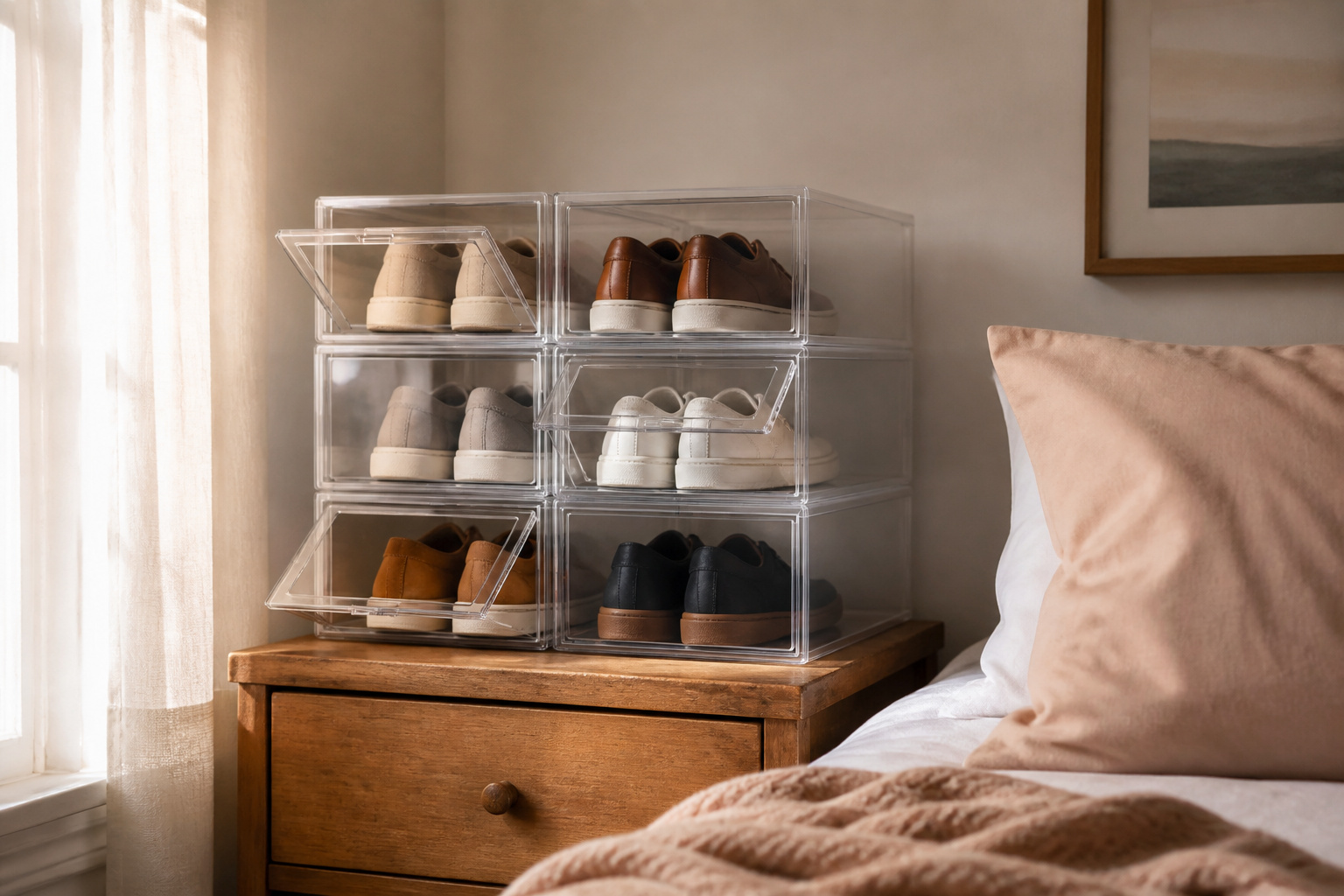
A shoe box organizer is a clear, stackable container with a drop-front door that lets you see and grab a pair without unstacking the whole column. The catch is that mixing brands breaks the whole system: a slightly different corner radius or hinge direction means the row never lines up flush, and the visual rhythm you paid for falls apart. Container Store’s Everything Organizer line fixes this by keeping the footprint, acrylic, and hinge identical across every unit, so four across a shelf read as one clean grid.
Drop-Front Shoe Boxes
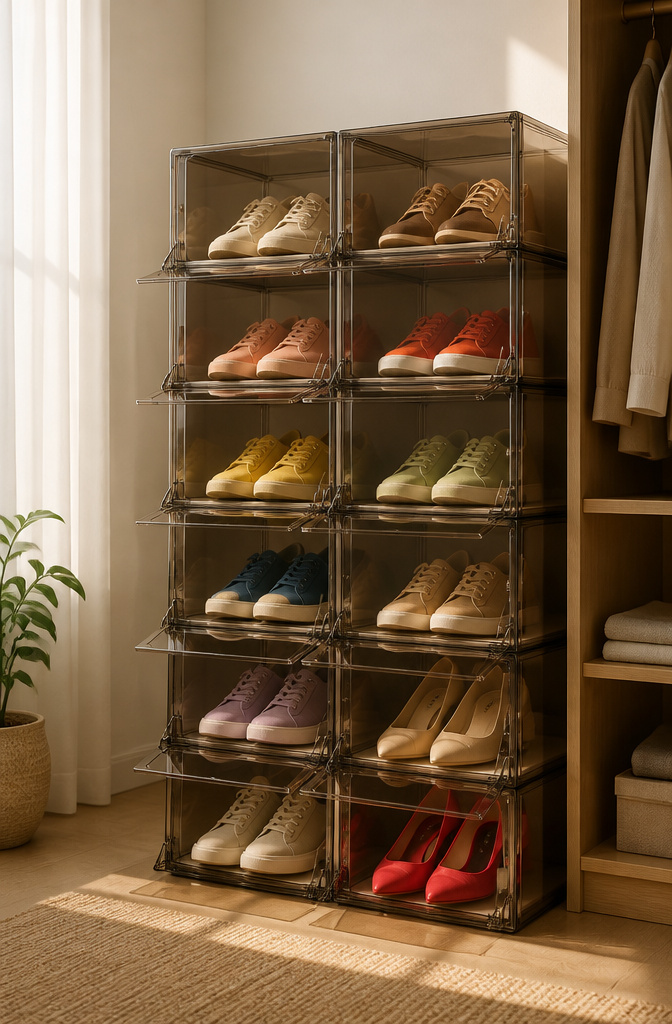
Clear doors on drop-front shoe boxes let you scan a stack in seconds without pulling anything out, which matters more than you’d think when you’re running late and hunting for the right pair. The UV-blocking sides keep leather and suede from yellowing or fading if the closet catches morning light, and the sealed construction keeps dust off soles and uppers between wears. Most collections that get backed heavily for everyday use use this exact format: drop-front access, full visibility, and protection built in rather than added later. The 360-degree clarity on higher-end lines shows every detail, but even the standard clear-door versions solve the main problem of knowing what you own without unstacking half a closet.
Everything Organizer Drop-Front Shoe Box
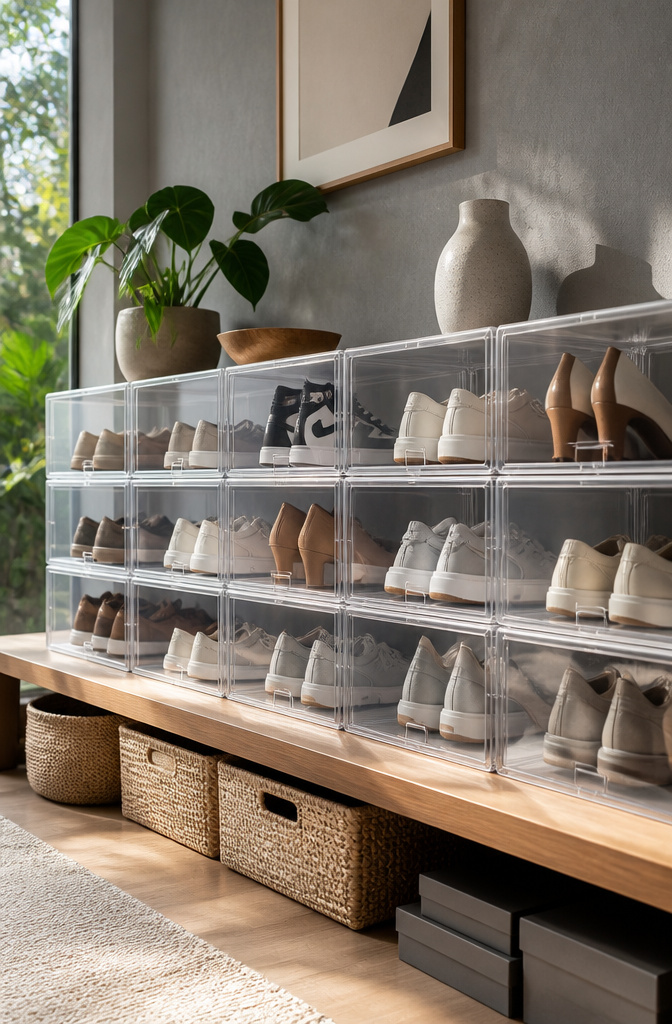
The Everything Organizer Drop-Front Shoe Box works best when you treat it as one piece of a larger system rather than a standalone fix. Container Store built the whole collection so each unit talks to the next: same footprint, same clear acrylic, same drop-front hinge. That means a single box on the closet floor looks intentional, but the real payoff comes when you line three or four across a shelf and the whole wall reads as one clean grid.
I have seen renters get tripped up by mixing brands here. A slightly different corner radius or a hinge that opens the opposite direction breaks the visual rhythm you paid for. If you are already holding one of these, the smart move is to stay inside the same collection for every additional box. The drop-front keeps its promise only when the row lines up flush, and that takes matching dimensions, not just close ones.
Stacking is where the system earns its keep. The acrylic walls are rigid enough that weight from above does not bow the lid, so you can build vertical columns without the sag you get from thinner plastics. For a weekend project with a few hundred dollars, this is the difference between storage that looks like storage and storage that reads as built-in.
Cambridge Drop-Front Shoe Box
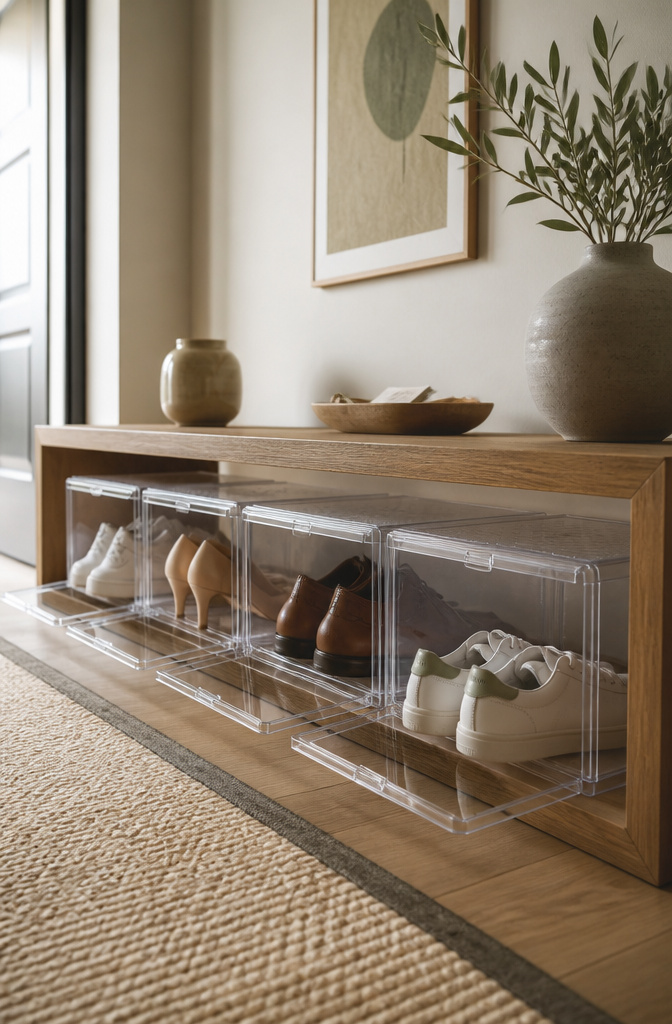
A drop-front door that folds flat against the box bottom changes how you use these things more than you’d expect. Standard drop-fronts swing down and hang there, which means you’re always working around a little plastic flap while you dig out sneakers. The Cambridge style gets that door completely out of the way.
I first noticed the difference in a stack of four. With the door folded under, you can pull a pair from the middle box without the row above it wobbling. The front panel itself tends to be a single piece of acrylic, no hinge line across the face, so the clear view stays uninterrupted. That sounds minor until you’ve lived with the cheaper kind and watched hairline cracks form at the fold point after a year of opening and closing.
The magnetic catch sits at the top rather than the bottom, which keeps dust from settling on the closure. One practical limit: the door needs that extra clearance below, so these boxes run slightly taller than their standard cousins for the same interior volume. Measure your shelf height before you commit to a stack.
Styling-wise, the cleaner front reads more display case than storage bin. For renters who want shoes visible but not messy, that distinction matters on open shelving.
Side-Profile Drop-Front Shoe Box
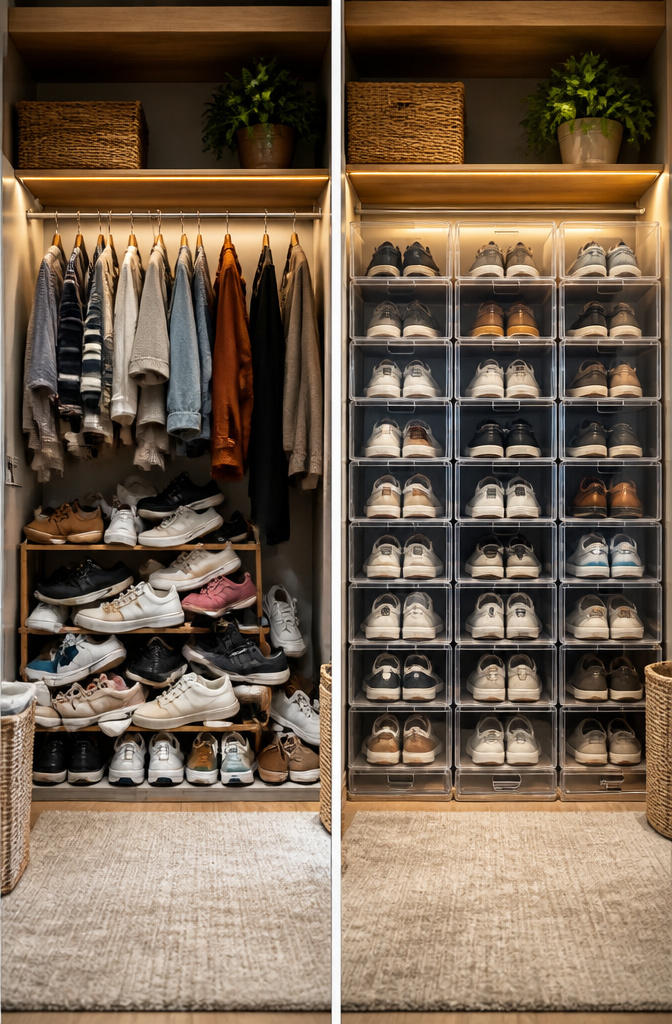
A side-profile drop-front shoe box turns the opening to the long edge instead of the short one, which changes how you reach shoes once the stack gets above three or four units high. The door drops down from the side, so your hand slides in horizontally rather than reaching down from above. In a narrow closet where boxes face the aisle, this keeps the opened door from blocking your path while you grab a pair.
Stacking works differently too. The side opening means each box supports weight directly above its lid without a hinged front fighting the closure, so tall columns stay square longer. The tradeoff is label visibility: the narrow end faces out, so you write smaller or use photo inserts to remember what lives where.
Side-profile boxes earn their keep when depth matters more than width, like under a hanging rod where front-facing boxes would jut too far into the room. I would not bother with them for floor-to-ceiling display walls where the wide face is the whole point. For renters fitting storage behind a single sliding door, the slimmer face and stable stack usually win.
Modular and Stackable Systems
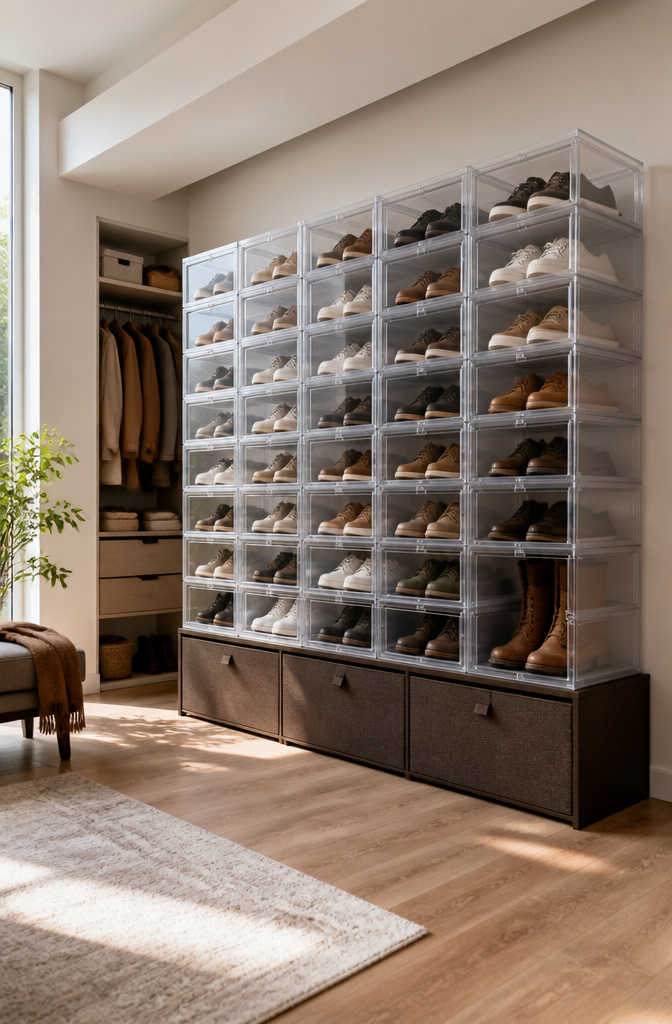
The real advantage of a modular shoe box organizer is that it bends to the space you actually have, not the closet the architect imagined. A single stack of drop-front boxes fits inside a narrow rental linen closet. Three stacks side by side fill a full-width wall. The connection points are built into the box corners, so units lock together without extra hardware and come apart again when the lease ends or the family grows.
What convinced me, reading through the options, was the difference between "stack a few" and "build a statement wall." That range matters for renters. One month the boxes line a shelf under hanging clothes. The next, after a roommate moves out, the same boxes form a floor-to-ceiling column in the spare room. No new purchase, no tools, no holes in drywall to patch later.
The Container Store’s original Drop-Fronts and the newer Everything Organizer line both use the same stacking logic, though the profiles differ slightly. If you start with one line and later add the other, check that the corner geometry matches before you commit to a tall stack. A wobble at box four becomes a collapse at box eight.
Shoe Racks
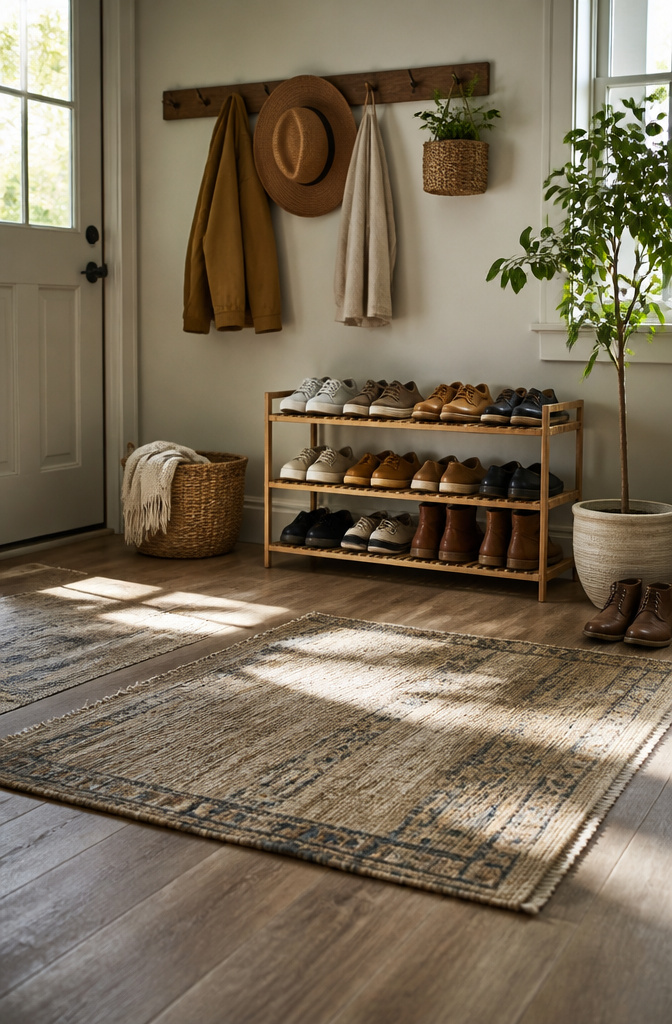
Open storage wins when you reach for the same three pairs every week and want them off the floor in thirty seconds. A shoe rack keeps daily wear visible and ventilated, which matters more than you’d think for sneakers that never fully dry between wears. The tradeoff is immediate: dust settles, pet hair collects, and a collection that looks curated in a photo looks cluttered by Tuesday if you own more than six or seven pairs.
I tried a rack first in my last apartment because drop-front boxes felt like overkill for running shoes and rain boots. It worked until it didn’t. Seasonal pairs I wore twice a month became visual noise, and the rack itself needed wiping down more often than I expected. For a tight closet or a renter who moves every couple years, a freestanding rack makes sense. For anyone building a collection past ten pairs, the open system starts asking for discipline you probably don’t have.
Customized Shoe Organizers
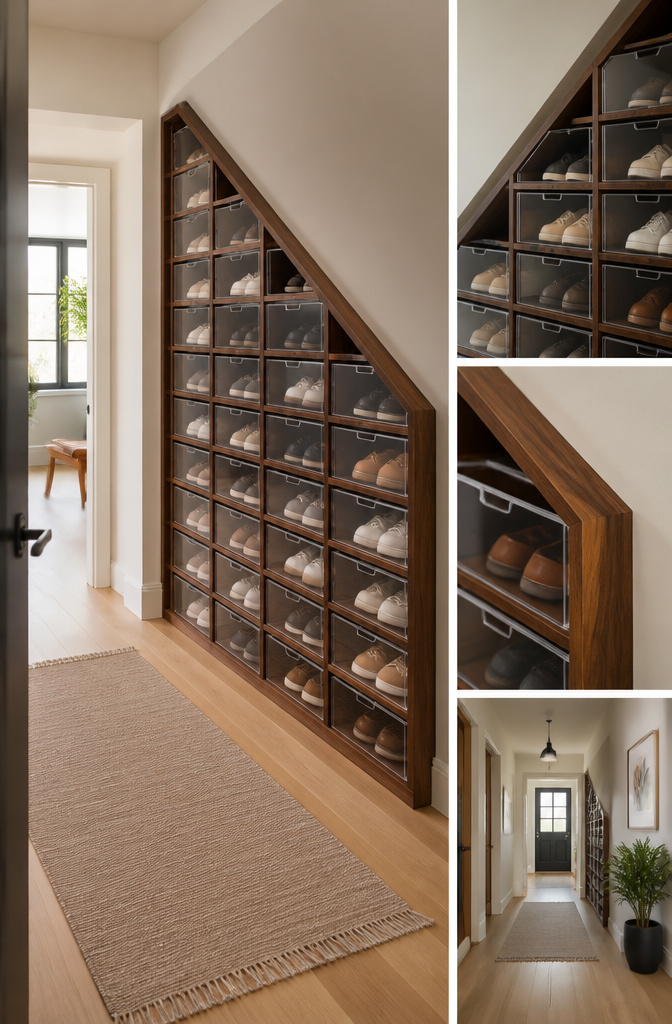
Custom shoe organizers fill the gap between what a closet actually is and what off-the-shelf systems assume it should be. A rental with a slanted attic ceiling, a narrow entry that doubles as a hallway, or a collection that runs heavy on boots rather than flats all throw standard dimensions out the window. The benefit is space reclaimed from awkward corners, though the tradeoff is lead time and a price that starts higher than modular boxes you can carry home the same day.
The people who get their money’s worth are the ones who measure twice and build once. If you have twelve pairs of sneakers in steady rotation and the rest in storage, a custom unit with open front slots at waist height beats a full wall of identical compartments. For renters, portable custom units on casters let you take the investment with you, which changes whether the math works at all.
My own leaning is toward hybrids: a custom frame that holds standard acrylic drop-front boxes. You get the tailored footprint without locking yourself into a single box style forever. The frame can be wood, metal, or a laminate that matches existing closet millwork, and the boxes swap out if your collection changes shape. What stops me from going fully custom every time is the wait. Four to eight weeks is standard, and for a weekend project mindset, that patience is the real cost.
Materials That Last

UV-blocking sides matter more than the marketing lets on. Sunlight through a bedroom window will yellow white soles in a single summer, and clear doors that look like an advantage become a liability if they are ordinary acrylic with no tint. The original Drop-Front line builds in that UV protection on the sides while keeping the door itself clear for scanning what is inside; the Everything Organizer line goes further with 360-degree clarity all around, which looks sharper on a shelf but leaves every panel exposed unless the whole box sits away from light.
Dust protection sounds like a given until you handle a stackable system with a loose lid. A shoe box organizer that seals at the door keeps the interior actually dust-free, not just dust-resistant. The drop-front hinge is the usual failure point; a rigid frame that does not flex when you pull the magnetic closure is what separates a box that lasts five years from one that starts gaping after two. For renters moving every couple of years, that durability beats the small savings on flimsier alternatives that crack at the corner when the stack shifts in a car trunk.
Sizing Up to Men’s 16
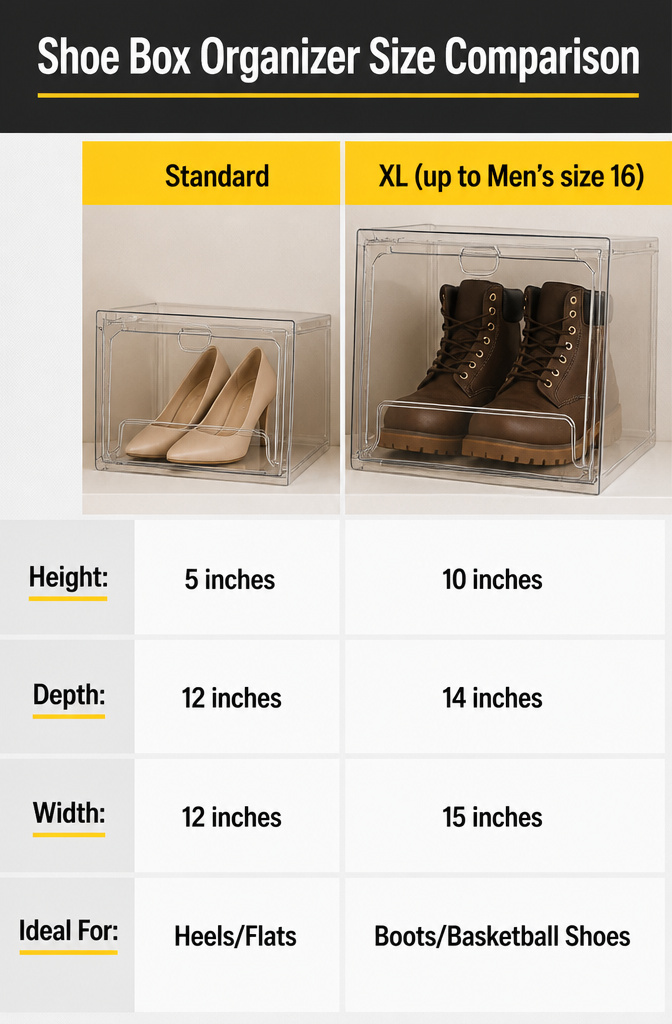
A shoe box organizer that stops at women’s size 10 misses half the households I know. The Container Store runs its drop-front boxes from small to a true XL rated up to Men’s size 16, which covers work boots, basketball high-tops, and the running shoes that seem to grow half a size every replacement.
With available options ranging from small to a true XL (up to Men’s size 16), you can find storage for everything from heels to larger shoes.
What that means in practice: a low-profile heel or flat sits fine in the standard depth, but a men’s boot with a tall shaft or a chunky sole needs that XL height and length both. Stack four standard boxes and the top one crushes the toe of the boot below it. Match the box to the shoe type, not just the foot length.
Design That Fits Your Space
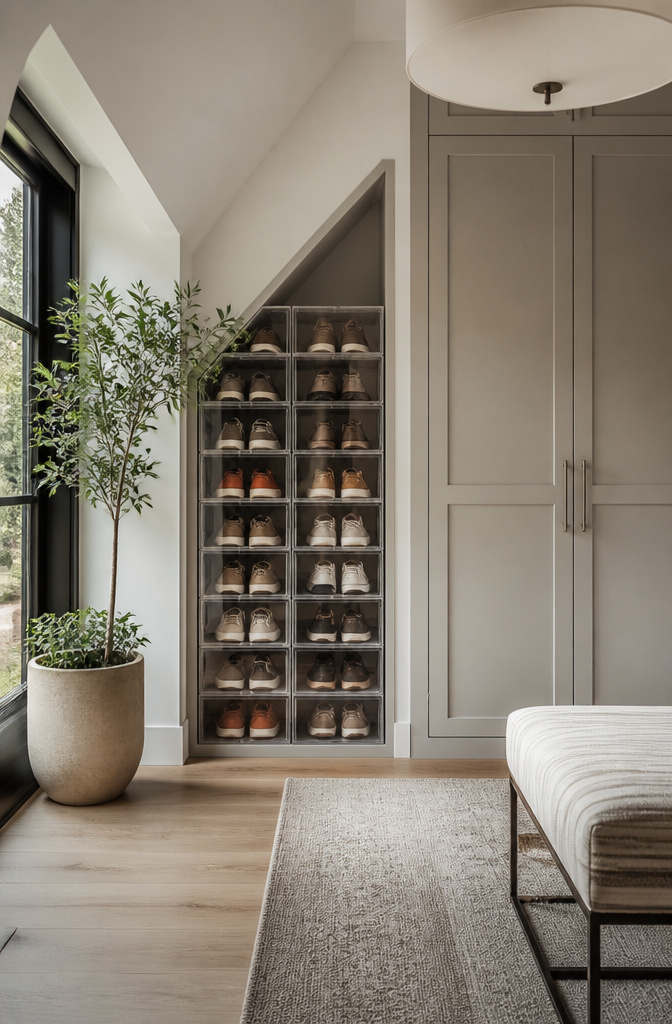
Acrylic shoe boxes let light pass through, so a wall of them reads as negative space rather than a solid block. I learned this the hard way after installing a white melamine unit in a narrow hallway; the room felt smaller every time I walked past it. The clear version disappeared visually, and the shoes inside became the color statement instead.
Stackable systems work best when you build in a 2-inch gap above the top row for the lid lift on drop-front styles. Without it, you are sliding the whole tower forward every time you need the pair on top. Modular cubes let you bridge awkward spans, like the 14-inch recess beside my radiator where nothing off-the-shelf fit. Three half-width boxes locked together with the interlocking tabs took the full depth and left no dead zone.
Rental constraints matter here. A freestanding stack leaves no holes to patch later, and acrylic weighs enough to stay put on carpet without tipping. The trade is footprint: floor-based storage eats walking room that a wall rack would spare. In my last apartment, the math was six inches of floor depth versus eighteen inches of wall width. The wall won until I realized the rack stuck out far enough to catch a shoulder every morning. Sometimes the obvious space is not the usable one.
Frequently Asked Questions
What are the best shoe storage solutions?
Drop-front shoe boxes and modular systems that maximize space and visibility work best. Drop-fronts with clear doors let you scan a stack in seconds without pulling anything out, and modular units lock together without extra hardware so you can reconfigure them when you move. UV-blocking sides keep leather and suede from fading, and sealed construction keeps dust off between wears.
How do I organize my shoes?
Use racks for daily wear that needs quick access and ventilation, and switch to drop-front boxes or modular organizers for collections past ten pairs or seasonal storage. Match the box size to the shoe type, not just foot length; boots need XL height and length both so the stack above does not crush toes. Build in a 2-inch gap above the top row for lid lift on drop-front styles.
What sizes do shoe organizers come in?
Shoe organizers range from small to XL rated up to Men’s size 16, covering everything from heels and flats to work boots and basketball high-tops. A low-profile heel sits fine in standard depth, but chunky soles and tall shafts need that extra height and length. Stack four standard boxes without matching sizes and the top one crushes the toe of the boot below it.