Backdoor shoe storage is any container, bench, or cabinet positioned where you actually take your shoes off, not where you wish you did. The catch is that most people buy for the shoes they wear on dry days and end up with lids that won’t close over boots or baskets that topple when sneakers stack two deep. A rectangular base wider than it is tall keeps the pile vertical, and sixteen inches across is the minimum that holds adult pairs without spilling into the walkway.
Shoe Baskets

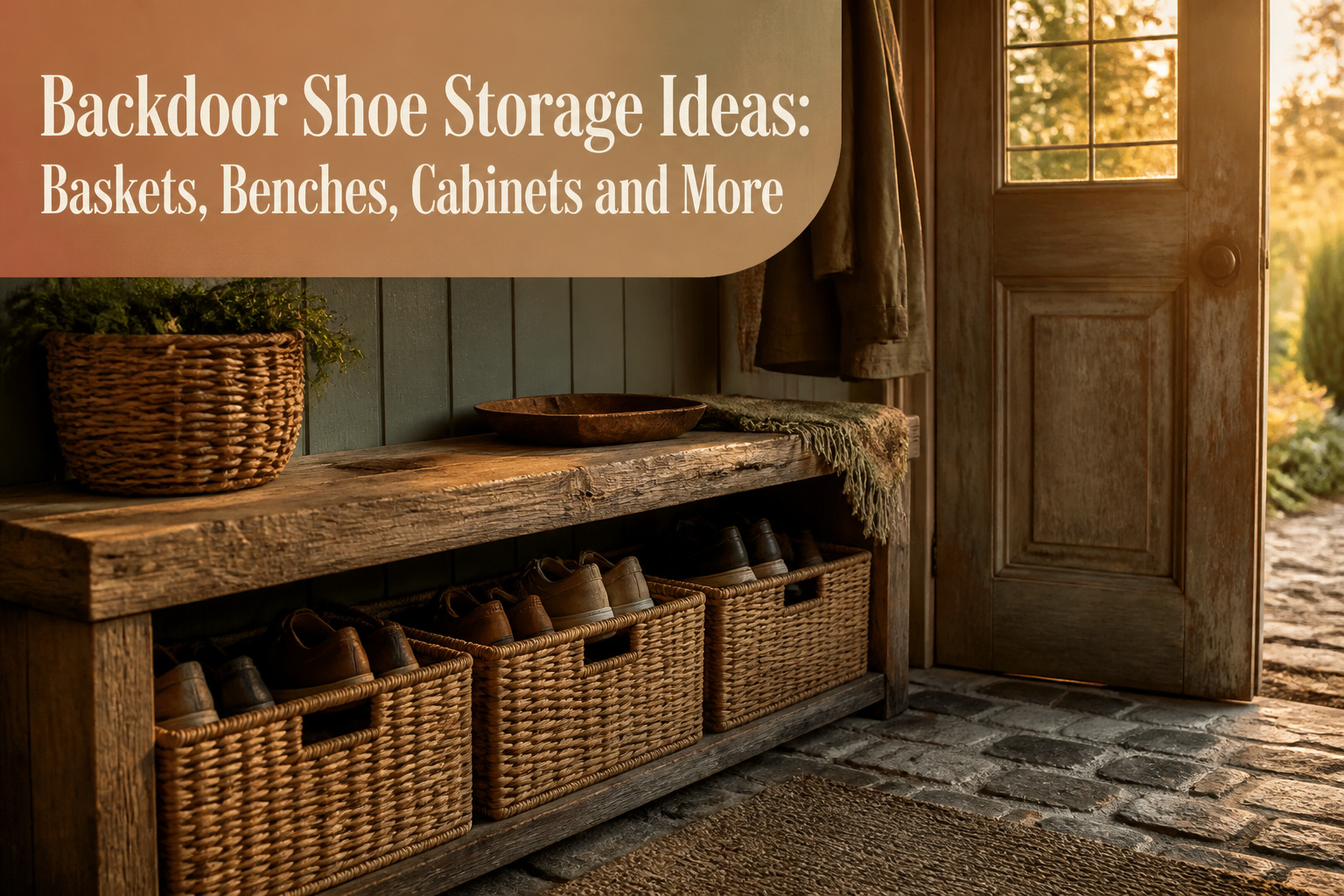
A single large basket by the back door is the lowest-effort shoe storage that still looks intentional. Woven or braided options with an internal metal framework hold their shape once boots and sneakers start piling in, which matters more than the label on the weave. Wicker works, though the stiffer braids tend to sag less under weight.
The mistake shows up fast with sizing. Baskets under about sixteen inches across look generous holding flip-flops, but adult sneakers stacked two deep topple outward every time someone drops in a pair. A rectangular base wider than it is tall keeps the pile vertical instead of volcanic.
Renters get the full benefit here. No wall mounts, no lease negotiations, no patching later. Slide it against the baseboard by the door and the shoes disappear from the walkway without disappearing from reach. If the landlord already scuffed the finish there, the basket earns its square foot twice.
Storage Ottomans
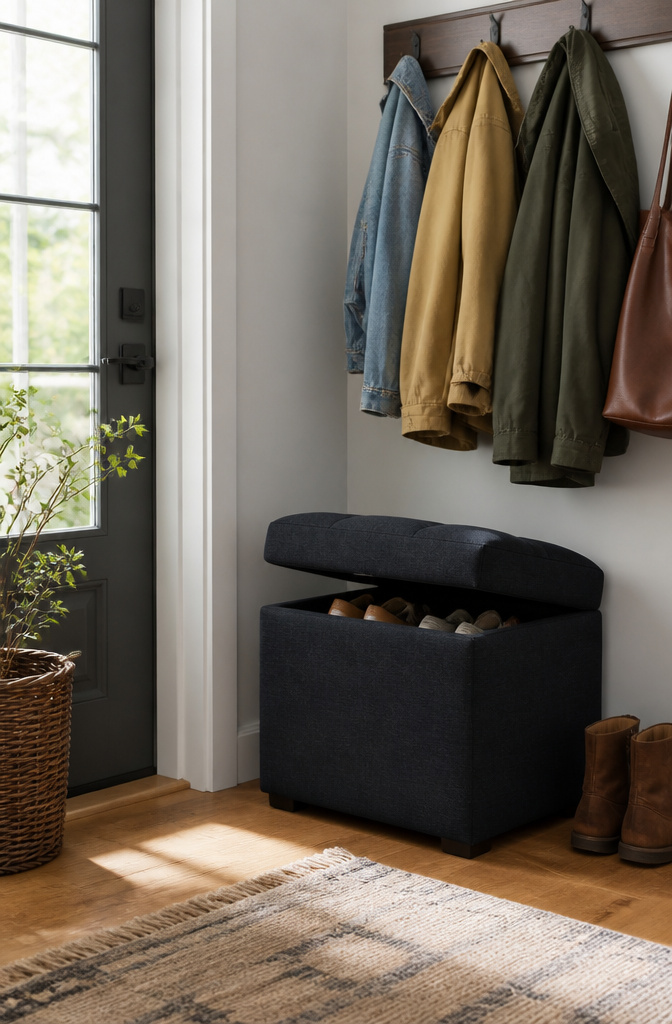
An upholstered storage ottoman with a hollow interior gives you a place to drop your bag and a place to hide the shoes that pile up by the back door. The fabric matters more than the shape: lined or darker upholstery hides scuff marks that light-colored fabric shows after a few months of sneakers sliding in and out. I have watched a cream linen cube turn gray at the corners where rubber soles rest, and that was with regular rotation.
Hard-sided ottomans clean easier but dent if you drop anything heavy on the lid. The real test is the hinge. A lid that does not stay open on its own becomes a two-handed operation every morning, which means you stop using it. The flip-top bench I looked at for my own entryway stays up when lifted and closes slowly, which is the detail that separates the piece you keep from the piece you replace. If you are shopping online, check the hinge description or the reviews for "stays open" before you order; the word "hinged" alone tells you nothing about how it behaves in use.
Round storage ottomans or upholstered cubes with lift-off tops fit under a console if your backdoor area is narrow. The storage space inside a typical cube runs deep enough for four to six pairs of flats or low sneakers, fewer if you wear boots.
Entryway Shoe Storage Bench

An entryway shoe storage bench solves two problems at once: a place to sit while lacing up, and a hidden spot for the shoes themselves. The lift-top style is the one that actually swallows a full household’s worth. Hinged seats stay open on their own and close slowly, which matters more than it sounds when you’re juggling a toddler or an armful of groceries. One of these benches fit nine pairs lined up neat inside, or more if you treat the cavity like a basket and pile.
The drawer-style bench trades capacity for a smaller footprint. It works in apartments where the entryway is barely a hallway, holding just a few pairs you want out of sight. Upholstered versions with wood legs or fully padded tops read more like furniture than storage, which helps if the backdoor opens straight into your living space.
The common mistake is buying too shallow for men’s boots. A bench that looks right in the product photo can leave two inches of boot sticking up, preventing the lid from closing. Measure your own entryway first, and measure the tallest boots that live there, not the sneakers you happen to be wearing. I learned that after assuming standard depth would cover anything. It did not.
Hall Tree
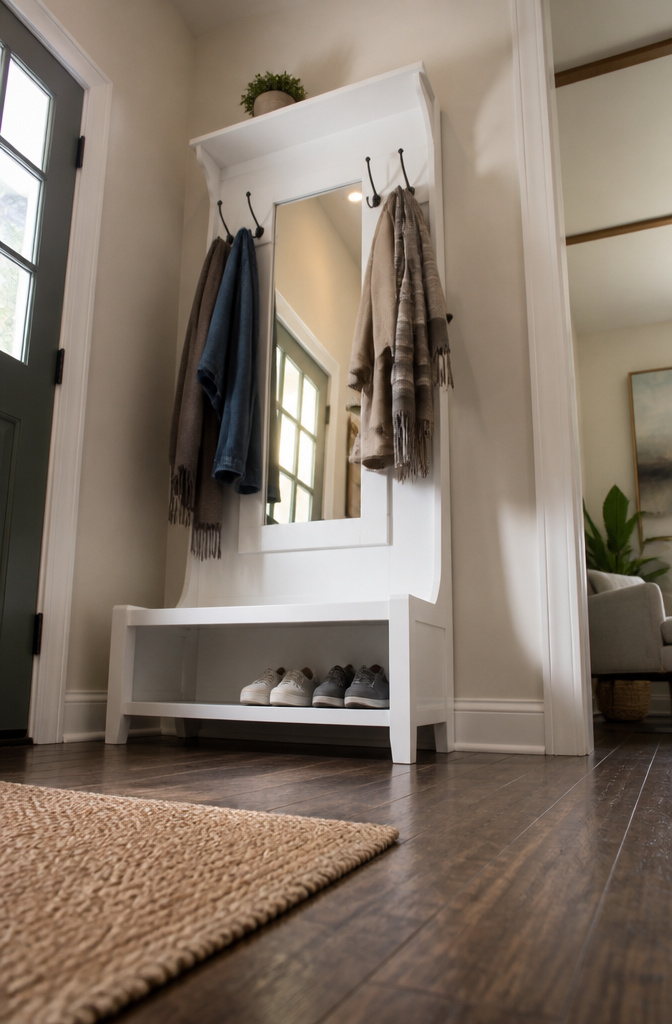
A hall tree pulls coat hooks, a mirror, and shoe storage into one vertical column that eats up nothing but the wall or floor space directly beneath it. Freestanding units run taller than they are wide, which matters when your backdoor opens onto a narrow landing with no closet in sight. I spent an afternoon assembling one that looked straightforward in the photos; the cam-lock fittings took three hours and a rubber mallet I had not expected to need. The bottom shelf sits 6 inches off the floor on most units, high enough for a pair of sneakers but a tight squeeze for winter boots. Mine came with one fixed shelf, so the lug soles had to lie sideways or stay on the mat. If you wear boots half the year, look for adjustable shelves or a bench-height base with open cubbies underneath; flats and loafers stack neatly two-deep in a 12-inch cube, but a boot needs the full height to stand upright.
2-Tier Rolling Baskets
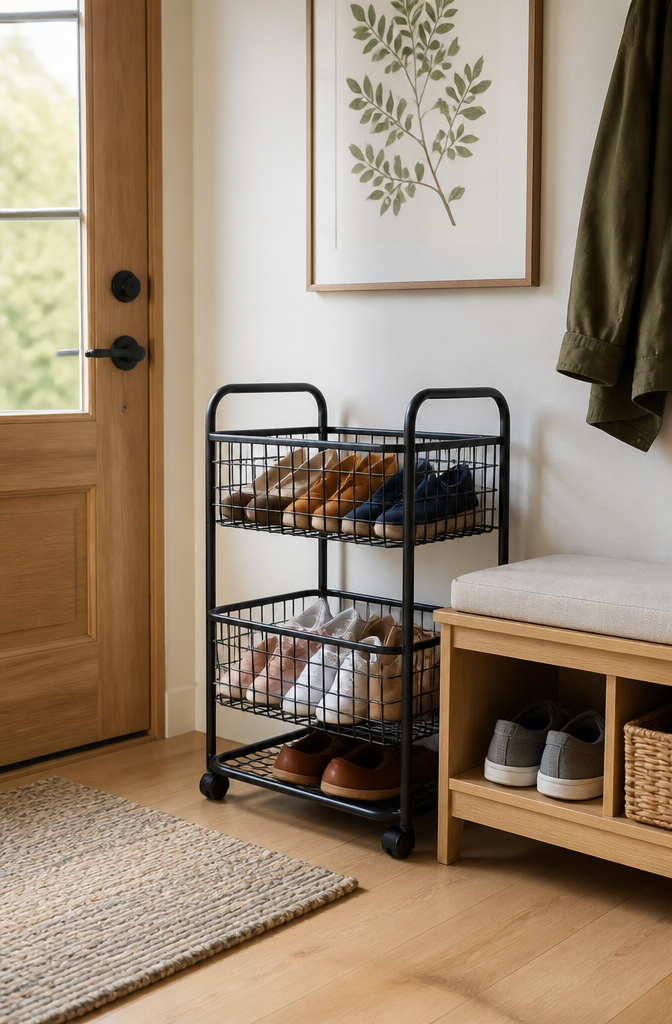
Metal wire baskets on casters slide into gaps most furniture can’t reach. A two-tier rolling unit under twelve inches wide fits beneath a bench or tucks beside a radiator, and the casters let you roll the whole load out for cleaning or to grab a pair from the back row. Laundry versions handle shoes fine; the wire spacing keeps wet soles from pooling and the open sides mean you see what you have.
The wheels are where cheap models fail. I bought one set with plastic casters that flattened under the weight of four pairs of boots; within a month the basket dragged instead of rolled, which defeats the purpose in a tight backdoor area. Look for steel or hard rubber wheels and a frame gauge heavy enough that the shelf doesn’t bow; wire lighter than standard household shelving will sag once you load it with sneakers or loafers. The gap between tiers matters too, since a low second shelf traps tall boots underneath.
Shoe Storage Cabinet
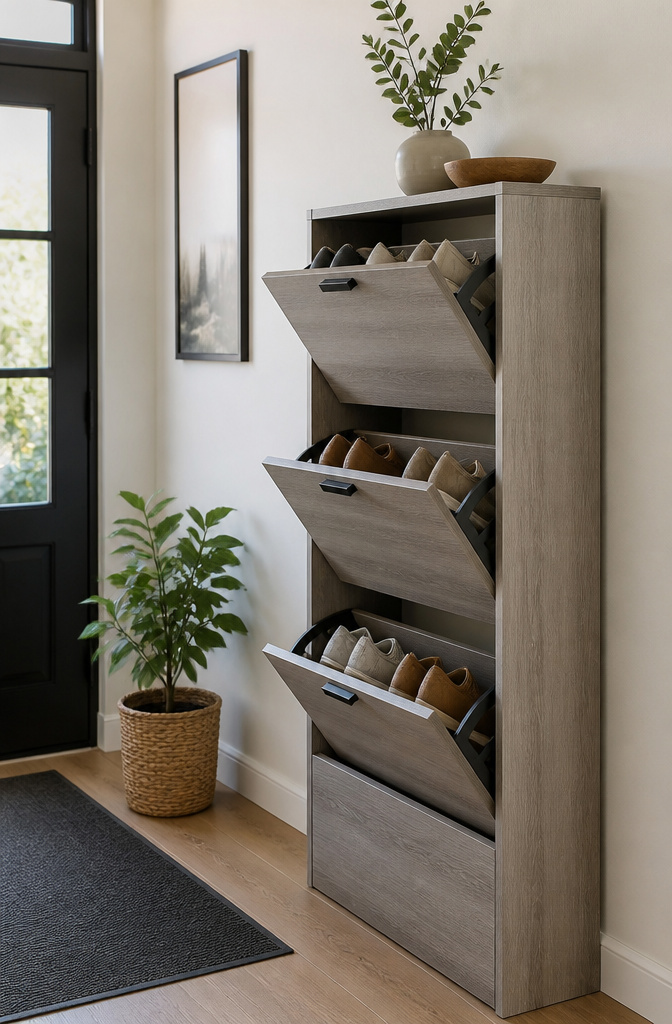
A slim shoe cabinet with tilt-out drawers or doors hides the clutter behind something that looks like ordinary furniture. The dusty gray oak finishes I have seen run under $100 on sale, and the shallow depth suits narrow entryways where a bench would stick out too far. The hinge quality is what separates the ones that last from the ones that start sagging around month six, once the daily open-and-close rhythm sets in. Depth is the other fight: the cabinet needs enough room inside for adult shoes angled forward, but every inch past about twelve competes with doorway clearance and the arc of the door swing. I would measure the full path of the door before ordering, not just the footprint against the wall.
Over the Door Shoe Storage
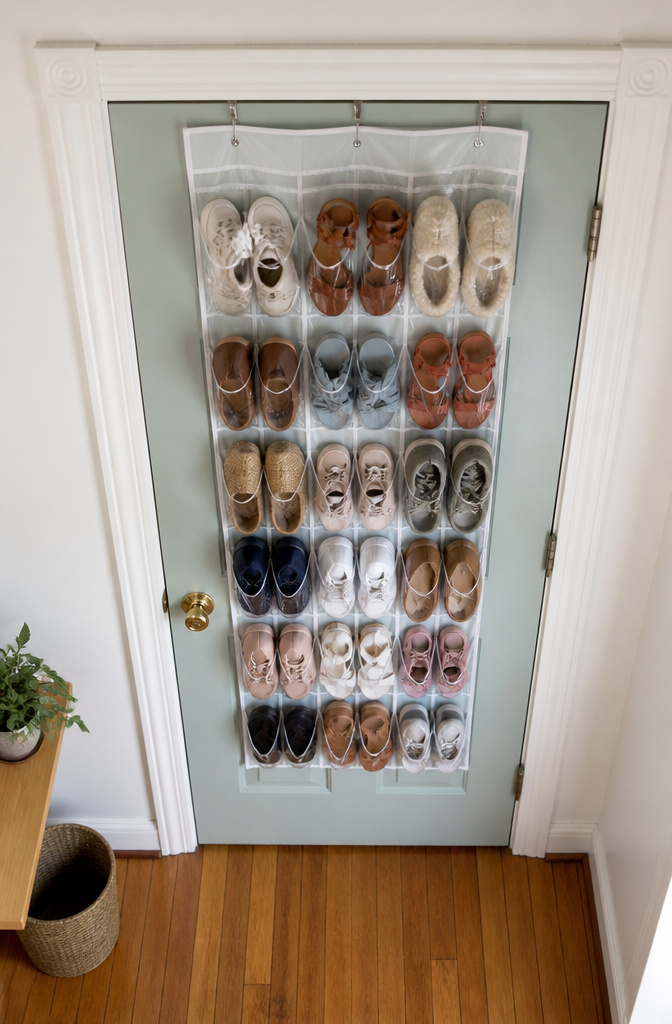
A hanging organizer on the back of a door buys you about five inches of depth, which in a tight back entryway is the difference between walking in normally and doing that sideways shuffle past a pile of sneakers. The standard interior door in most rentals and older homes is 80 inches tall and 30 to 32 inches wide, so the organizer you pick needs to hang clear of the knob and any trim without binding when the door swings. I measured the back of my own door before ordering and found the usable height stopped around 72 inches once the deadbolt and knob hardware were accounted for; anything longer bunched at the bottom or scraped the frame.
The pocket material matters more than the marketing images suggest. Fabric pockets hold their shape and look tidier for dry shoes, but mesh drains and dries faster when you’re stuffing in rain-soaked running shoes or snow boots. In a humid climate or a house with kids, that difference decides whether the organizer smells like a locker room by month three. Shelf-style over-door units exist too, though they stick out farther and the lip that keeps shoes from sliding off also makes one-handed loading awkward when you’re balancing groceries.
What Decorative Options Actually Change

Wicker baskets look forgiving until you live with them. The open weave that softens a shelf in the living room turns the backdoor into a visual mess of rubber soles and mud flakes. I swapped mine for canvas-lined wire bins after six months; the solid sides hide the chaos without losing airflow, and the difference in how the entryway felt was immediate.
Upholstered benches suffer the same bait-and-switch. The linen-look fabric on mine looked gentle and pulled together in the store, but the seat edge darkened within weeks from shoe contact and rain spots. Fabric with any nap or light color grades up the maintenance fast at a backdoor. Vinyl or a tight-weave outdoor textile survives the friction better, though it reads harsher. I accepted the trade after reupholstering once.
Matching material to traffic means watching where feet actually land, not where you wish they would. My household cuts through the backdoor with garden boots and running shoes, not house slippers. A piece that photographs well in a staged entry assumes a different user. I now buy for the shoe that comes in wettest, and let the styling catch up later if it needs to.
Space Efficiency Without the Math
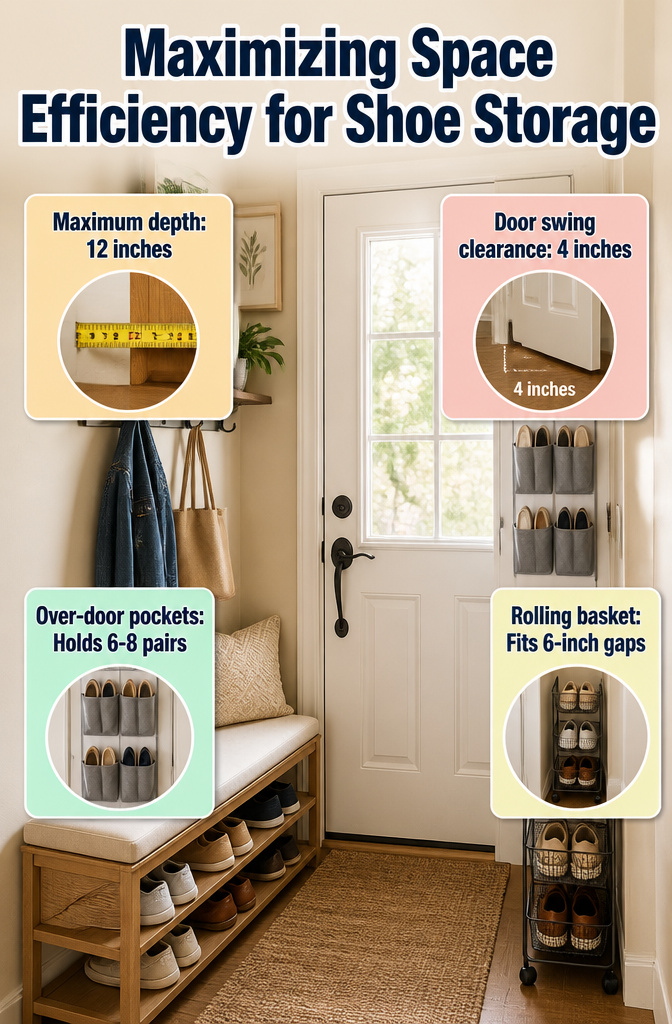
The first cabinet I bought for our back door measured perfectly on paper. Floor space was twelve inches deep, thirty wide, and the height cleared the window sill with two inches to spare. What I forgot to measure was the door swing arc. The cabinet sat flush against the wall, but the back door could only open about seventy degrees before its edge hit the corner of the cabinet. My husband and I spent three weeks squeezing through that gap before I admitted the unit had to move.
Rolling storage and over-door racks reclaim the zones that static furniture can’t use. A rolling basket tucks into the six-inch gap between a cabinet and the door frame when you need the floor clear, then rolls back when the door closes. Over-door pockets hang on the door itself, so they eat no floor space at all and disappear when the door opens into the room. The tradeoff is capacity: most over-door units hold six to eight pairs, enough for daily shoes but not for a season’s collection.
What finally worked in that same spot was a bench only ten inches deep, positioned far enough from the hinge side that the door clears it by four inches. Measure the door’s full swing first, then subtract four inches for safe passage. That is the measurement that matters, not the raw wall length.
Multi-Functionality That Survives Daily Use

A bench that stores shoes only earns its floor space if the seat still feels solid after a year of daily use. The flip-top style with a hinged lid and slow-close hinge sounds ideal until the mechanism takes the load of a winter boot drop or a kid climbing up to reach a coat hook. I would not trust any storage bench without checking the weight limit on the seat itself; the ones that list a specific capacity, usually 200–250 lb, are the ones that bothered to engineer the hinge for real life. The cheaper models skip this number entirely, and that silence is your warning.
Hall trees with a mirror and hooks look like the shoe cubbies are the point, but the mirror is what makes the unit usable in a narrow back hall. Being able to check your coat and your face in one stop means the shoe shelf below actually gets used, instead of shoes piling up on the nearest flat surface because the full routine took too many steps. The mirror also bounces light into a space that rarely has a window, which matters more than the finish color.
I stopped using an upholstered storage ottoman for shoes after the lid hinge cracked from the load. The mechanism was rated for soft storage, blankets and scarves, not the concentrated weight of leather boots lined up in a row. The lid would not stay open on its own after that, and a lid that drops on fingers or needs one hand to hold while the other fishes for shoes is a bench you will abandon for the floor inside a month.
Frequently Asked Questions
What are some creative backdoor shoe storage ideas?
Baskets, storage ottomans, entryway benches, hall trees, rolling wire baskets, slim cabinets, and over-the-door organizers all work well. A single large woven basket with an internal metal frame is the lowest-effort option that still looks intentional, while a storage ottoman hides shoes and gives you a place to sit or set down bags.
How can I maximize space for backdoor shoe storage?
Use vertical and rolling solutions that reclaim zones static furniture cannot reach. Over-door pockets eat no floor space at all, and two-tier rolling baskets on casters slide into gaps under benches or beside radiators, then roll out when you need them. Measure your door’s full swing arc first, then subtract four inches for safe passage; that is the measurement that matters, not raw wall length.
What types of materials are best for backdoor shoe storage?
Woven baskets with internal metal frameworks hold their shape better than plain wicker under weight. For upholstered pieces, lined or darker fabrics hide scuff marks that light colors show within months; vinyl or tight-weave outdoor textiles survive friction better than linen or anything with a nap. Metal wire baskets with steel or hard rubber casters handle wet soles without pooling.