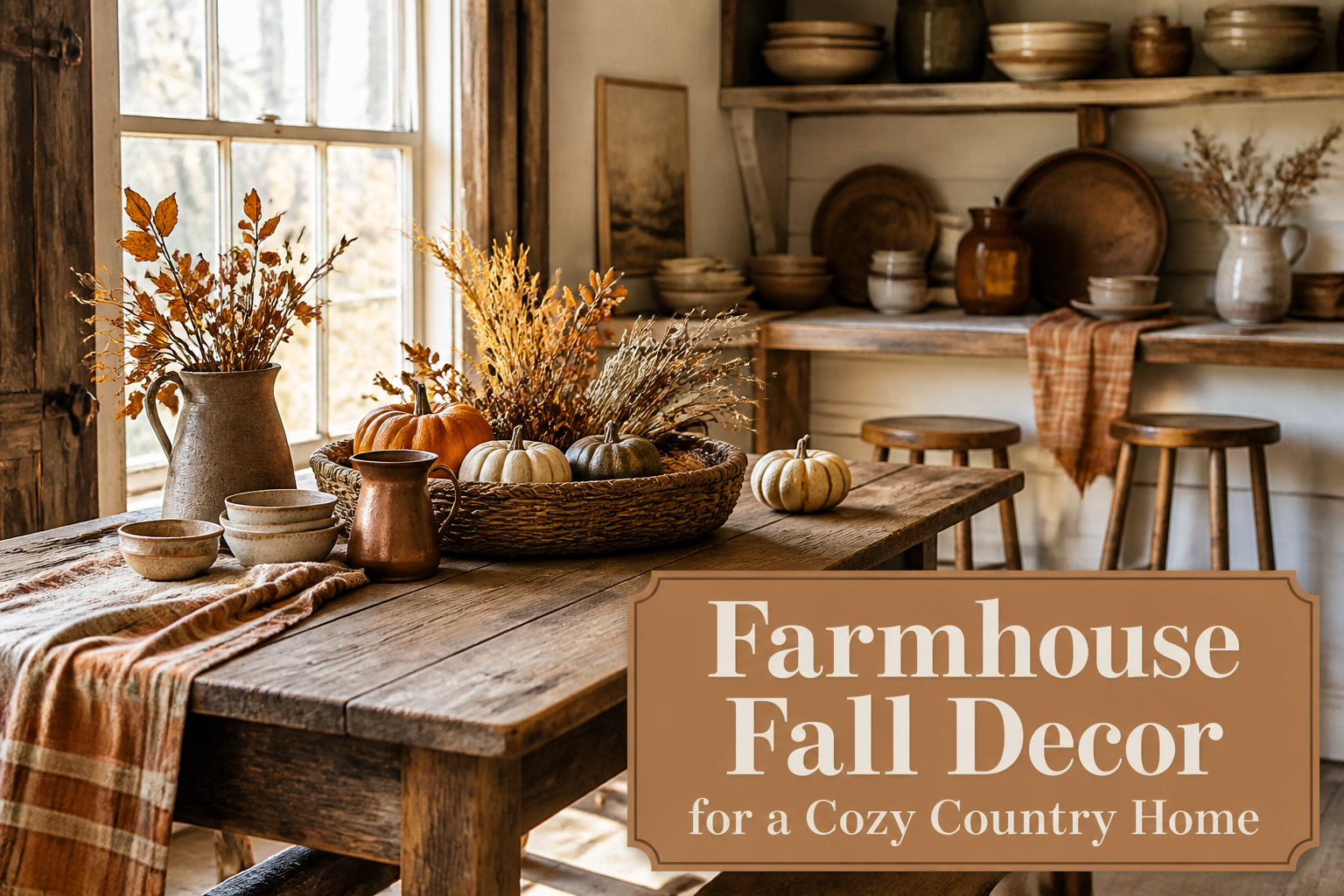
Farmhouse fall decor is the art of making a home look like a working farm slowed down for autumn rather than a set dressed for it, and the difference comes down to imperfection. A copper pitcher with real tarnish, a grain sack faded to rust, or a throw blanket that looks pulled from a field jacket carries the dust and sun-bleach of actual farm life, not the saturated orange of a craft-store aisle. The cost of getting it wrong is a house that reads staged; the reward for getting it right is warmth that feels lived-in.
Color Schemes

Ochre, rust, deep brown, and olive green read as farmhouse rather than generic fall because they carry the dust and sun-bleach of actual farm life, not the saturated orange of a craft-store aisle. These colors show up in paint on a weathered barn door, in the natural dye of a vintage grain sack, or in the patina on a copper pitcher left out through the seasons. Textiles make the easiest swap: curtains that have faded to a workable rust, throw blankets in olive green that look like they were pulled from a field jacket, pillows in deep brown that hold the same tone as turned garden soil. Small decor items carry the same weight without the cost of repainting a room. A warm-colored vase on the kitchen counter, a basket in that same ochre tone on the bedroom vanity, and the palette ties together without looking staged. The trick is letting the colors stay slightly imperfect, the way sun and use would actually age them. A copper pitcher with real tarnish beats a bright new orange pot every time. Keep store-bought pieces to a minimum and let the tones come from found or worn items, and the whole house reads like a working farm slowed down for autumn, not a set dressed for it.
Fall Wreaths
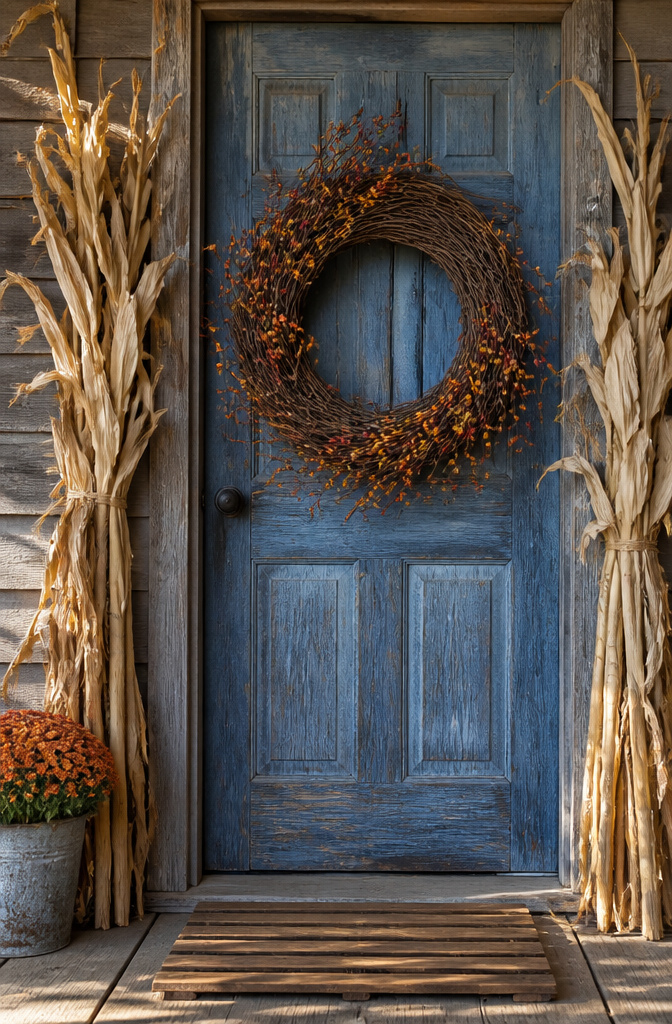
A cornstalk wreath hung on my own door last September looked festive for about ten days before the dried husks started shedding every time the storm door swung. That experience pushed me toward grapevine bases with clipped bittersweet sprigs and fall berry picks layered in, which hold up through Thanksgiving without the mess. For a standard 36-inch front door, a wreath between 24 and 30 inches across fills the space without blocking the knocker or looking like a life preserver. Smaller side doors or interior walls suit something in the 18-to-22-inch range so the piece reads as intentional, not an afterthought. Corn shocks and dried cornstalks still work beautifully as flanking elements, not the wreath itself. Two shorter stalks tied with twine on either side of the frame give that harvest welcome without the shedding problem, and they cost nothing if you clip them from a field edge or a generous neighbor’s garden. The balance to strike is warmth without clutter: one wreath, maybe a pair of stalks, and stop before it looks like a roadside stand.
Pumpkin Decorations
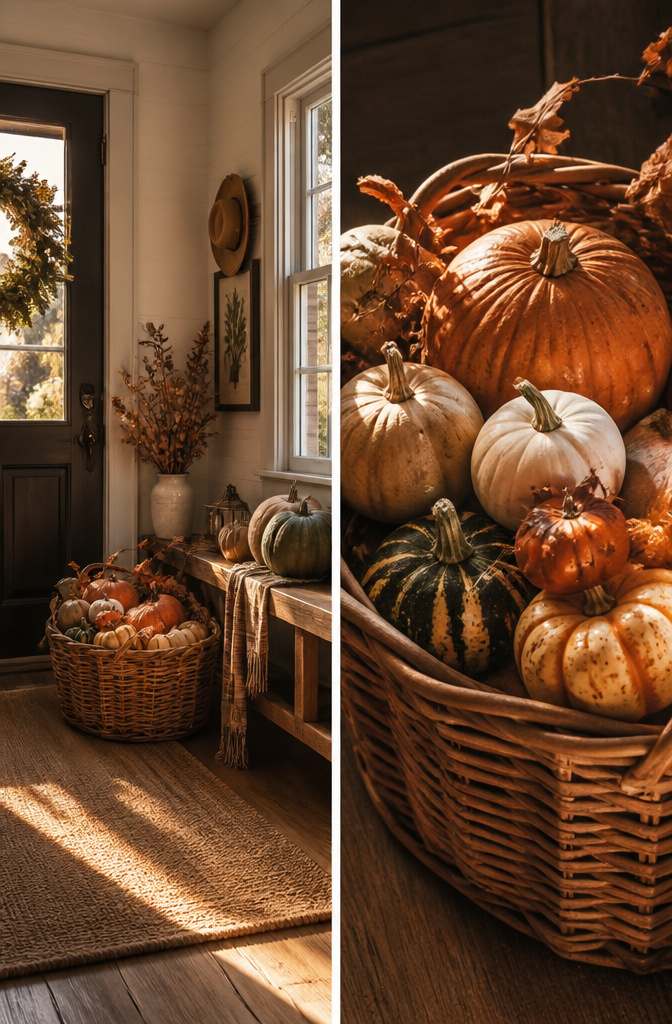
A basket of pumpkins by the door is the quickest way to signal fall without committing to a full porch overhaul. Real pumpkins last roughly three to six weeks once the skin is broken, so placing them in a basket rather than directly on damp concrete buys a little time. Faux pumpkins have improved enough that mixing one or two among the real ones fills gaps where a small pumpkin would otherwise disappear, and the weight difference actually helps: the heavier real ones anchor the base while lighter foam or resin pieces sit higher without toppling.
Painted pumpkins solve the color problem when orange clashes with your existing palette. A matte chalk paint in cream or deep green reads more farmhouse than the glossy craft-store look, and a quick dry-brush of off-white over the stem keeps the finish from looking too flat. Indoors, a cluster of three sizes on a kitchen island or hearth mantel carries more visual weight than a uniform row. The trick is varying the height by at least two inches between each piece, so the eye travels instead of resting on a single plane. Outdoors, the same rule applies, but the scale needs to jump: a large pumpkin beside a medium and a small reads as intentional, while gradual sizing looks accidental.
Natural Elements
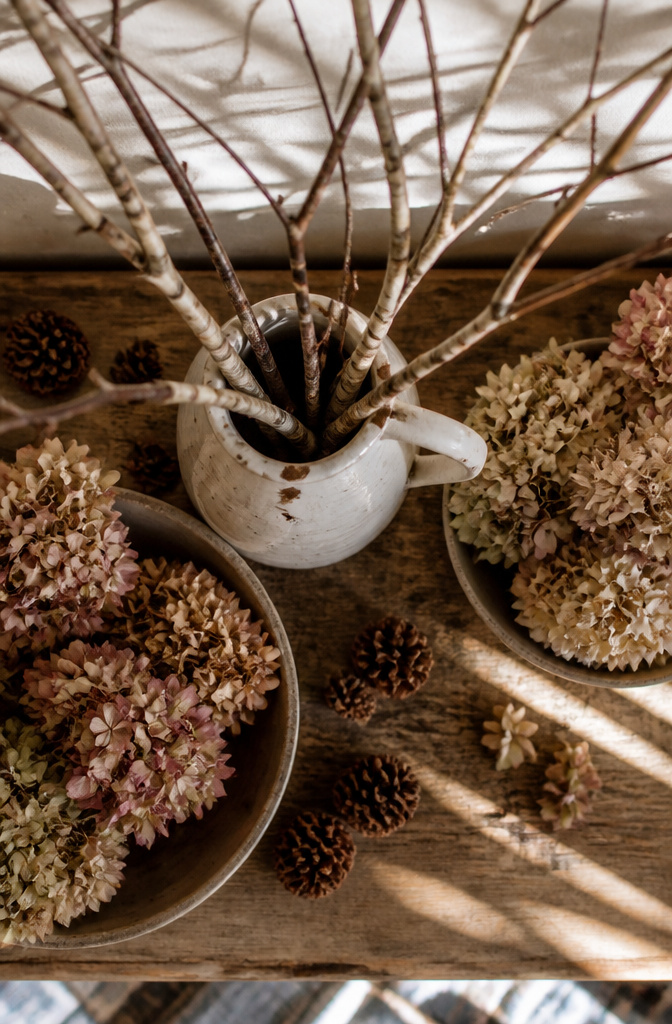
Branches on the mantel or dried hydrangeas in a pitcher look collected instead of messy when you stick to one shape per surface. I learned this after a weekend of hauling home everything that looked pretty on the trail. The oak branches with acorns went on the console table, the pine cones filled a single wooden bowl, and the dried grass stems stood in a stoneware vase by the window. Mixed together they read as clutter; separated, each group looks intentional.
Forage what holds its shape without work: bare birch branches, sweetgum balls, dried seed heads from the roadside. Buy the fragile stuff, like dried lavender or wheat stalks, unless you enjoy sweeping. A $12 bundle of dried stems from the grocery store saves hours of hanging and waiting.
The arrangement itself matters less than the container. A galvanized bucket, a chipped crock, or a plain mason jar gives foraged pieces the same weight as a store-bought wreath. I leave the tags off and let a few stems lean against the wall behind the vase. That slight asymmetry is what makes it look like you walked in and set it down, not like you studied a photo for twenty minutes.
Cozy Textiles
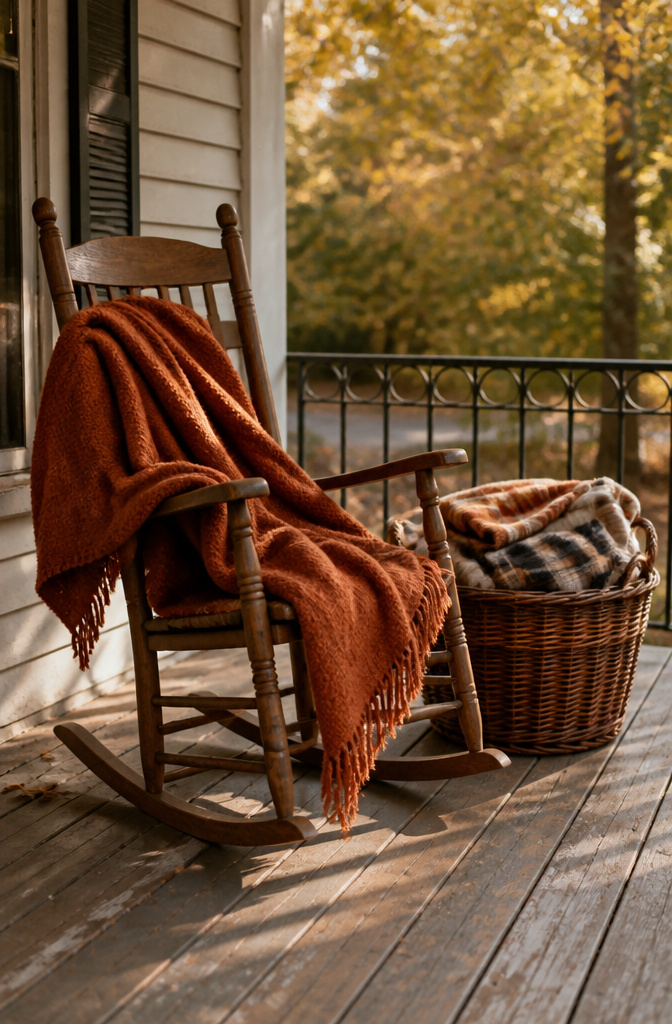
The porch is where farmhouse fall decor first meets real weather, and lightweight cotton throws look the part for about two weeks before they turn damp and sad. A mid-weight wool blend or thick cotton flannel holds up against October mist and still looks right draped over a rocking chair or stacked in a galvanized tub. I keep one basket by the door for outdoor use and rotate it inside once rain sets in for good; that fabric gets washed, dried thoroughly, and stored flat in a cedar chest or even a clean cardboard box with a few cedar blocks. Never seal wool in plastic, it needs to breathe or it will smell like a wet dog by next September.
Pillows follow the same rotation. Early fall calls for linen or cotton covers in rust, mustard, or simple plaid. When nights drop below fifty, I swap in heavier canvas or even a soft tweed that can handle actual sitting without going clammy. The outdoor pillows go through the dryer on low with a couple of tennis balls to keep the fill from clumping, then into a breathable storage bag labeled with the year. Plaid patterns hide porch dust better than solids, which matters more than Pinterest suggests, and warm colors read as intentional even when the leaves behind them have already blown bare.
Seasonal Centerpieces

A diagonal plaid tablecloth changes the whole feel of a dining table without any sewing. Laying the cloth corner-to-corner softens the grid and reads more casual than a straight-on placement, which matters when you are already mixing reds, oranges, and browns that could turn stiff if the lines stay too neat.
Height is where most fall centerpieces go wrong. Anything above twelve inches blocks sightlines across the table, so the conversation gets cut into pieces. Metal candle holders and lanterns work because you can find them low and wide, and wheat bundles add vertical interest only if you keep them under that ceiling or move them to a sideboard instead. Leaves tucked around the base bring the color down to the surface where it belongs.
The red-orange-brown mix itself needs one color to dominate or the eye flattens everything into mud. Two-thirds red plaid on the table, with orange and brown showing up in smaller doses through leaves and metal, keeps the warmth without the clutter. Last year I tried equal parts of all three and the table looked like a leaf pile; pulling the brown into just the candle holders and the orange into scattered leaves fixed it in about five minutes.
Tablescapes
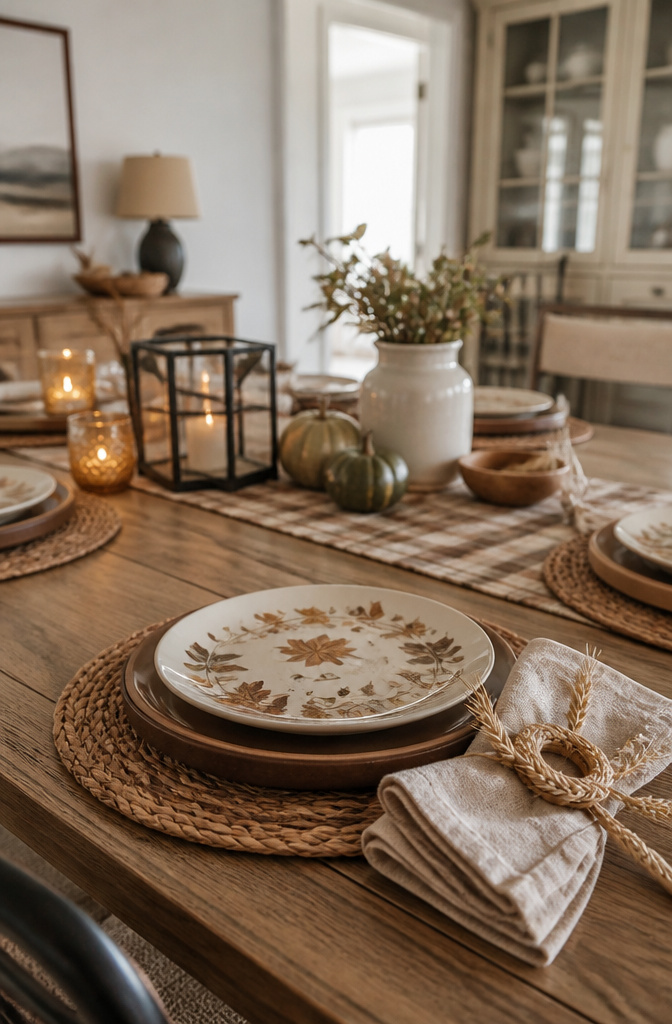
Layered plates do more for a farmhouse fall table than any single centerpiece. I start with a charger or a dinner plate in a warm, muted tone, then set a smaller salad plate on top in a pattern that reads autumn without shouting it. A checked napkin folded beside the stack, or looped through a simple ring with a sprig of dried wheat, finishes the look without blocking conversation across the table.
The line between decorative and functional sits at about two inches above the plate surface. Anything taller than that, and people start rearranging pieces to pass the gravy or see the person across from them. I keep candles low, use flat runners instead of raised garlands down the center, and cluster any vertical elements where a serving dish would sit anyway. The table should still look dressed when the food arrives, not cleared to make room for it.
Cotton or linen napkins in oatmeal or rust tones hold up to actual meals and soften with washing. Paper looks wrong against stoneware, and stiff polyester fights the relaxed mood you are after. The goal is a table someone wants to linger at, not one they are afraid to use.
Mantel Decor
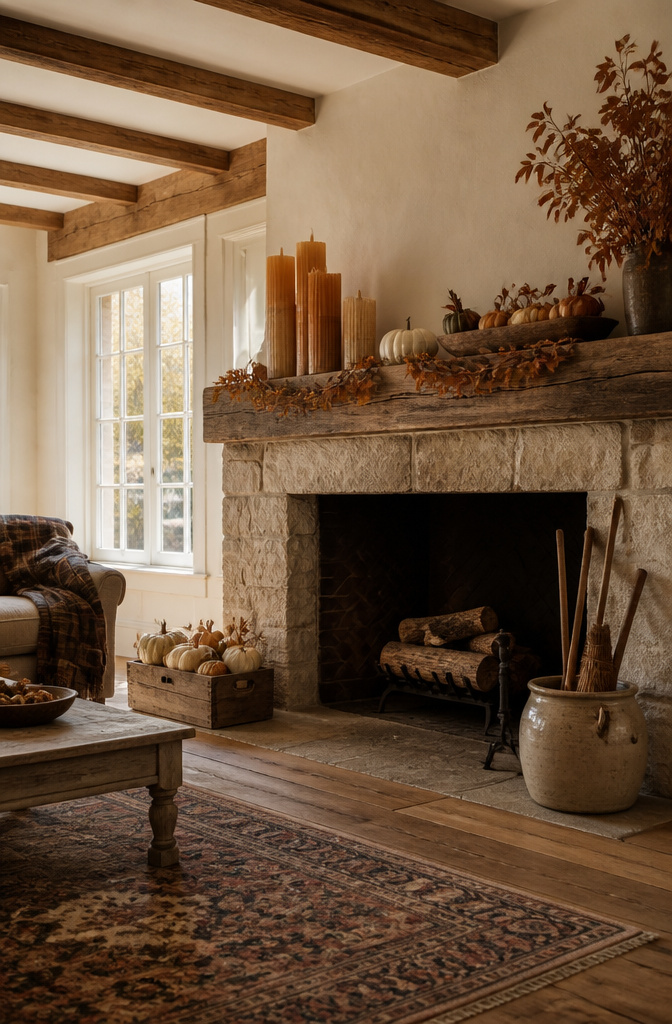
A fireplace mantel in farmhouse fall decor lives or dies by its height spread. The asymmetrical triangle method keeps the eye moving without demanding perfect symmetry you will never achieve on a real weekend. Taller pieces, pumpkin candles in varying heights or a pair of metal bookends holding slim seasonal volumes, anchor one side. The other side drops lower, maybe a single ceramic figure or a shallow wooden tray, and the visual weight still balances because the tallest point and the widest point sit at opposite corners.
Scale against the mantel itself matters more than most people account for. A six-foot mantel can carry a group that spans four feet comfortably; on a four-foot mantel, that same arrangement swallows the whole wall and looks like a store display. The rule that held up across every arrangement I tested was this: leave at least six inches bare on each end, more if the mantel sits above a particularly wide fireplace opening. Metal bookends work because they add height without bulk, but cheap stamped ones tip forward once the books lean. Weighted cast iron costs more and earns its place if you are touching this setup daily through October. Seasonal figures, the little pilgrims or barn animals, work best in odd numbers and never dead center; offset them toward the shorter side of your triangle so the whole line stays active.
Entryway Decor
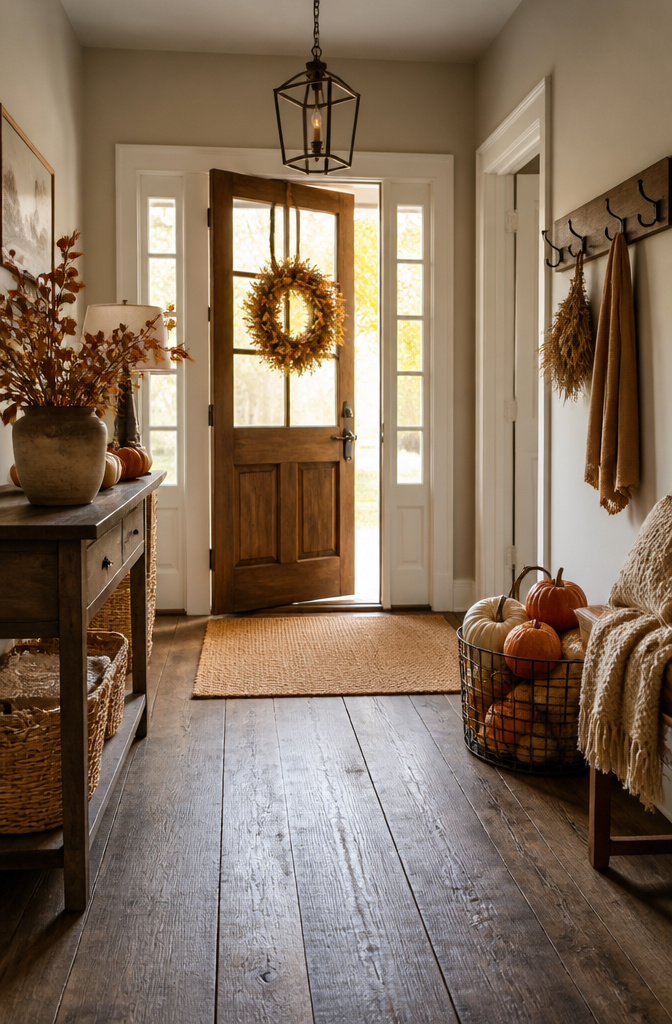
A wreath on the door sets the expectation, but the real work happens in the three feet between the threshold and the living space. I lay mine out so a visitor meets decor in the order their eyes travel: wreath first, then a low basket of pumpkins or gourds to the right of the door swing, then the mat. The mat catches shoes and frames the basket; swap it for a folded plaid blanket draped over a bench only if the traffic is light enough that the drape stays put.
For high-traffic entryways, a rubber-backed coir mat beats jute every time. Coir sheds and stains; the rubber layer keeps it from sliding and traps moisture before it reaches the floor. The pumpkin basket sits better on a boot tray anyway, and that tray saves the wood when October brings rain.
I skip real pumpkins in the entry. One soft spot and the whole arrangement turns to a chore. Faux pumpkins in a wire basket look the same from the doorway, and you are not carrying a rotting gourd through the house in November. The wreath can stay up through Thanksgiving if you pick dried wheat and bittersweet over overt Halloween shapes; swap the ribbon instead of the whole piece.
Rustic Accents
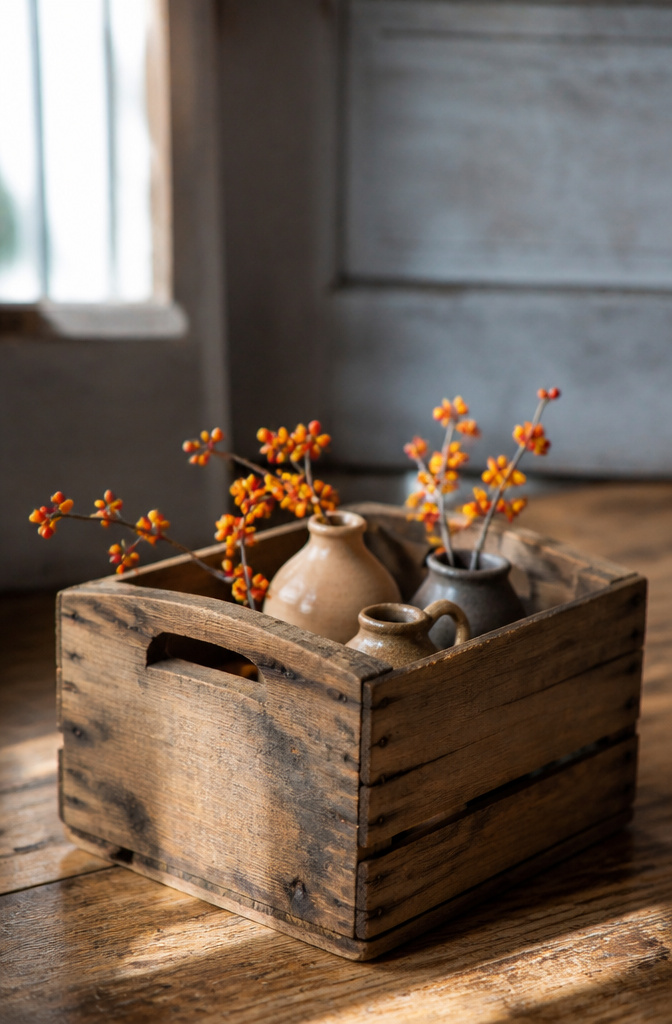
Wooden crates read farmhouse only when the slats are rough-sawn and the edges stay uneven. The ones with metal corner brackets and a stamped logo lean industrial, and against a plaid throw or a stack of mini pumpkins they look like you borrowed them from a warehouse. I found my best crate at a roadside stand for eight dollars, no finish on it at all, and that raw pine darkened after one season of holding cider jars and bittersweet sprigs.
The rule that keeps a vignette from turning into a flea-market pile is one rustic material per grouping. Pair the wood crate with ceramic or glass inside it, not with a weathered sign and a galvanized bucket competing for attention. A single wooden sign with an autumn greeting works above the crate, but only if the sign stays flat on the wall and the crate sits below it on the floor. Two rough textures in the same line of sight cancel each other out; the eye cannot settle and the whole thing reads as clutter you meant to stage.
When to Start and What to Spend
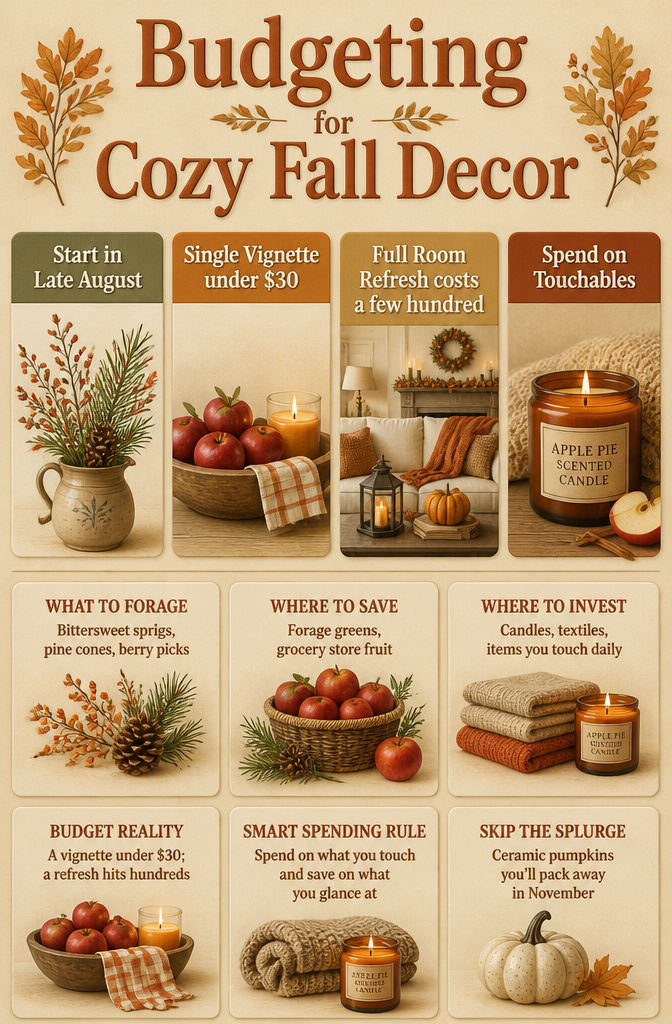
Late August is when farmhouse fall decor actually starts to feel right. The air shifts, and swapping in dried stems or a woven basket of foraged branches costs almost nothing while it still reads as intentional rather than premature. I like to gather bittersweet sprigs, pine cones, or whatever berry picks are turning on the bushes near me before the garden centers mark up the same look.
The budget split is what matters here. A single vignette, maybe a primitive bowl with apples and a candle on the entry table, runs you under $30 if you forage the greens and shop the grocery store for fruit. A full-room refresh with new textiles, lanterns, and layered pumpkins across multiple surfaces climbs toward a few hundred dollars fast. My rule is to spend the money on what you touch and save on what you glance at: a $20 apple-pie-scented candle warms the room more than a $60 ceramic pumpkin you will pack away in November.
DIY Decor That Holds Up
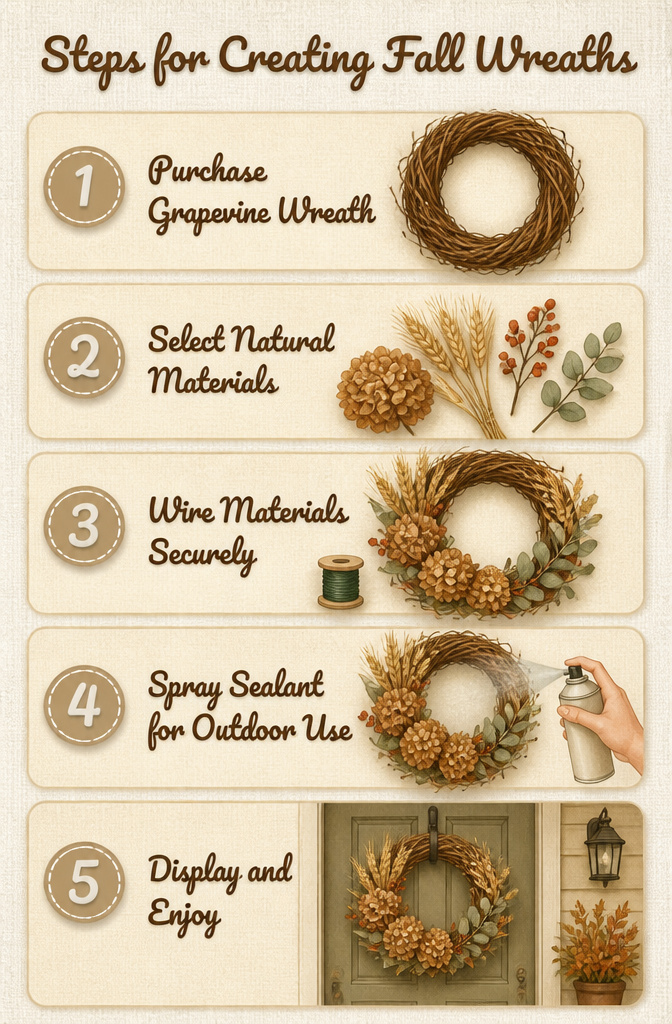
Dried grapevine wreaths from the craft store run about six to eight dollars and make a forgiving base for fall materials. The trick is not overloading them. Last year I wired on dried hydrangea, some wheat stalks, and a few faux berries, and the whole thing looked balanced for about three weeks. Then the hydrangea went brittle and started shedding onto the porch every time the door closed. Fresh or dried natural materials need a sealant spray if the wreath lives outside, or you will be vacuuming petals until Thanksgiving.
Centerpieces follow the same rule of restraint. A wooden dough bowl filled with mini white pumpkins, a couple of taper candles in brass holders, and maybe one branch of dried eucalyptus reads intentional. Add pinecones, artificial leaves, a string of beads, and a ceramic turkey, and it reads like a clearance shelf exploded. The handmade line sits right there: asymmetry and empty space signal design, while even spacing and too many textures signal effort.
For renters, these projects matter because they pack flat. The wreath form stays, the fillers change with the season, and nothing is nailed to a wall you do not own.
Indoor Against Outdoor
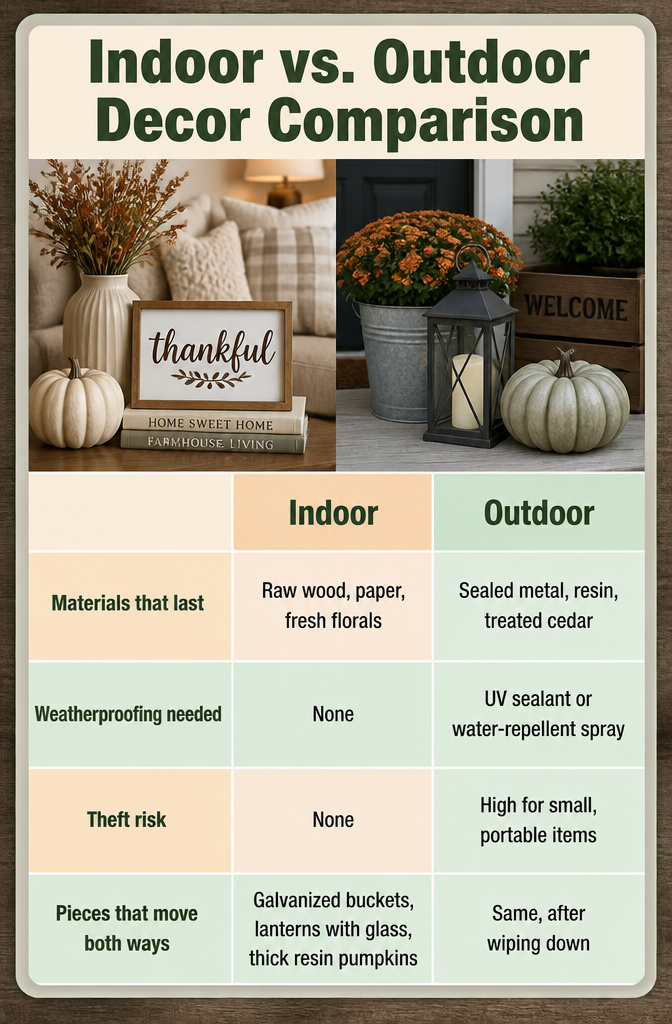
Weatherproofing decides where farmhouse fall decor lives. A galvanized metal pumpkin or sealed wood lantern handles porch humidity fine, but anything with raw edges, paper inserts, or fabric bows will swell, fade, or grow mildew within a few weeks outside. I learned that after bringing a burlap wreath back inside and finding the backboard warped.
Theft risk on porches is real, especially for lightweight pieces someone can grab walking past. Heavier cast-iron or filled-base items stay put; small signs, ceramic pumpkins, or loose gourds tend to walk off in neighborhoods where that happens.
| Indoor | Outdoor | |
|---|---|---|
| Materials that last | Raw wood, paper, fresh florals | Sealed metal, resin, treated cedar |
| Weatherproofing needed | None | UV sealant or water-repellent spray |
| Theft risk | None | High for small, portable items |
| Pieces that move both ways | Galvanized buckets, lanterns with glass, thick resin pumpkins | Same, after wiping down |
The pieces worth buying for both zones are the ones built like actual tools: a lantern with a real glass chimney, a thick resin pumpkin with weight to it. Move them in after wiping off pollen or dew, and they read fresh indoors for months without looking like porch castoffs.
What I Skip and Save For Later

The real money on farmhouse fall decor moves in predictable waves if you watch for it. Wreaths and door signs go to clearance by mid-October, right when the Halloween rush starts, because retailers need that wall space for the next holiday. I wait on those every year. The wooden pumpkin patch signs and LED lantern candles from the major farmhouse lines hit their discount around the same window, and the daily email drops at places like Antique Farmhouse will flag exactly when stock turns over.
What I buy full price instead are the natural pieces: wheat bundles, pine cones, the acorns and leaves I gather myself. They do not go on sale because they do not sit in a warehouse. The same goes for metal candle holders or good plaid table coverings; those basics run low before they run cheap, and a renter’s Thanksgiving table still needs them whether the timing is convenient or not.
The 2,000-product fall collections rotate daily, which sounds overwhelming until you realize most of it is the same wreath in three sizes. I keep one saved search for "Cozy Amber Glow" and "Chipped Charm" specifically, the sub-collections that lean heavier on textiles and less on kitsch. Those lines sell out first and rarely make it to the clearance round. Signing up for stock alerts beats checking the site; the notify-me button emails when something returns, and that is usually your only shot at the limited seasonal pieces without paying resale prices later.
Frequently Asked Questions
When should I decorate for fall?
Late August is when farmhouse fall decor starts to feel right, since the air shifts and swapping in dried stems or a woven basket of foraged branches costs almost nothing while still reading as intentional rather than premature. You can gather bittersweet sprigs, pine cones, or berry picks before garden centers mark up the same look. September and October work too, but starting early lets you build the look gradually without the pressure of a single weekend overhaul.
How do I decorate for fall on a budget?
Forage natural items like leaves, pine cones, and acorns from outside, then spend your money on what you touch and save on what you glance at. A single vignette, such as a primitive bowl with apples and a candle on the entry table, runs under $30 if you forage the greens and shop the grocery store for fruit. A $20 apple-pie-scented candle warms the room more than a $60 ceramic pumpkin you will pack away in November, and full-room refreshes with new textiles and lanterns climb toward a few hundred dollars fast if you let them.
What are some ideas for fall mantel decor?
Use the asymmetrical triangle method: taller pieces like pumpkin candles in varying heights or weighted metal bookends holding slim seasonal volumes anchor one side, while the other side drops lower with a single ceramic figure or shallow wooden tray. Leave at least six inches bare on each end of the mantel, more if it sits above a wide fireplace opening. Seasonal figures work best in odd numbers and never dead center; offset them toward the shorter side so the whole line stays active rather than frozen.
How do I create a fall tablescape?
Start with a diagonal plaid tablecloth laid corner-to-corner to soften the grid and read more casual, then layer a charger or dinner plate in a warm muted tone with a smaller patterned salad plate on top. Keep everything below about two inches above the plate surface so conversation flows; use low candles, flat runners instead of raised garlands, and cluster any vertical elements where a serving dish would sit anyway. Let one color dominate the red-orange-brown mix, with two-thirds red plaid on the table and the other colors showing up in smaller doses through leaves and metal.