
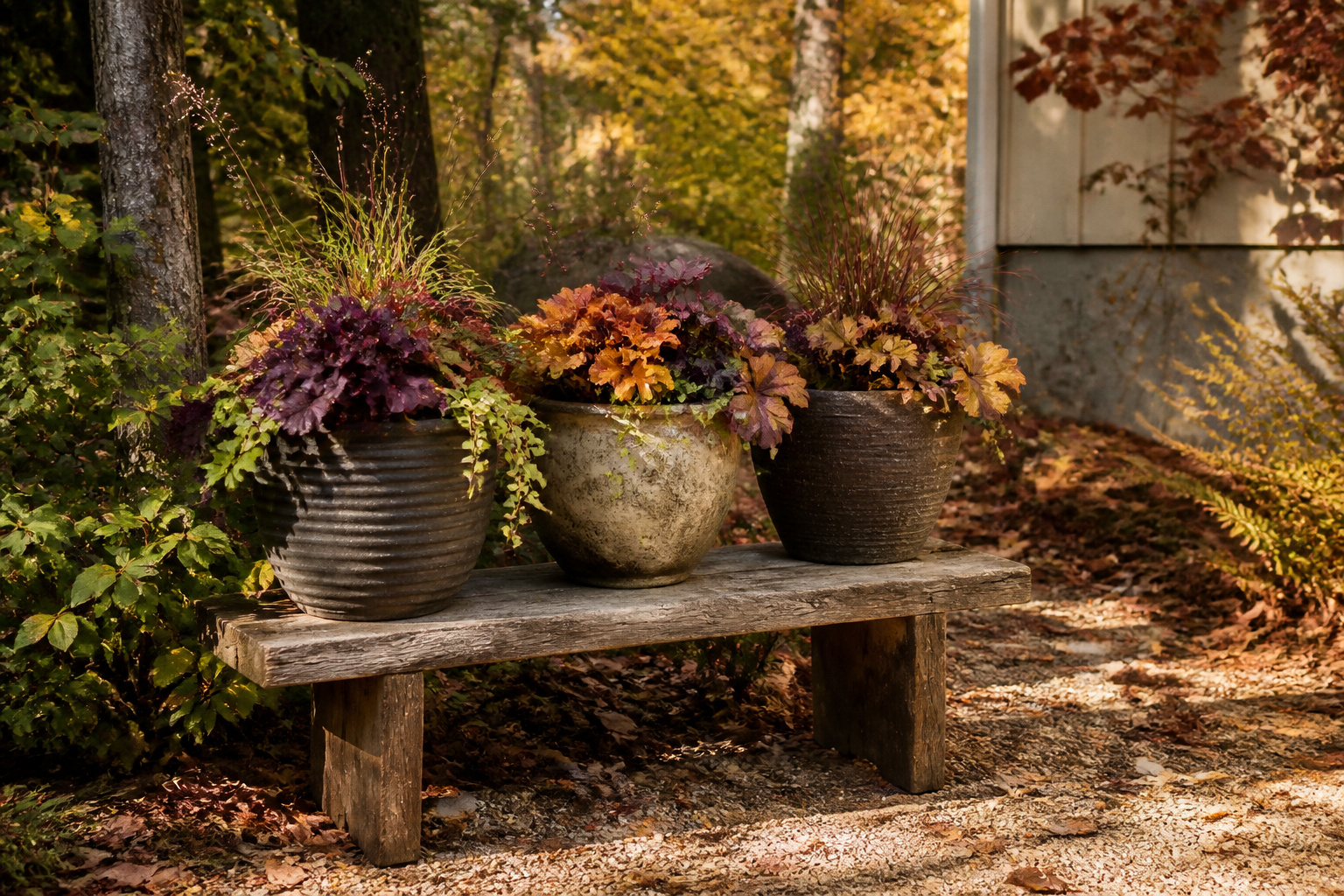
Fall container planters are pots built to carry color from September into late autumn, but only if you treat the hardiness zone on the tag as one number higher than where you actually live. Roots freeze faster in soil that has no insulating earth around it, so a grass rated for Zone 4 in a garden bed may collapse in a planter by Halloween. I learned that rule after watching two whiskey barrels of deep plum heuchera turn to wet mulch on my steps by October 31, 2022.
Heuchera for Foliage That Lasts
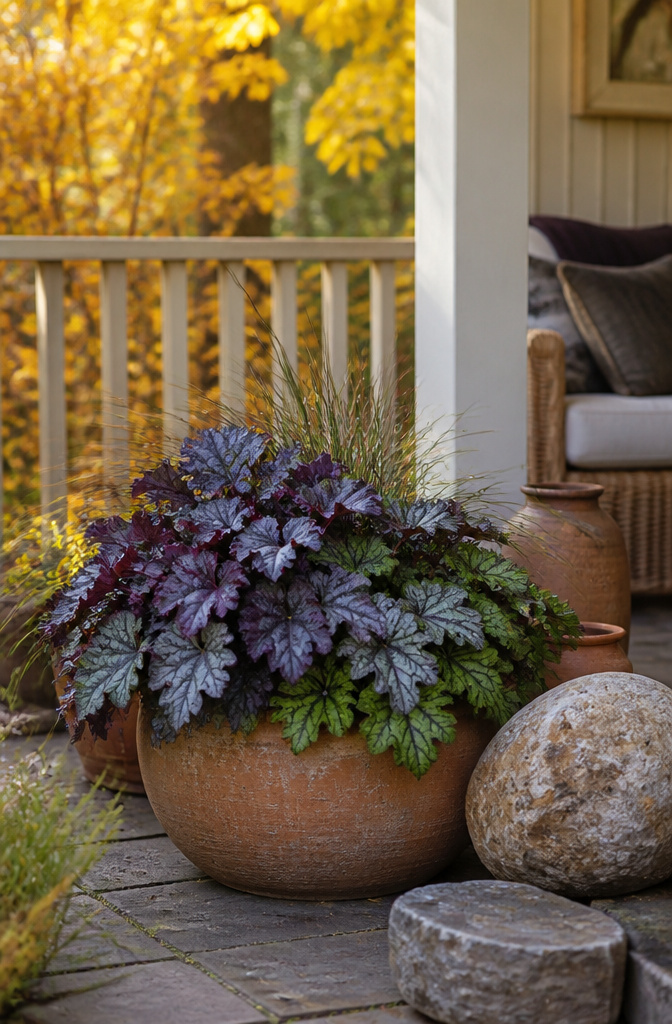
Heuchera, or coral bells, earns its spot in fall container planters through foliage that keeps working after flowers have given up. The variety ‘Stormy Seas’ carries Zone 3–8 hardiness and leaves that shift through enough purple, silver, and green tones to read as color without a single bloom on the plant. That matters once nighttime temperatures start dipping into the 40s and the usual annuals turn to mush.
I used to treat heuchera as a filler, something to tuck around a thriller. Now I build the whole pot around it. The ruffled leaves on ‘Stormy Seas’ hold up through light frost and the occasional freeze that sneaks in before Halloween, and the clump stays neat enough, around 9 inches tall in most varieties, that it never bullies its neighbors. Pair it with something that flowers early, let those blooms fade, and the heuchera keeps the pot from looking spent through November.
Mums as the Fall Anchor
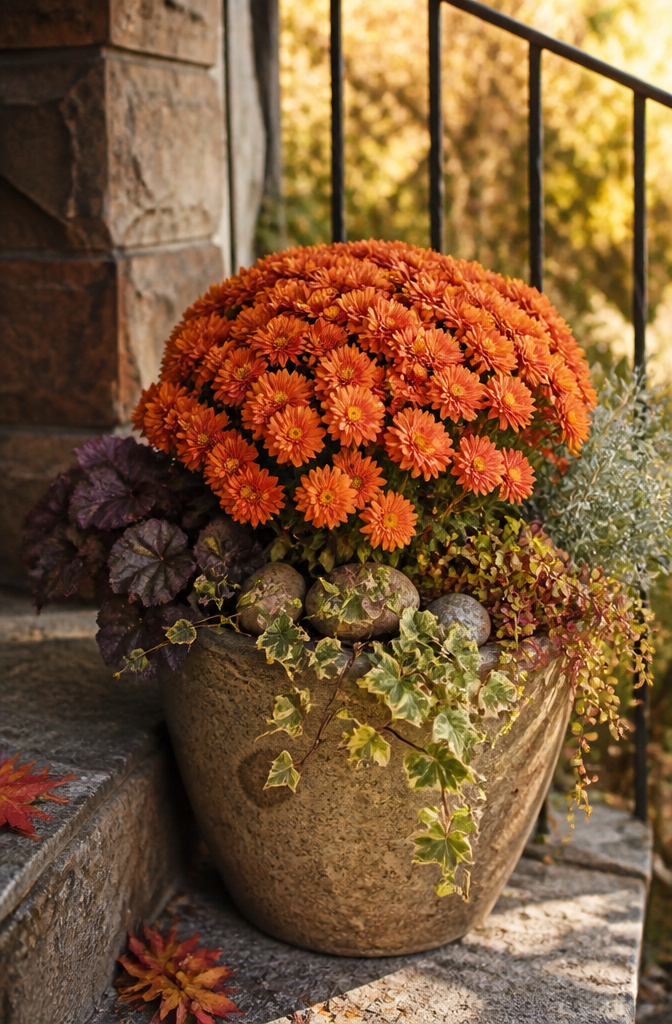
Chrysanthemums still read as fall the way no other flower does, and after years of treating them as disposable grocery-store grabs, I have settled on ‘Valerie’ as the one worth seeking out by name. The bloom runs a warm bronze-orange that sits right where September color wants to be, not the blaring red-yellow of the cheapest trays. What convinced me, reading through a dozen grower descriptions and sorting through my own dead plants each November, is that mums in pots live roughly half as long as mums dropped into garden beds. The root ball crowds faster than you think, and a container that dries twice a day in late summer heat shortens what was already a short perennial life into a true annual. I now buy ‘Valerie’ knowing she is a six-week flower for the porch, not an investment, and I plan the surrounding pots to outlast her. The color carries the whole arrangement while it lasts, which is exactly what an anchor should do.
Pansies for Cool-Weather Color
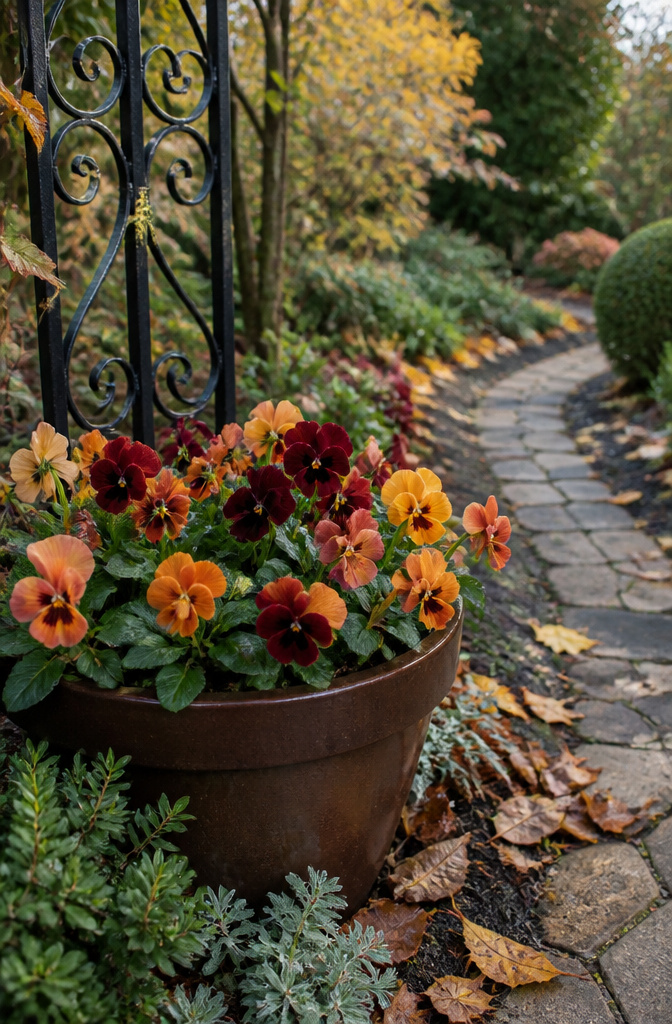
Pansies handle the temperature drop that wilts petunias and zinnias by mid-September. Their cell structure keeps photosynthesis going in weather that sends summer annuals to the compost pile, which is why they outlast the rest of a mixed container by weeks.
I learned this the hard way after swapping out a fried coleus bed for pansies one October and watching them sail through a frost that crusted the lawn. In USDA zones 7 and warmer, a September planting often carries clean into December, sometimes longer if you deadhead the spent blooms and cut back leggy stems after the first hard chill. That bridge from fall display to early winter matters more than I expected: the container still reads "intentional" on Thanksgiving weekend instead of "abandoned."
The color range runs wider than the purple-and-yellow cliché. Rust, burgundy, and soft apricot varieties pair cleanly with the burnt tones people already want in fall container planters. A six-pack of established seedlings costs about the same as a bag of decent potting mix and fills a 12-inch pot with something that looks deliberate in six weeks, not six months.
The catch is timing. Plant too early in a warm snap and they stretch thin and floppy; too late and the root ball never anchors before real cold sets in. Soil that still holds summer warmth, air that stays below 75°F: that window is usually narrower than the garden center marketing suggests.
Ornamental Kale for Texture
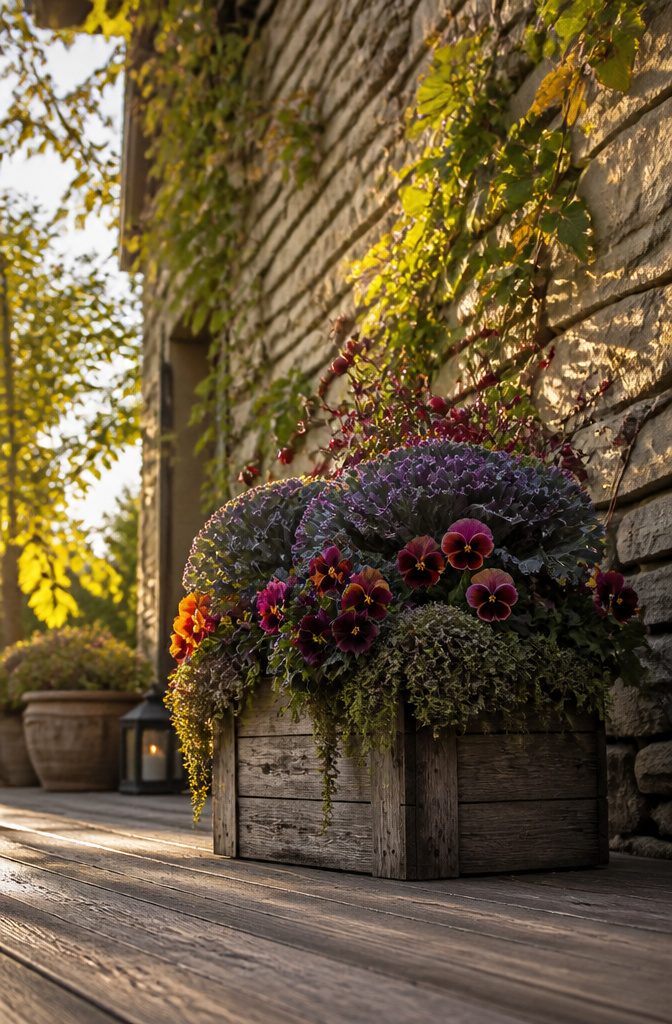
Ornamental kale earns its spot in fall container planters through leaves that look almost too ruffled to be real. The puckered surface catches morning dew and afternoon light differently than anything else in the pot, giving the whole arrangement a weight that pansies or grasses alone never quite manage. Color shifts as nights get colder, with some varieties turning deeper purple or brighter white along the veins, so the same plant reads as two different things across October and November.
The texture works best when you place it where people will brush past it close up, along a railing or the edge of a stoop. From six feet away it reads as a cabbage-shaped mound; from two feet the leaves look like rosettes built from crinkled paper. That near-far switch is the payoff.
Plant too early and warm soil tricks kale into stretching tall and leggy before the cold ever arrives. The rosette stays loose, the color stays muddy, and by the time frost would have tightened everything up, the plant looks exhausted. I wait until soil temperature has dropped enough that tomatoes would sulk, usually well past Labor Day even in my impatient years. The plants sit small for a week or two, then settle into the dense, low habit that carries them past Thanksgiving.
Grasses for Height and Movement
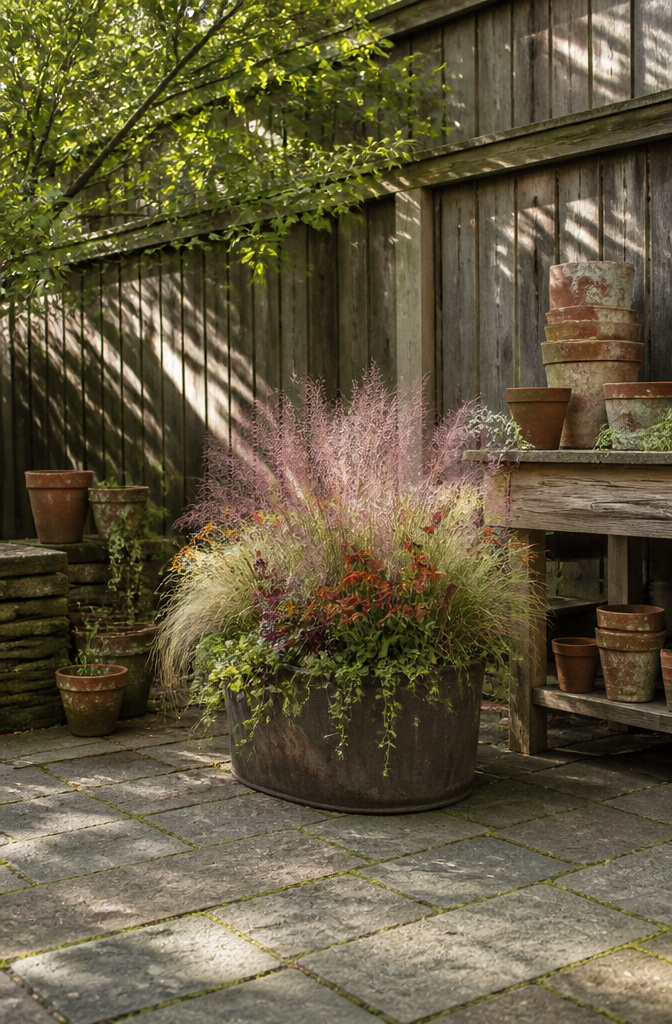
Ornamental grasses solve the height problem in fall container planters without asking for much in return. Muhly grass (Muhlenbergia dumosa) grows upright to about 3 feet and carries a soft, feathery texture that catches late-afternoon light. That vertical lift matters more than you might expect: a container with only low mounding plants reads flat from the street, but one tall grass at center-back pulls the eye upward and gives the whole arrangement a backbone.
Mexican feather grass (Stipa tenuissima) plays a different role at roughly 18 to 24 inches. Its wispy, blond foliage moves with even slight breeze, so the container keeps changing throughout the day. I would not use it as the sole height element; instead, it works threaded between bolder shapes, softening edges and adding motion that makes a static arrangement feel alive. In a two-pot setup, muhly grass owns the taller container while Mexican feather grass fills the shorter one, repeating the grass theme without competing for the same vertical space. The proportions stay balanced because each pot has its own job: one reaches, the other weaves.
Sedum for Drought-Tolerant Late Color
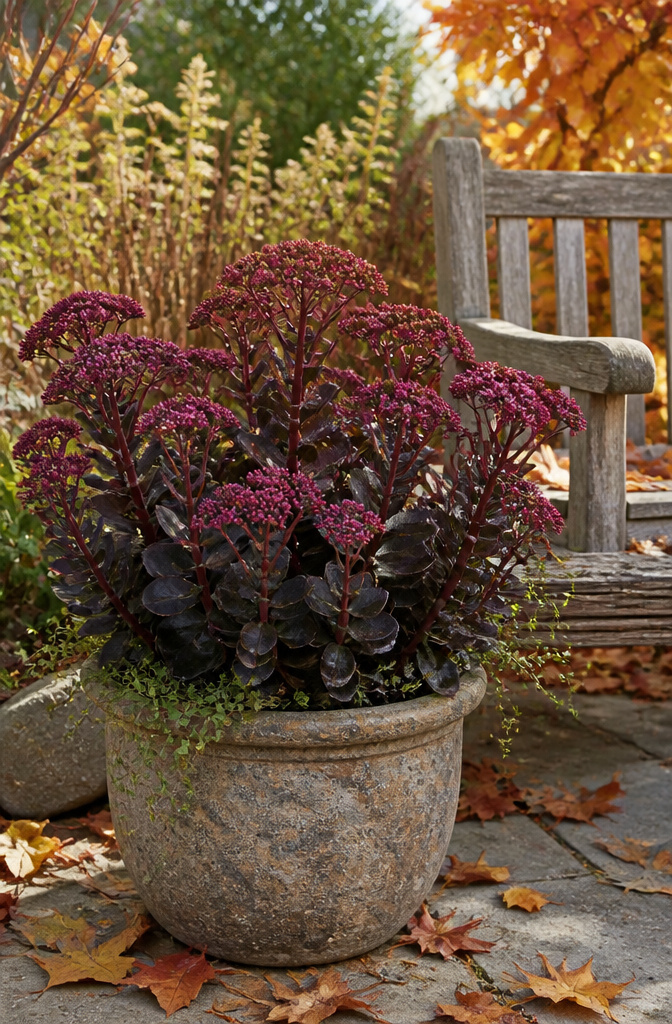
Sedum is the plant you add when you know you’ll forget to water. Its thick, succulent leaves store moisture the way a cactus does, which means it shrugs off the dry spells that turn mums crispy and send kale into sulk mode. That same waterwise habit makes it a natural fit for renters who travel on weekends or first-home owners still figuring out their hose schedule.
The catch is timing. Sedum looks presentable all season, but the color really arrives late, often not hitting peak until other fall container plants are already fading. The variety ‘Dark Magic’ runs this playbook perfectly: deep pink flower clusters open on short upright stems, but the show doesn’t get going until late summer stretches into true fall. The foliage reads almost black-purple before that, glossy and structural, so the pot still earns its place while you wait.
Up to 20 inches tall and 15 inches wide, it holds a middle layer in a mixed planter without flopping over the edge. Full sun keeps the stems sturdy; shade makes it stretch and lean. Zones 4 through 9 covers most of the country, though in a container it will need more winter protection than it would in the ground. Pair it with something that peaks earlier, so the pot doesn’t sit through September looking like it’s still warming up.
Asters for Pollinators and Late Blooms
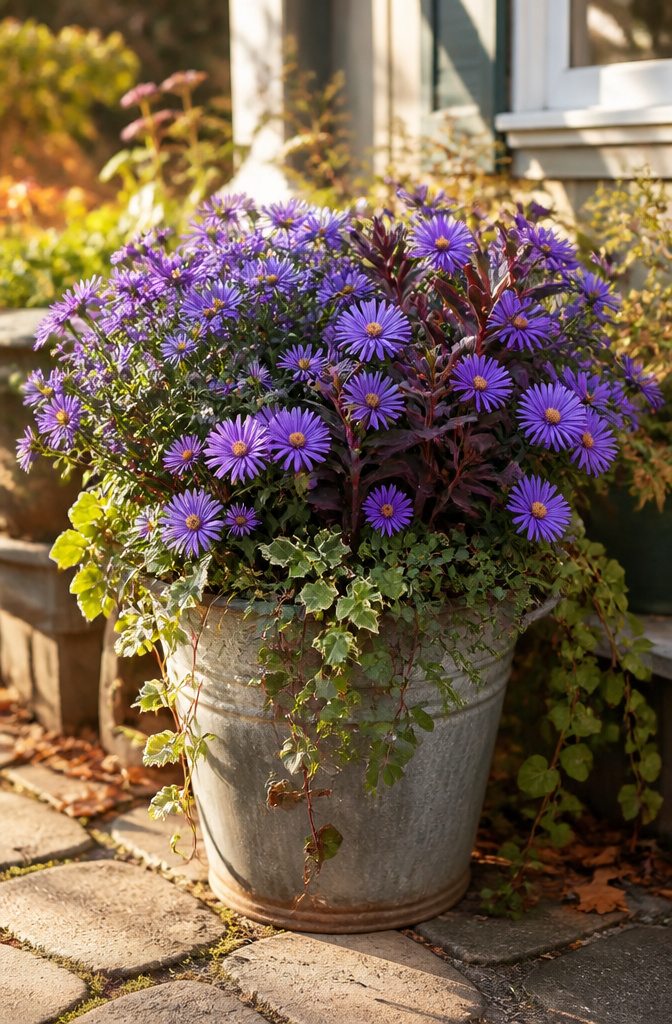
Asters carry a container straight through the weeks when most summer blooms have turned to papery heads. In my own reading, what keeps them in the conversation for fall container planters is the timing: they start once the September heat breaks and often go until a hard frost, which in most zones means a solid month or more of color when bees and butterflies are already stripping the last nectar from fading beds.
The pollinator piece matters more than the color, at least to me. By late September, monarchs are fueling for migration and native bees are provisioning final nests. Asters sit in that gap between spent summer perennials and the first hard freeze, offering flat, daisy-like landing pads loaded with small flowers that read as purple, blue, or white from a distance. The finegardening list places them in Zones 4–8, which covers most of the continental US outside the deep South and the coldest northern pockets.
Placement in a container wants sun, but asters also appreciate not drying to dust. The root ball is relatively shallow compared to a mum, so a pot at least 12 inches deep gives enough soil buffer to ride out a warm October afternoon without wilting. Pair them with something that carries the base: the glossy purple-black Sedum ‘Dark Magic’ mentioned in the Monrovia notes works here, since its flower clusters run on the same late-summer-to-fall schedule and the pollinators visit both. The sedum handles the drier edge of the pot; the aster takes the spot where you water more generously.
One limit: asters can get leggy if they were pinched back in June, and nursery pots in fall often skipped that step. Buy compact varieties or plan to stake with bamboo rather than hoping a tall aster rights itself in a breeze.
Golden Creeping Jenny as a Trailer
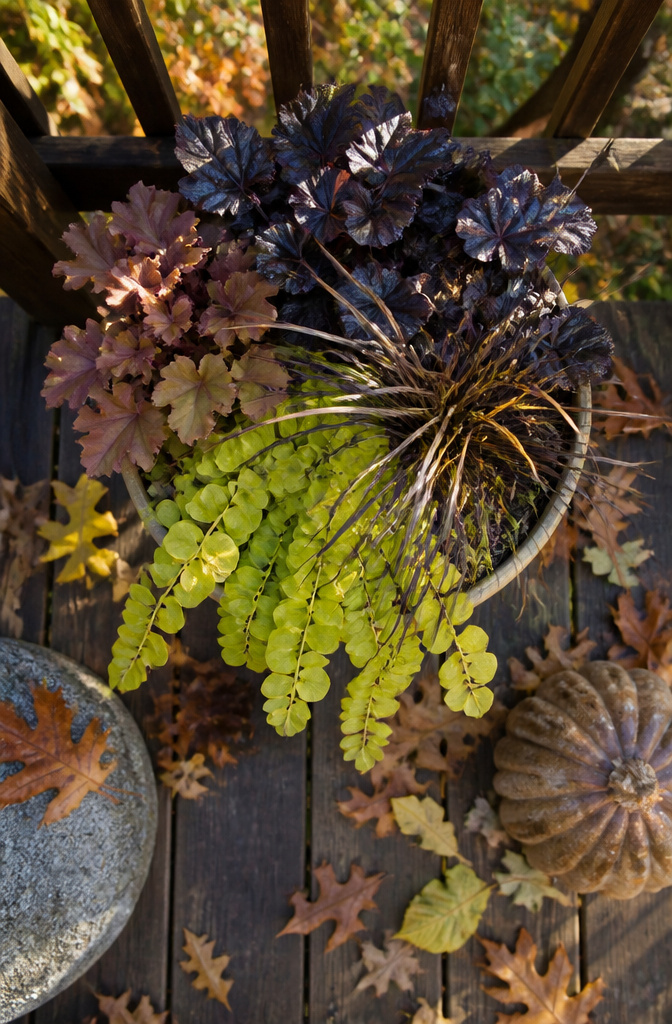
Golden creeping Jenny, Lysimachia nummularia ‘Aurea’, does something few trailers manage in a fall container: it reads as warm rather than merely green. The chartreuse leaves pick up the amber and copper tones in surrounding plants instead of cooling them down the way true green would. In a pot crowded with burgundy heuchera or burnt-orange mums, that slight yellow cast keeps the whole arrangement from turning muddy.
The stems spill about six to ten inches over the edge in a season, softening the rim without demanding its own spotlight. I treat it as filler that happens to drape, not as the main event. That modesty is useful, because it will not survive a hard freeze in the pot. In USDA zones 4 through 9 the roots may overwinter in ground plantings, but container soil freezes solid and thaws erratically, which usually finishes it. I plan on replacing it in spring, or at least not counting on its return.
For a renter’s weekend project, that disposability is almost a feature. You get eight to ten weeks of living fringe for the price of a four-inch pot, and you know exactly what you’re walking into.
Snapdragons for Vertical Accents
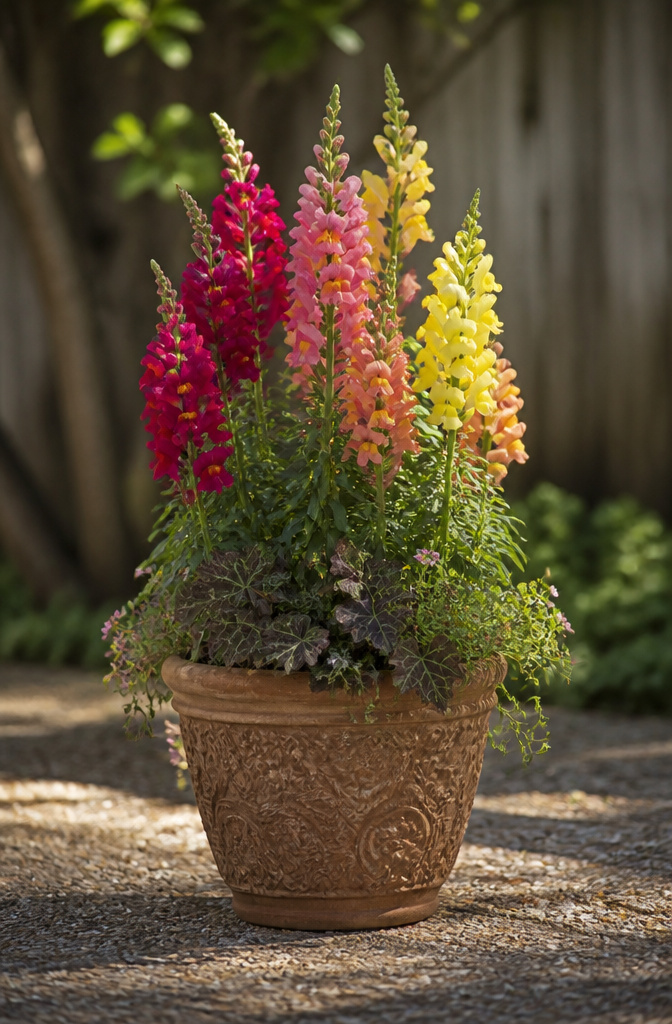
Snapdragons look exhausted by late August, but cool nights revive them for a second act that lasts well into October. The spiked form reads differently than the soft mounds of mums or the airy see-through quality of grasses; it draws the eye straight up and creates punctuation points in a container arrangement. I like them placed toward the center or back of a pot where their height rises above lower fillers without blocking what sits behind them.
The color range runs from deep burgundy and rusty orange to pale yellow and white, so they bridge autumn palettes cleanly. In my experience, the shorter varieties hold up better in wind than the tallest ones, which sometimes need a discreet stake after a hard rain. Deadheading keeps the spikes producing side branches rather than setting seed early.
Pair snapdragons with something rounded and low, a heuchera or trailing vine, so the vertical line has a contrast to push against. The combination reads as intentional rather than accidental, which is the difference between a container that looks finished and one that looks like a parking-lot assembly.
Dahlias for Late Drama
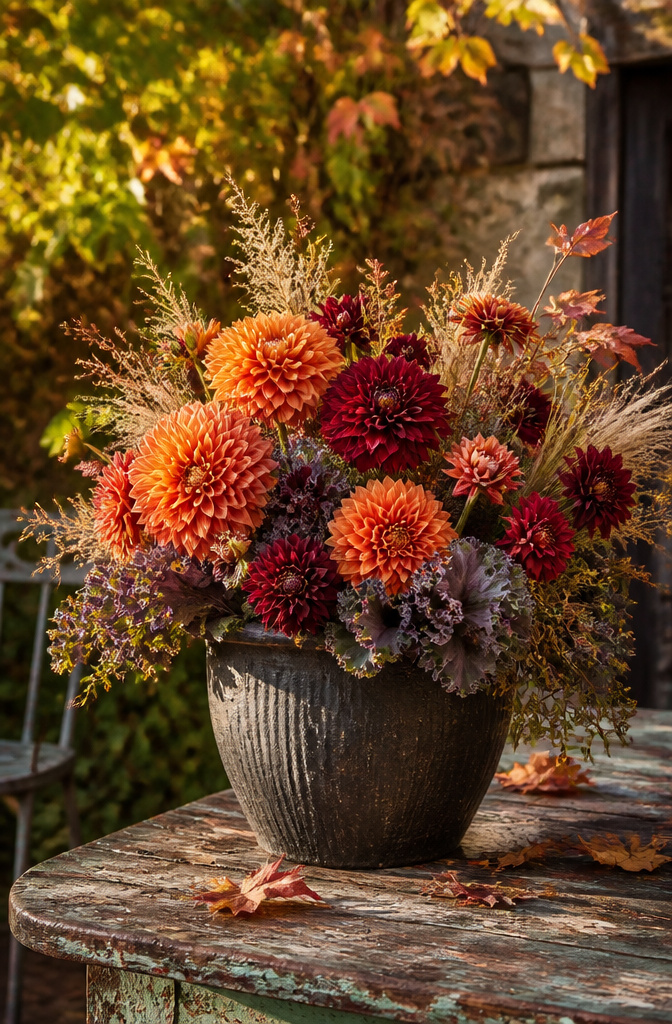
Dahlias carry the largest bloom a container will hold through September and often into October, which is exactly when most summer annuals have turned to seed heads and bare stems. The tubers are not cheap, and that cost stings harder when a hard freeze arrives mid-bloom and the open flowers turn to black slime overnight while the unopened buds harden into little stones. I have watched this happen twice.
The gamble is specific and geographic. In Zone 6 and colder, a September frost is not unusual; in Zone 7 and warmer, you might get clean through to November. The tuber investment only makes sense for a fall container if you are already growing dahlias in ground and can spare divisions, or if you treat the container as a one-season display and write off the tuber cost as entertainment. Digging them from a pot in late October, drying and storing them over winter, then replanting in spring is possible but adds a full weekend of work that most renters will not repeat. For a single autumn planter, a nursery-grown dahlia in a six-inch pot, planted in August while it still has time to root before the cold, gives the same late drama without the tuber arithmetic.
Hardiness Zones and What They Actually Mean
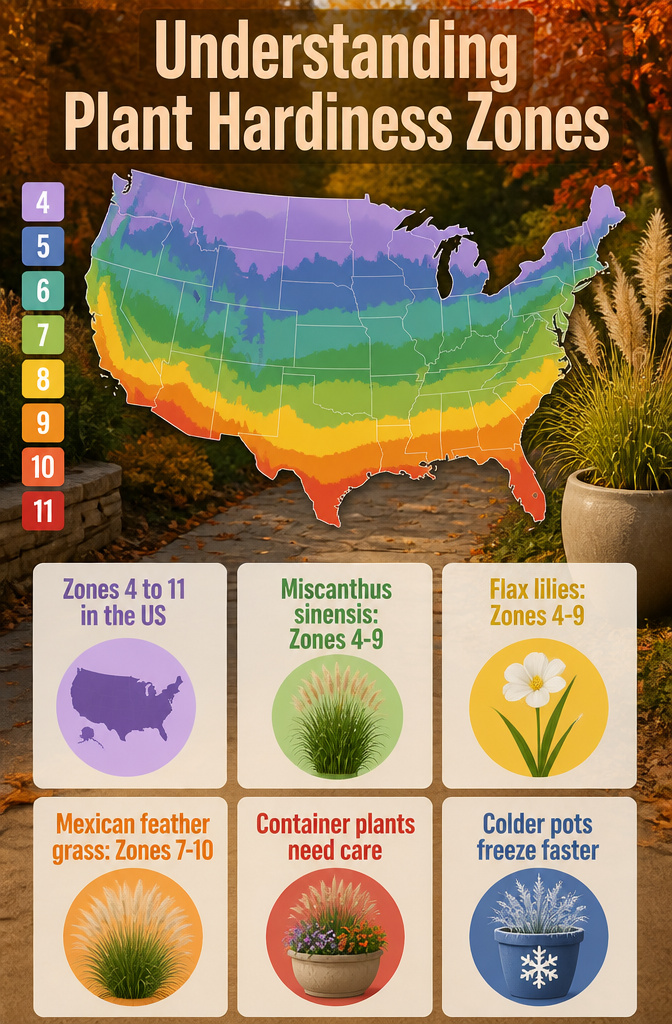
Plant hardiness zones run from 4 to 11 across the continental US, and those numbers decide which of the ten plants in this article will still be alive come November. Grasses like Miscanthus sinensis carry a zone 4–9 rating, which covers most of the country except the warmest southern edges where zone 10 and 11 gardeners live. Flax lilies stop at zone 9, ginger lilies and muhly grass start at 8, and Mexican feather grass sits in the 7–10 band. Container-grown plants face a zone colder than their tag suggests, because roots in a pot have no insulating earth around them and freeze faster than the same plant in ground soil. A grass rated to zone 4 in a garden bed may struggle in a planter once night temperatures drop below its threshold. That gap matters more the further north you are, and it is the detail that separates a container that lasts six weeks from one that collapses after the first hard frost.
Color Schemes That Read as Fall
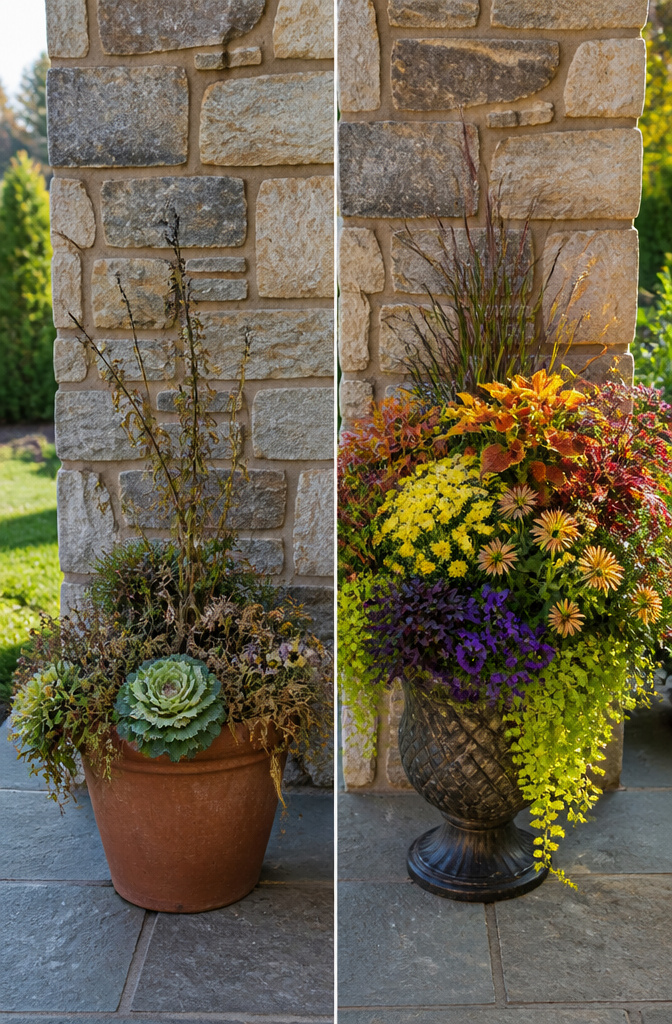
Purple, burgundy, orange, and yellow are the colors that read as fall in a container, but the ratio matters more than the individual plants. A photograph of a balanced mix usually shows about 40 percent purple, 30 percent orange, 20 percent yellow, and just a touch of burgundy. In an actual container on a porch, that same mix goes dark and muddy. The burgundy swallows the other colors once the sun drops below 45 degrees in the sky, which happens by mid-October in most zones.
What has worked in my own pots is closer to half yellow or orange, a third purple, and burgundy kept to accents only. One burgundy plant per 14-inch pot is the ceiling, not the starting point. Two Heuchera in that deep plum shade will make the whole arrangement read as brown from five feet back. I learned this the hard way with a pair of whiskey barrels in 2022 that looked rich in the nursery parking lot and like wet mulch on my steps by Halloween.
Orange carries further than the others, so it does the work of drawing the eye from a distance. Yellow brightens the soil line where shadows collect. Purple bridges them without demanding its own spotlight. Burgundy, used sparingly, gives the depth that makes the arrangement feel layered rather than flat. Skip it entirely and the container looks like a spring mix that got lost; add too much and fall turns to mud.
Arranging Height, Texture, and Color
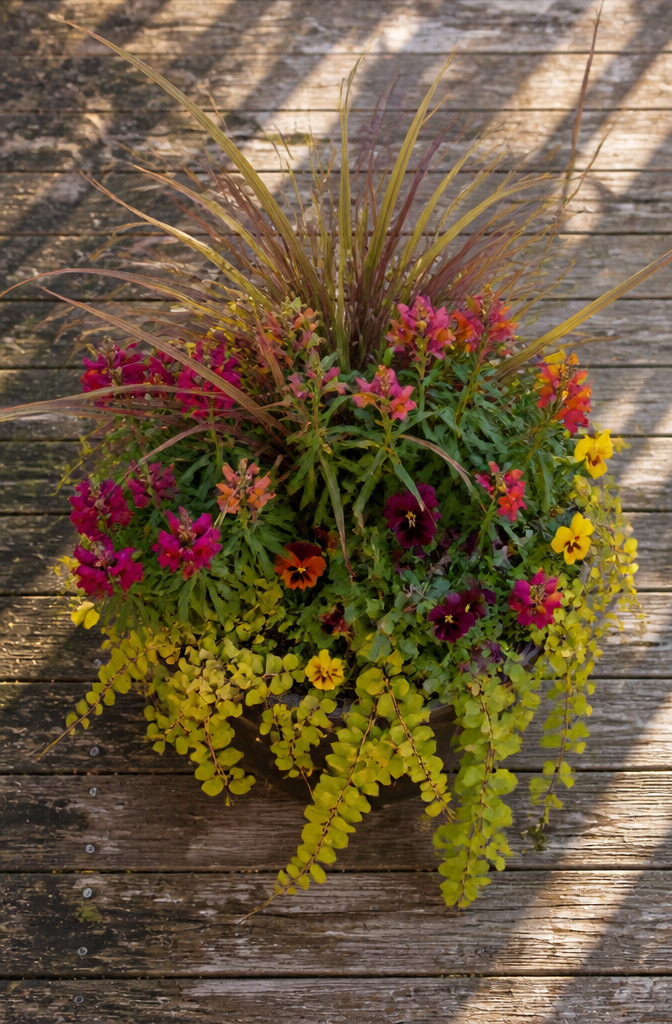
A fall container that reads as intentional usually comes down to three decisions made before the first plant goes in. The thriller-filler-spiller framework still works once temperatures drop, though the plants themselves behave differently than summer annuals.
Thriller grabs height and attention. In my own pots, grasses and the taller sedum varieties do this job without needing stakes. Ornamental kale can read as thriller too, but only the large, upright cultivars; the rounded ones sink back into filler territory unless you raise them on an overturned pot inside the container.
Filler occupies the middle zone and carries most of the color. Mums dominate here by default, though I have learned to place them slightly off-center rather than dead middle, which keeps the arrangement from looking too symmetrical and flat. Heuchera, asters, and the shorter snapdragon varieties fill the same layer with more staying power; mums fade first, so I treat them as the temporary pop and let the foliage plants hold the structure.
Spiller softens the edge. Golden creeping Jenny handles this in cool weather better than most trailing summer annuals, which is why it appears in nearly every fall container I build. Pansies can spill too if you let them trail over, though they read more as low filler when kept clipped.
The mistake I kept making was treating all ten plants as interchangeable across roles. Dahlias want thriller height but collapse without support; snapdragons give vertical line without the bulk of a grass. Knowing which plant lands where keeps the container from reading as a crowded grocery-store rack.
Watering and Fertilizing as Temperatures Drop
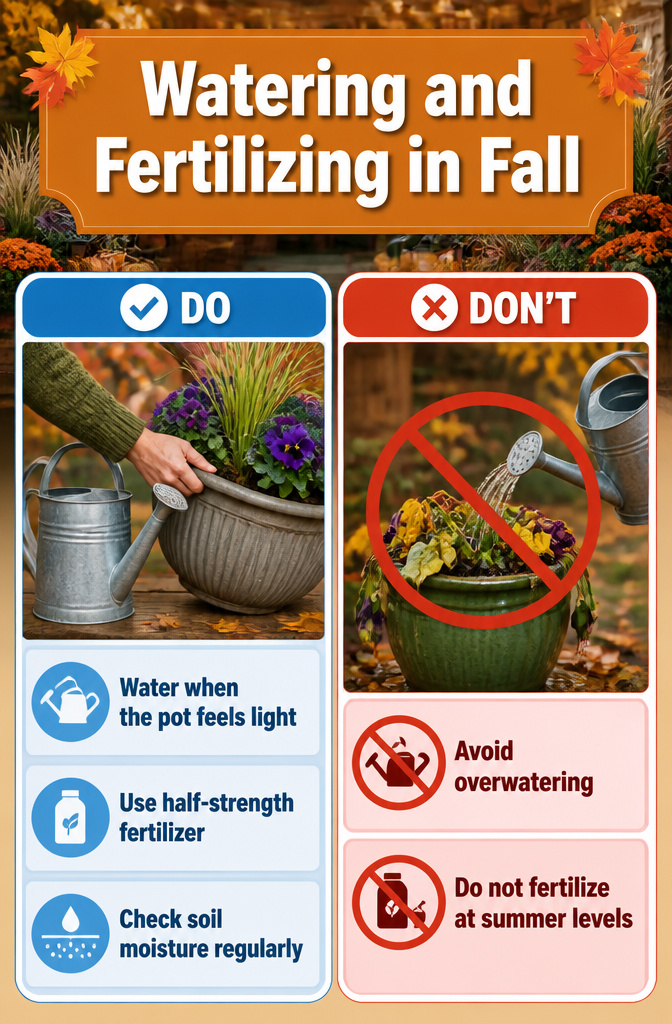
Cooler weather changes the rhythm of container care more than most people expect. The soil stays wet longer in fall, so the real test is the weight of the pot, not the calendar. A container that needed daily attention in August might now go several days between drinks. I lift the edge and water only when it feels light, which keeps roots from sitting soggy through a string of gray afternoons.
Balanced, water-soluble fertilizer still has a place in this slower season. Growth does not stop the moment nights turn chilly; kale keeps filling out, grasses push their last plumes, and pansies root in for the stretch toward frost. A half-strength feeding at planting, then again if the display runs into November, matches what the plants are actually doing rather than forcing summer levels on them.
Because the weather is cooler, the pots don’t need to be watered as often as summer pots do, so I get to spend more time sitting back and enjoying the bounty that fall has to offer.
That shift from maintenance to watching is the point. Less water, lighter feed, and the same container carries you from September color straight into December, when dried grasses and seed heads slip into winter arrangements if the snow holds off.
Frequently Asked Questions
What are the best plants for fall container gardening?
Heuchera, chrysanthemums, pansies, ornamental kale, grasses, sedum, asters, golden creeping Jenny, snapdragons, and dahlias all earn their place in fall container planters. Heuchera holds color through frost without a single bloom, mums anchor with classic autumn color for about six weeks, and pansies bridge from fall display into early winter. Each plant solves a specific problem: height from grasses, late drama from dahlias, movement from Mexican feather grass, and drought tolerance from sedum.
How do I care for my fall container plants?
Lift the edge of the pot and water only when it feels light, since soil stays wet longer in cool weather and soggy roots kill faster than dry ones. Feed once at planting with half-strength balanced water-soluble fertilizer, then again only if the display runs into November; growth slows but does not stop the moment nights turn chilly. Ornamental kale keeps filling out, grasses push last plumes, and pansies root in for the stretch toward frost, so match your inputs to that pace rather than forcing summer levels on them.
What colors should I use in my fall container planters?
Purple, orange, yellow, and burgundy read as fall, but keep the ratio to roughly half yellow or orange, a third purple, and burgundy at accent levels only. One burgundy plant per 14-inch pot is the ceiling; two heuchera in deep plum will make the whole arrangement read as brown from five feet back once the sun drops low by mid-October. Orange carries furthest, so it draws the eye from a distance; yellow brightens the soil line where shadows collect; purple bridges without demanding spotlight.