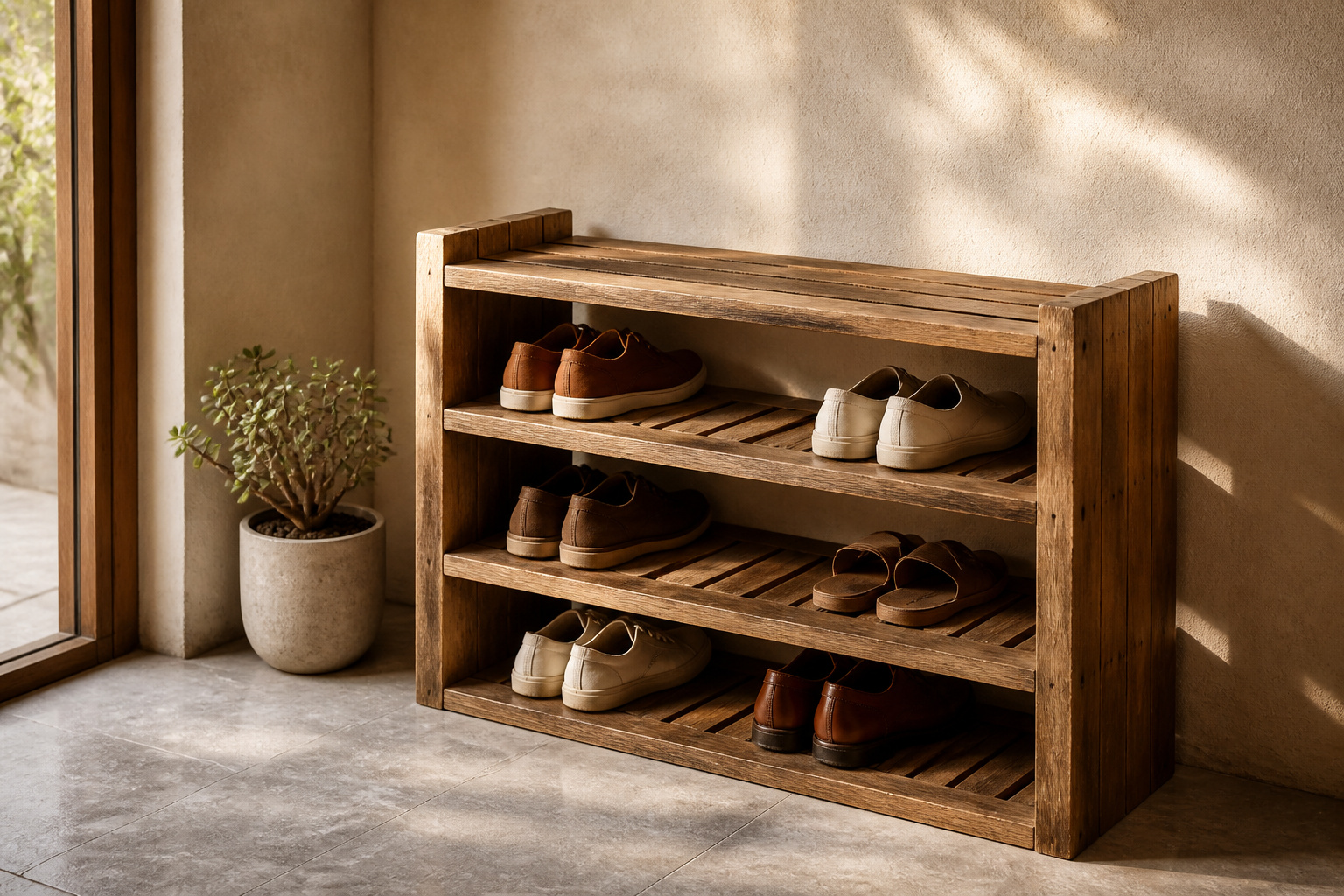
A wood shoe rack is a slatted or shelved frame that holds footwear in open view. The catch is the discipline it demands: every pair left out reads as clutter faster than anything else in a room.
Most designs run narrower than closed cabinets, about 15.7 inches deep, which is the difference between fitting an apartment hallway and blocking it.
Shoe Storage Cabinets
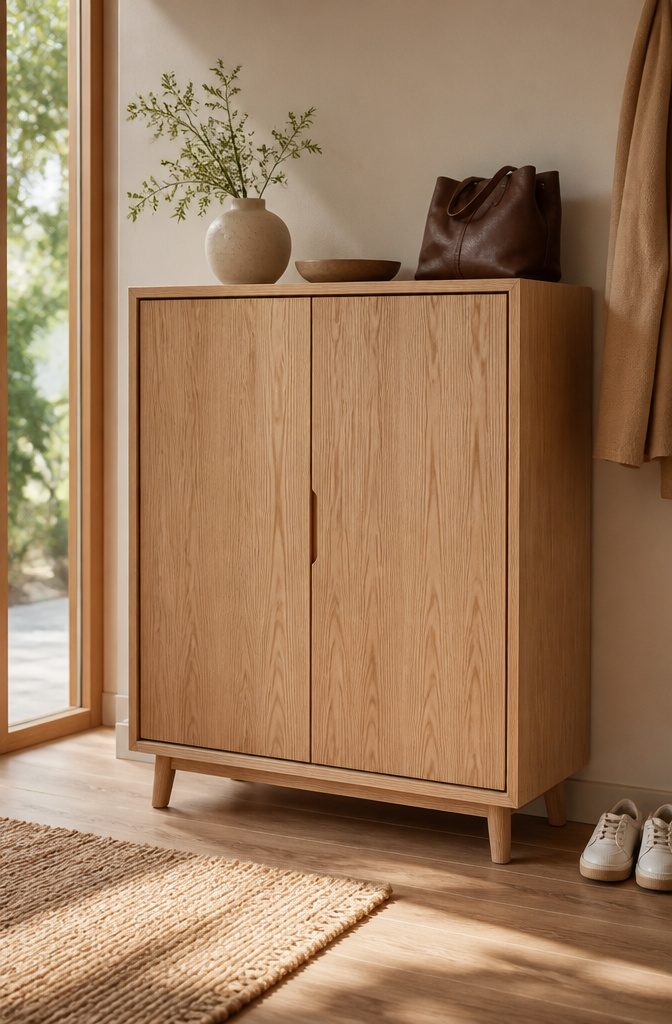
A cabinet with doors changes the whole feel of an entryway.
Shoes disappear behind panels, and the space reads as furniture rather than storage. The trade is a larger footprint and a higher price: the Sabina 48" Ash Wood Shoe Storage runs $1,219–$1,299, which puts it well past weekend-project territory for most renters.
Dimensions stay fairly consistent across this style, about 47–48 inches wide and 15.7 inches deep. That depth matters; it is slim enough for a hallway but still demands a wall with clearance for the door swing and your own path through.
Before choosing shoe storage, measure the wall near your front door and leave enough clearance for walking, door swings, and cabinet access. Hernest’s current designs are about 47–48 inches wide and 15.7 inches deep, making them better suited to hallways and entry areas where a deep wardrobe would feel bulky.
— Hernest
What this means in practice: a 48-inch cabinet wants at least 54 inches of wall, and you still need walking space in front.
I would not squeeze one into a landing narrower than 36 inches clear. If the hall is tight, open shelving or a bench with cubbies wins on footprint, though you lose the visual quiet.

Sturdy Construction: Say goodbye to flimsy, cheap shoe storage. Our entryway shoe cabinet, made of E0 MDF, provides solid construction that ensures your shoes won't wobble or fall and offers a hefty load capacity

Shoe Storage Capacity: Our two-door shoe cabinet can accommodate about 14 pairs of adult women's shoes and adult men's shoes (children shoes can store up to about 20 pairs), the maximum size of women's shoes is 16, and the maximum size of men's shoes is 15. If you need to accommodate larger boots we recommend removing the centre divider
Shoe Racks
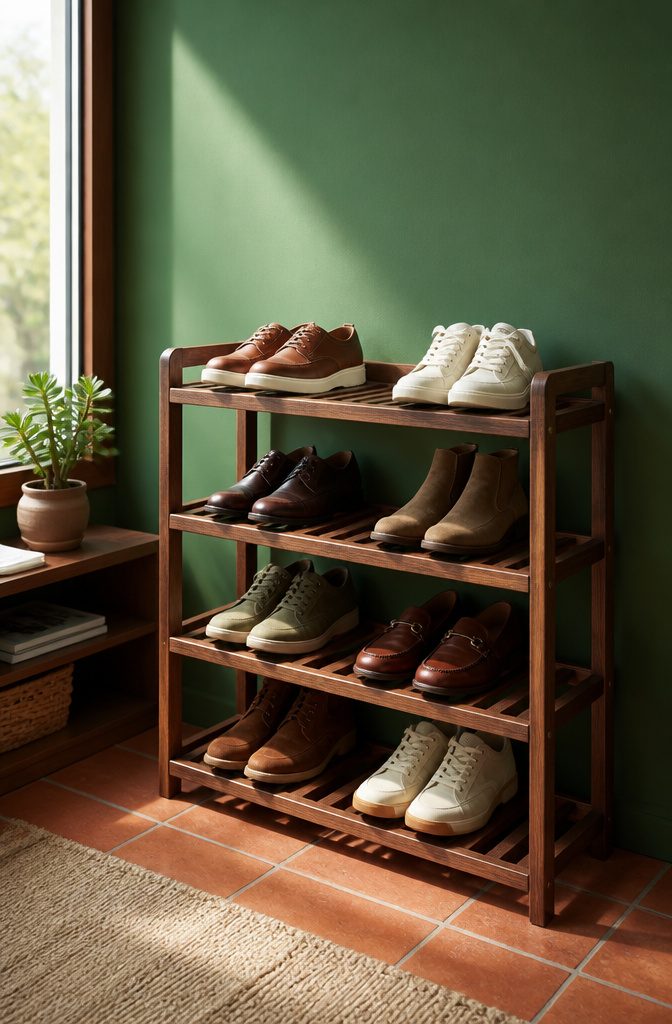
Open racks keep pairs at eye level and grab-ready, which matters on mornings when you are already late. The slats or dowels let air move through, so damp sneakers dry faster than they would in a box.
Most wood shoe rack designs run narrower front-to-back than cabinets, a difference that counts in apartment entryways where every inch of floor space is spoken for.
The catch is what you are choosing to look at. Shoes left out read as clutter faster than almost anything else in a room, and an open rack does not forgive a messy pile.
In my own place, the rack lives in a closet niche where the door frames it like a shallow shelf.
Out in the open, I would need the discipline to face every pair toe-out, or the tolerance to let them look lived-in.

【Distinctive Arched Fluted Design】The graceful arched accent and richly textured fluted panels give this shoe rack cabinet a distinctive, furniture-inspired look. Each flip drawer comes with a metal handle for easy access. Available in oak, black, gray, white, blue, and walnut, it complements various home styles. The enclosed front keeps shoe clutter out of sight, while the open-back design improves airflow and is intended for placement against a wall. The shoe organizer cabinet ideal for entryways, hallways, living rooms, or closets.

[Generous Storage Space]: Keep your room clutter-free with this compact shoe holder cabinet. It features 6 enclosed storage shelves plus a spacious countertop for keys, plants or decorative objects—never taking up too much of your valuable floor space. It’s ideal for apartments, small foyers or narrow hallways where floor space is limited.

Fashionable versatile design:Combining rural style with modern style, featuring elegant arc-shaped relief patterns, wood grain finishes, and metal decorations. Available in various surface treatments such as walnut, white, and black. Suitable for entrance halls, corridors, living rooms, and porches, it can easily blend into Scandinavian, modern minimalist or rural interior decorations.
Shoe Benches
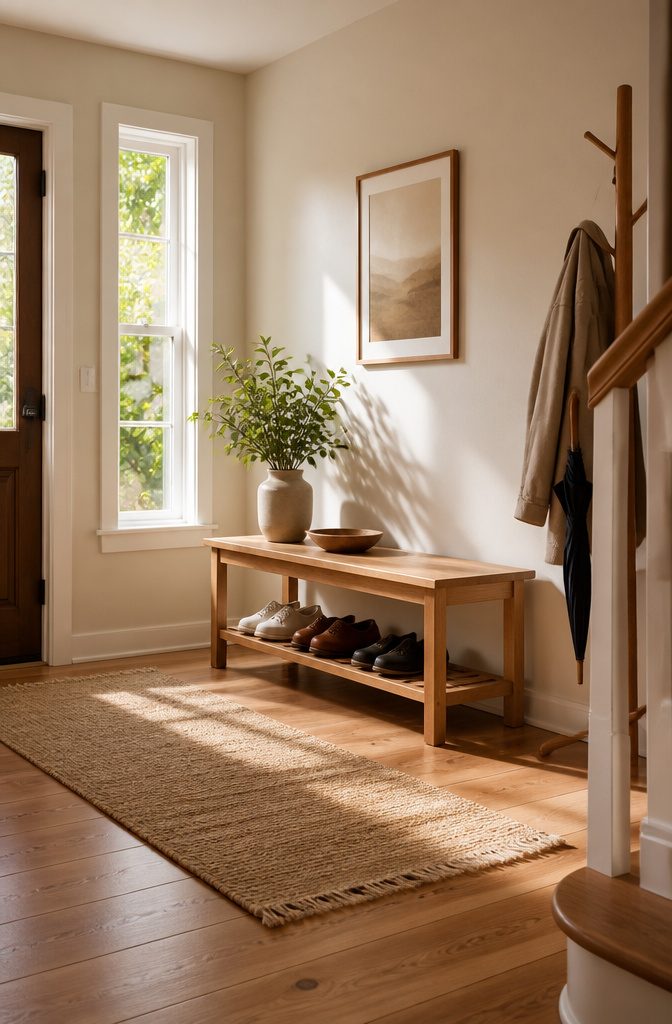
A shoe bench is the one piece that earns its floor space twice over.
The top gives you a place to sit while you wrestle off boots or lace up sneakers, and the cavity underneath holds the shoes you just took off.
In an entryway with no closet and no room for both a stool and a rack, that dual role matters.
The surface needs to feel finished enough for daily use. A smooth, sealed wood top wipes clean after wet coats or muddy paws, and a height around 18 inches lets most adults sit without dropping too low.
The storage below varies: some benches open like a chest, others use slatted shelves that let air circulate around damp shoes. Slats beat solid bins in humid climates, since trapped moisture turns wood musty over time.
For renters, the real advantage is replacement value. A bench that handles two jobs means one less piece to buy, move, or squeeze through a narrow doorway when the lease ends.
A wood shoe bench in a light oak or pine also reads as furniture first, storage second, which helps when the entryway opens straight into the living room and you would rather not greet guests with a wall of shoes.
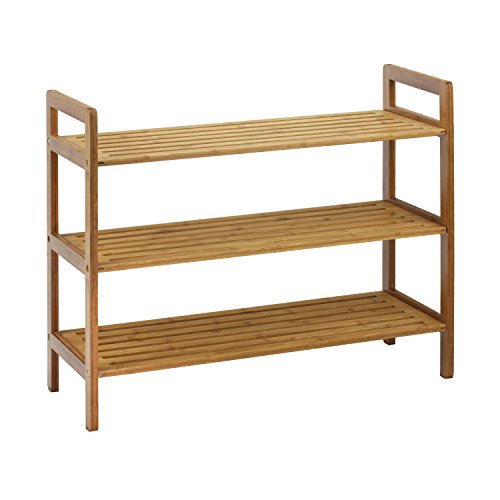
Can fit up to 9-12 pairs of adult sized shoes

【Preferred high-quality bamboo】The entryway shoe rack is made of eco-friendly bamboo for an elegant look and very durable. After high temperature carbonization,not easy to crack and deform. Due to the properties of bamboo, bamboo boards are stronger and last longer than wood. In addition, bamboo is a renewable resource and is naturally environmentally friendly.

☘✔️1.Shoe rack for closet is the desired destination for every pair of shoes, selecting high-quality 5-year alpine bamboo with a natural and fresh taste. The material is more durable and durable than ordinary ones, sturdy and not easy to crack, deform, and perform better, achieving meticulously crafted shoe racks
Oak and Ash Wood Types
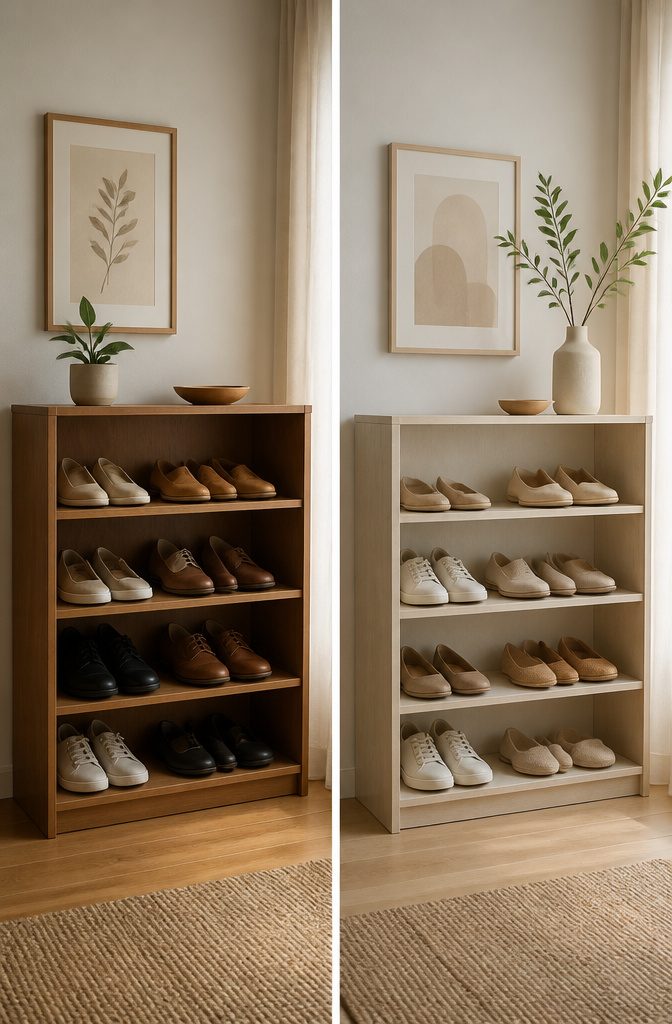
Oak reads heavier than it weighs. In a rental with beige carpet or honey-toned laminate, a warm brown oak shoe rack settles in like it was already there, grounding the entry without shouting for attention.
Natural ash wood takes the opposite path: paler, cleaner, almost Scandinavian in feel, and the better choice when your walls are white or gray and you want the storage to fade into the architecture rather than anchor it.
The practical difference shows up at the threshold. Oak plays well with mid-century lines and darker floors where you need the mass; ash keeps things airy in a compact entry that opens straight into the living room.
Both woods take stain if you change your mind later, but starting with the tone that already matches your flooring saves a weekend of sanding.
Coordinate any nearby cabinets in a similar tone and the shoe rack reads as furniture, not an organizer you settled for.
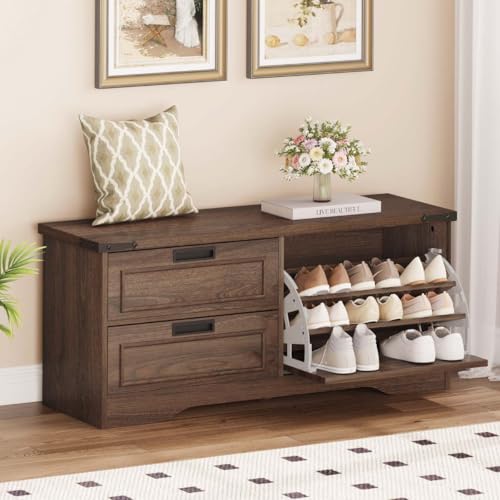
[Ample Storage Space & Multipurpose]: This storage bench for entryway designed with an adjustable flip door and 2 removable drawers, provides ample storage space while hiding clutter and keeping the room organized and neat. The adjustable shelf of the flip drawer allow you to easily store shoes of various sizes and the removable drawers can be used as drawers or storage shelves according to your needs

Stylish Fluted Shoe Storage Bench: Elevate your entryway decor with this modern shoe bench featuring a unique fluted door and a warm, natural oak finish. Its sleek, modern silhouette adds a touch of sophisticated elegance to any space. Perfectly suited for entryways, living rooms or bedrooms, this bench seamlessly blends functional storage with contemporary aesthetic appeal
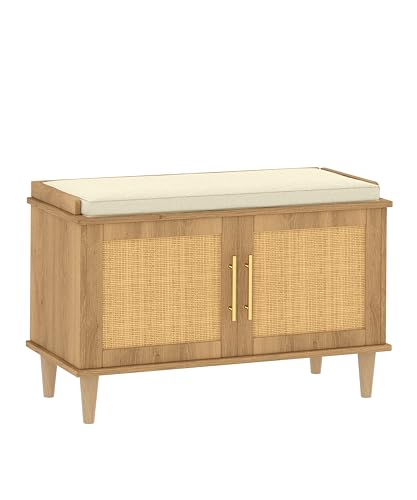
Flexible Storage: The shoe bench features an adjustable middle shelf with three height options (3.9", 6.3", and 11.8"), ensuring that high heels, mid-calf boots, and sneakers all fit neatly without crowding. Additionally, the two-door design provides ample storage space to accommodate 4-8 pairs of shoes, keeping your entryway organized
Measuring Your Space
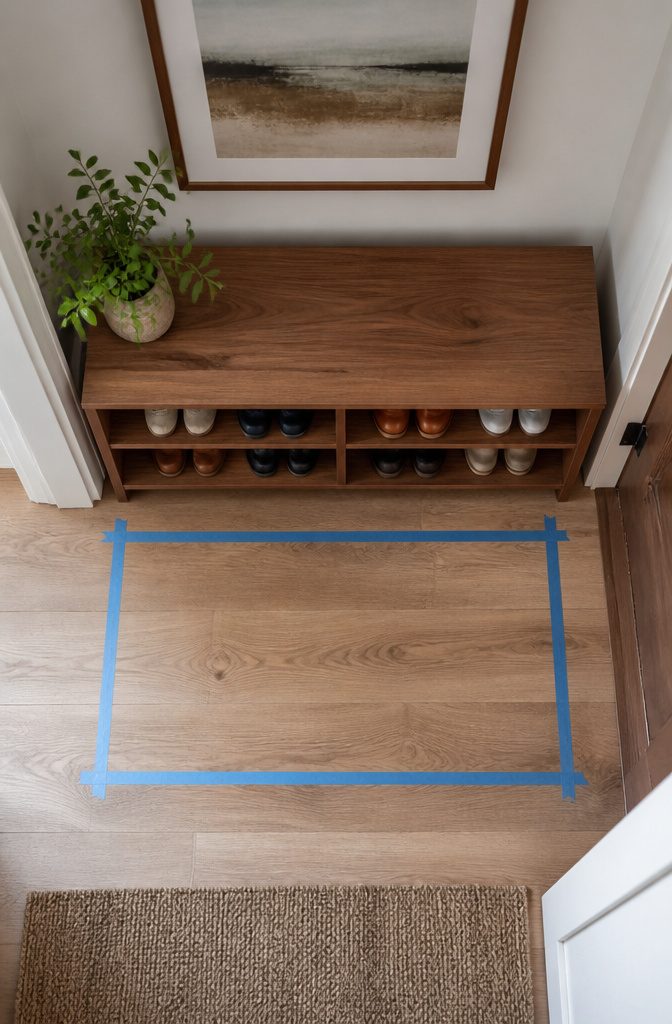
A wood shoe rack that looks right in the photo and blocks your door in real life is a mistake you pay for twice. I learned to pull out the tape measure before pulling out the credit card.
The 47–48 inch width and 15.7 inch depth that work for narrow hallways come from the same constraint: you need to move through the space after the rack is in it.
That depth leaves enough floor for a natural stride; anything deeper and you are sidestepping around your own shoes. The width fills a standard hallway wall without crowding the door frame.
Door swing is the measurement most people skip.
Stand where the door opens and mark the arc. The rack needs to sit clear of that sweep, plus about a foot of buffer for traffic passing someone who has stopped to tie a shoe.
If your entry is a straight shot from the living room, traffic flow matters more than wall length; a full-width rack becomes a bottleneck when two people leave at the same time.
I mark the wall with painter’s tape in the exact footprint before I buy. Walking through the taped box for a morning tells me whether I am solving storage or creating an obstacle.

SPACIOUS & FLEXIBLE STORAGE: This 10-tier shoe storage measures 17.5"x12.4"x69.3", providing ample space for up to 20 pairs of shoes. You can easily remove shelves to make room for taller boots, or take off the cover and rearrange the rack into separate sections. Customize the setup to fit your space and shoe collection.

Space-Saving Shoe Organizer Bench: Our entryway shoe bench with a size of 32.3"L x 12.4"W x 18.3"H takes up very little space, but it can perfectly organize your messy corridor. The flip-open storage box and adjustable shelf provide ample space for your shoes, hats, gloves, and other items

【Expand to Fit Your Space】 Adjustable from 17.5" to 30.7", this expandable shoe rack adapts to closets, entryways, apartments, closets and small spaces. Keep it compact to save floor space or extend it whenever you need extra shoe storage.
Adjustable Shelves
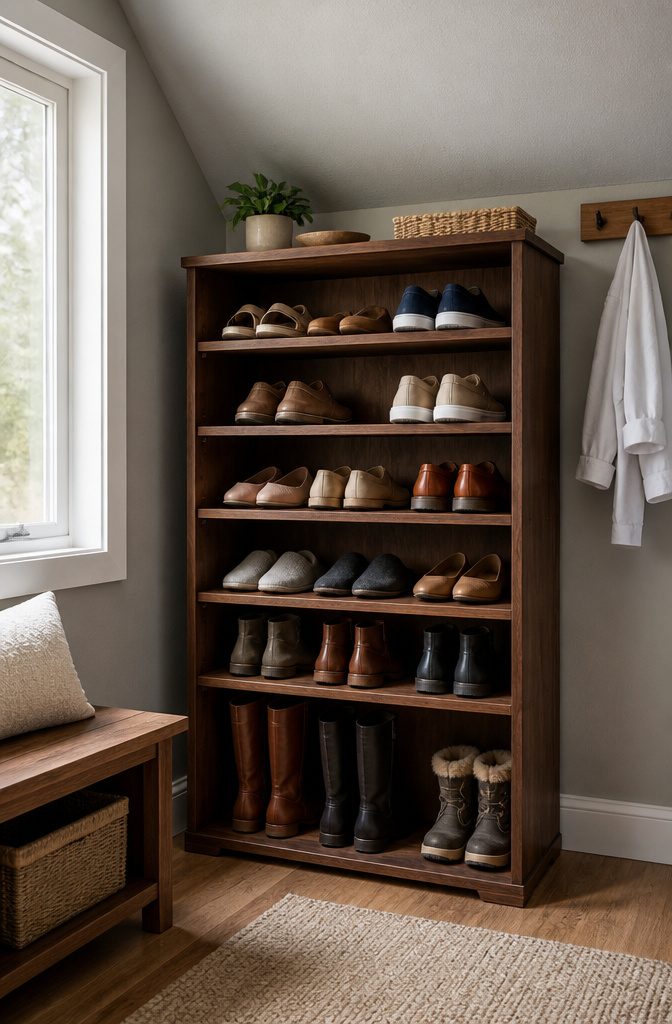
A fixed-shelf wood shoe rack looks tidy until you try to stand a pair of boots in it and the shaft folds against the shelf above.
Adjustable shelves fix this by letting you set the height where you need it: three to four inches of clearance for flats and sandals, five to six for sneakers and low boots, eight or more for taller styles.
The difference in usable storage is immediate.
In a cabinet-style piece, that flexibility also means you can reconfigure the interior as seasons change, dropping a shelf out entirely when winter boots come in or raising one to fit a stack of shoe boxes you want to keep.
The 47–48 inch widths common in entryway designs give enough run to group by type, and a slim 15.7 inch depth keeps the whole unit from blocking narrow hallways.
What convinced me, reading through a dozen of these setups, is that the people who actually maintain them long-term treat the adjustability as something they use twice a year, not once and done.

Sturdy Construction: Say goodbye to flimsy, cheap shoe storage. Our entryway shoe cabinet, made of E0 MDF, provides solid construction that ensures your shoes won't wobble or fall and offers a hefty load capacity

Durable And Simple Vertical Shoe Cabinet: This skinny shoe rack is ultra-slim and fits perfectly in narrow entryways, hallways, foyers or porches—total space saver for your home. It keeps your shoes hidden and your entry neat, no more messy shoe piles cluttering up your living space. With its modern minimalist look, it complements all home decor styles seamlessly.

【Large Capacity Jewelry Armoire】As a jewelry organizer can hold all of your jewelry and make it easily visible and accessible even for cosmetics. With 120 earring slots, 36 earring holes, 98 ring slots, 36 necklace hooks, 5 storage shelves, 2 drawers, bracelet rod and pouch for cosmetic brush.
Frequently Asked Questions
What is the best type of shoe storage for an entryway?
A cabinet with doors works best when you want shoes hidden and the space to read as furniture.
Open racks suit tight spaces and quick morning exits but show every pair. A bench earns its spot twice over by giving you a seat plus storage underneath, which matters in entryways with no closet.
Why choose a wood shoe storage cabinet?
Wood brings the warmth and presence of real furniture rather than looking utilitarian. Oak settles into homes with beige carpet or honey laminate, while paler ash fades into white or gray walls.
Both woods take stain later if you change your mind, though matching your existing flooring from the start saves a weekend of sanding.
Is a shoe cabinet with doors better than open shoe storage?
It depends on what you are trading. Doors hide clutter and keep the entry visually quiet, but the footprint runs larger and prices climb past weekend-project range.
Open racks dry damp sneakers faster and fit narrower halls, though they demand discipline to keep pairs tidy or the tolerance to let them look lived-in.
How do adjustable shelves help with shoe storage?
They let you set clearance where you need it: three to four inches for flats, five to six for sneakers, eight or more for boots.
The people who maintain these long-term reconfigure twice a year, dropping a shelf for winter boots or raising one to fit shoe boxes. Fixed shelves look tidy until a boot shaft folds against the shelf above.
Where can I place a shoe storage cabinet?
Near the front door, in hallways, or in mudrooms where it creates a polished landing zone without overwhelming the walkway.
Keep it clear of the door’s swing arc plus about a foot of buffer for traffic. I would not squeeze a 48-inch cabinet into a landing narrower than 36 inches clear.
What size shoe storage cabinet should I choose?
For narrow hallways, look to the 47–48 inch width and 15.7 inch depth that let you move naturally past the unit. That depth leaves enough floor for a full stride; anything deeper and you are sidestepping your own shoes.
Before buying, mark the footprint with painter’s tape and walk through it for a morning to see if you are solving storage or creating an obstacle.