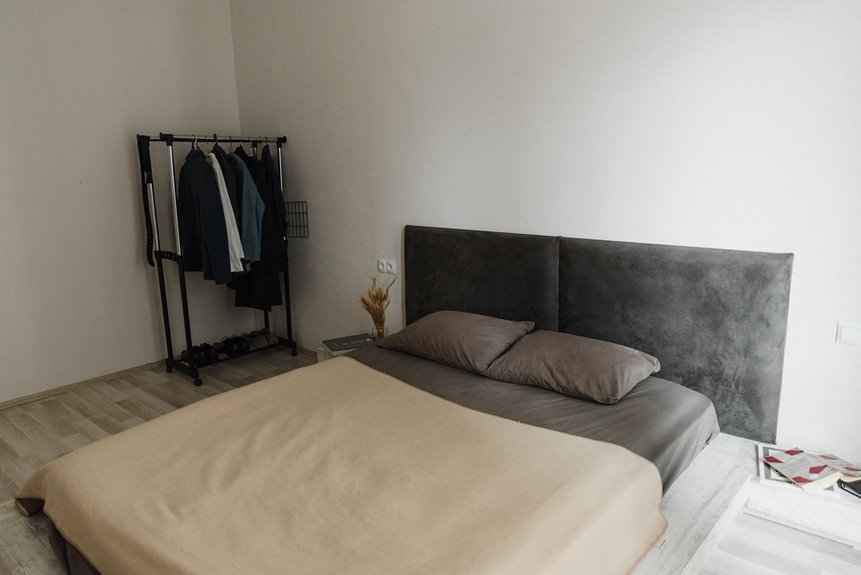
I’ll reorient your bed against a different wall to reclaim floor space and improve traffic flow.
I’ll replace bulky dressers with storage beds featuring integrated drawers or under-bed compartments.
I’ll install floating shelves and wall-mounted nightstands to build vertical storage without sacrificing square footage.
I’ll consider loft or platform frames to create usable space underneath for work or storage.
I’ll add mirrors opposite windows and choose light materials to visually expand the room.
Each strategy offers measurable spatial gains you’ll explore further below.
Start With Layout: Rotate Your Bed to Reclaim Floor Space
The simplest way to open up a cramped bedroom is often the one you haven’t tried yet.
A simple bed rotation transforms tight spaces. By pivoting your bed to a different wall, you reclaim floor space and redirect traffic flow around, not through, your sleeping area.
Why Rotation Works
- Creates open pathways that make rooms feel larger
- Reveals under-bed storage previously blocked by placement
- Improves natural light distribution throughout the space
- Accommodates low-profile storage without blocking windows
Execution Guidelines
Position your headboard against an alternative wall. Maintain 24–30 inches of clearance on all sides for comfortable movement and storage access. Test different orientations to locate built-in nooks or optimize existing features.
This layout shift costs nothing and delivers immediate spatial benefits. It establishes the foundation for additional space-saving strategies.

Hold Up to 66lbs: Yecaye under bed storage with wheels is made of high quality 300D PU fabric and sturdy metal frame, can hold up to 66 lbs, stronger than other fragile metal mesh, spacious capacity perfect for storing clothes, toys, books, shoes and other heavy items also won't compromise stability and durability

Large Capacity: This under bed storage bag measures 39.4"(100cm) x 19.7"(50cm) x 7.1"(18cm) and has a capacity of 95L which can easily hold 20 sweaters, 4 thick blankets and 14 sheets. Ideal for under-bed storage, closet or shelves.

80L Expandable Larger Capacity : Under the bed storage with dimensions 31.5 x 15.75 x 9.45 inches (with wheels), height adjustable from 9.45" to 11.02" to fit most bed frames. Perfect for storing clothing, shoe, bedding, pillow, towel, and seasonal decor like wrapping paper, Christmas and Halloween supplies. Slides smoothly under bed, couch, closet and table to maximize unused space
Choose Storage Beds That Replace Bulky Dressers
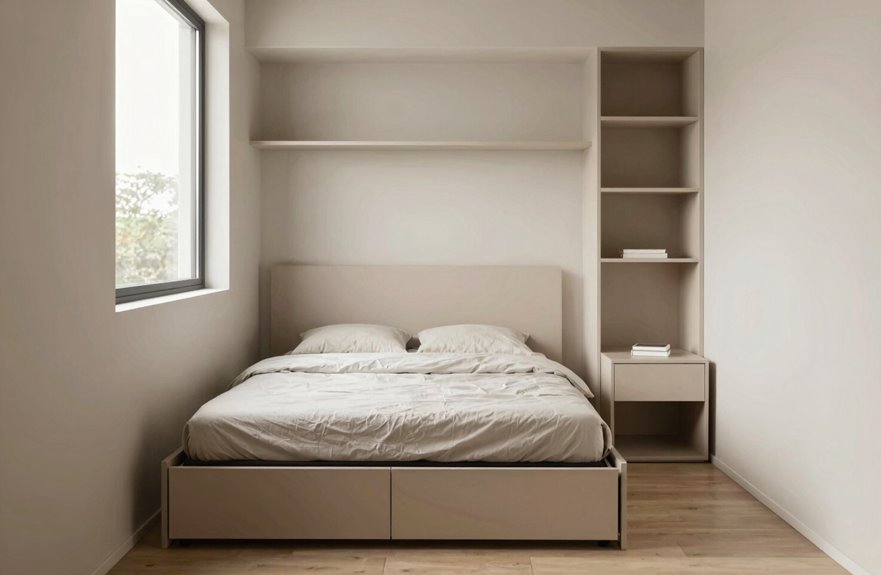
One transformation that changed how I approach small bedrooms involves swapping traditional dressers for beds with built-in storage. A storage bed fundamentally reclaims floor space while maintaining full functionality.
Why Storage Beds Work
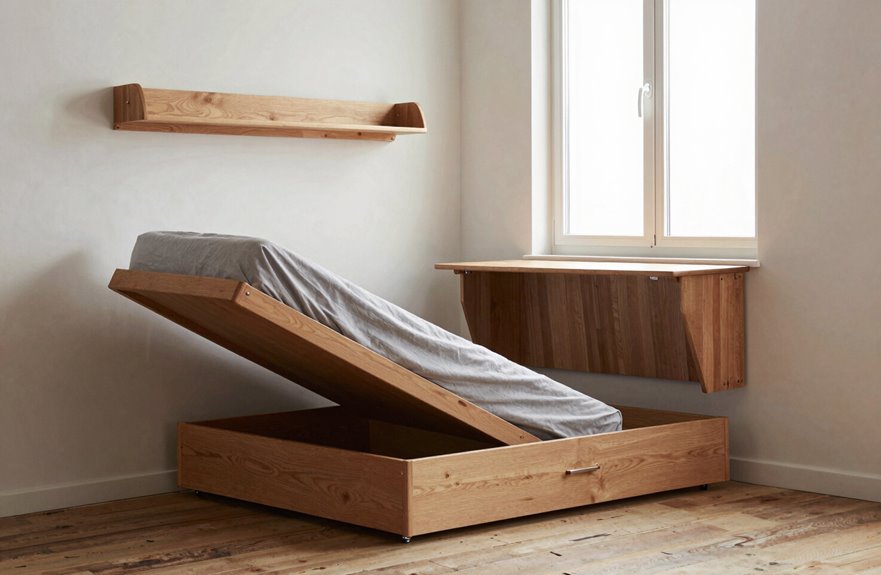
A storage bed combines sleeping space with integrated drawers, shelves, or cabinetry. This eliminates separate furniture pieces that clutter tight layouts. Under-bed drawers or trundle configurations substantially increase capacity without compromising sleeping area.
Built-In Storage Options
Built-in storage surrounding the bed includes vertical cabinetry and slim shelving units. These use wall-adjacent surfaces efficiently. Select frames with integrated lighting, which illuminates storage zones while keeping bedside surfaces clear.
Implementation Strategy
- Measure your space before selecting frame dimensions
- Choose drawer configurations matching your storage needs
- Prioritize cohesive finishes for streamlined appearance
This approach delivers organized, compact bedrooms where every element serves dual purpose.

【Space-Saving Design】This floating nightstand set features a modern wall-mounted design to free up floor space. With 11.42"D x 15.75"W x 11.42"H. The minimalist style complements any bedroom, living room, or entryway.It can serve as a nightstand, a side table, or a small display shelf to showcase your favorite items.

Modern & Elegant: Featuring a delightful black wood finish and geometric X - shaped side, this wall mounted nightstand serves as a modern art piece, seamlessly blending with various decor styles. Perfect for organizing and enhancing the vintage aesthetic of your space
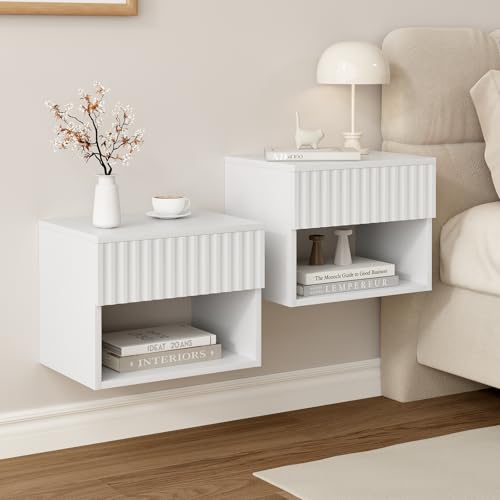
【Wall-Mounted & Space-Saving Design】: Designed as a sleek floating nightstand set of 2, these wall mounted night stands keep your essentials within reach while freeing up valuable floor space. Ideal for small bedrooms, apartments, and tight spaces, they work beautifully as bedroom nightstands, small end tables, or modern living room end tables without making the room feel crowded.
Build Vertical Storage With Wall-Mounted Shelves and Nightstands
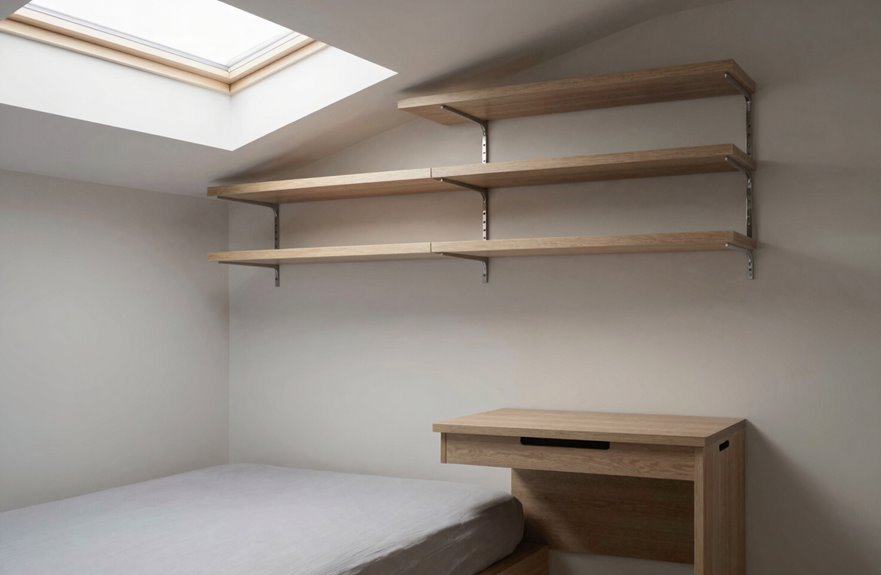
How do you reclaim floor space when every square inch counts? Build upward with wall-mounted shelves and nightstands that transform empty walls into functional storage zones.
Install Floating Shelves at Varying Heights
Stagger shelves between 12 and 24 inches apart to display books, plants, and personal items. This maintains an open, uncluttered aesthetic while keeping essentials accessible. Align them with windows or door frames to preserve visual flow.
Choose Wall-Mounted Nightstands
Replace floor-hugging bedside tables with compact wall-mounted nightstands featuring integrated lighting. These units free valuable floor area while providing surface space for phones and reading materials.
Create Flexible Configurations
Pair slim vertical storage with fold-away bed options, allowing the room to serve multiple purposes throughout the day. Staggered placement prevents visual heaviness and maximizes perceived spaciousness.

Well-designed Floating Shelves: Our white floating shelves for wall are made of MDF Laminate. These wall shelves can organize daily sundries to tidy your space, display your art pieces on the wall to decorate your home, and make it full of aesthetic flare.

[Small Floating Shelves] - Set of 4 small wall shelves with 2 types of installation: up or down, each small shelf size is 5"L x 5"D x 1.57"H.

Lightweight And Durable: Made of high-strength aluminum alloy, it is both light and stable
Free Up Square Footage With Loft and Platform Frames
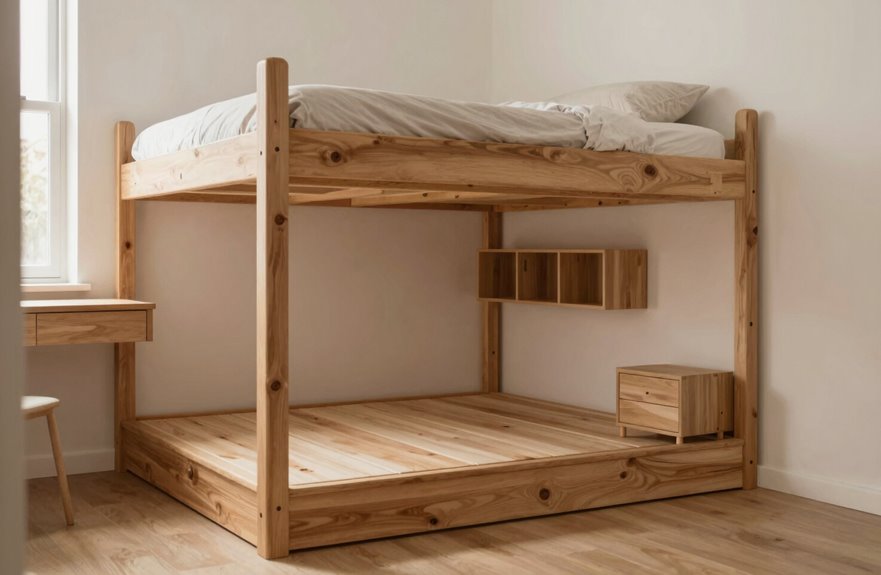
When floor space runs short, elevating your sleeping area transforms the entire footprint of a small bedroom. A loft bed creates valuable real estate underneath for storage solutions, work surfaces, or seating without expanding walls.
Consider these practical options:
- King Loft Bed with Stairs: This design supports adult weight while providing easy access and substantial under-bed storage.
- Platform Frames with Built-Ins: Integrated shelving eliminates additional furniture needs.
- Vertical Priorities: Select frames with light visual weight and sturdy ladders or stairs for safety.
Measure ceiling height first, then plan your under-bed zone. A lofted king-size bed can establish distinct living and sleeping areas in one compact room. Evaluate your daily routines to determine whether desk space, wardrobe storage, or a reading nook serves you best beneath the frame.

【Killer Workspace for Homework & Gaming】This twin loft bed features an 75.6"x41" L shaped gaming desk with hutch, shelves & drawers. The acrylic-front cabinet is for your coolest collectibles. A built-in pegboard and a grid panal are to hang stuff and make full use of vertical space. 5 s-clips come with your package. 3 storage drawers (2 medium + 1 deep) are designed for organizing by zone: school stuff, gaming gear and more

【Multifunction Loft Bed】 Multi-functional loft bed comes with 6 large fabric drawers, U-shaped desk, 2 open shelves,long pegboard with 5 hooks and a charger,combining multiple functions into one compact, space-saving unit maximizes the use of small spaces,optimizing the utilization of under-bed space,enhances utility and convenience,Perfect for teens/adults in compact spaces

【Sun-Inspired Design】This twin loft bed features a vibrant sun-shaped motif, symbolizing energy and positivity. Available in black with vintage brown and white with oak color, perfect for creating a bright and cheerful bedroom atmosphere.
Use Mirrors and Light Materials to Double Visual Space
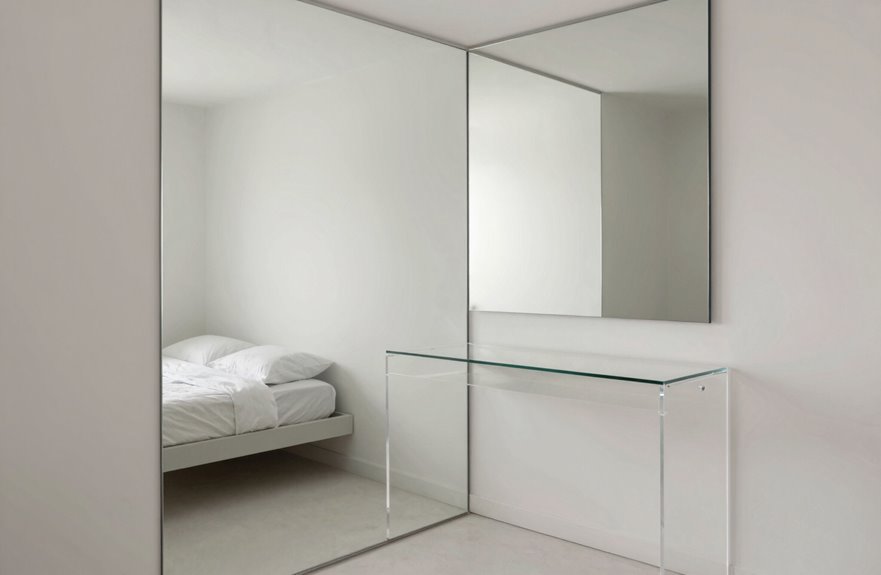
Where should you place a mirror to make your bedroom feel twice its size? Position mirrors opposite a window or beside the bed. This placement reflects natural light and creates depth that visually expands the room.
Position mirrors opposite windows or beside beds to double your bedroom’s perceived size through reflected light and depth.
Strategic Mirror Placement
- Opposite windows: captures and redistributes daylight
- Near beds: doubles perceived floor space through reflection
Material and Color Choices
Select light, airy materials to reduce visual weight. Linen sheers, wood slats, and sparse metal furniture keep the space open. Light-colored walls amplify this effect. Soft hues like muted pink or pale gray reflect more light than dark shades.
Lighting and Furniture
Layered lighting with slim sconces expands space without bulk. Pair these with low-profile, wall-mounted pieces that preserve clear floor area. Mirrors combined with light materials transform cramped quarters into breathable retreats.


Perfect Size: Measuring 24''L×1''W×34''H, this farmhouse accent mirror is the perfect size for any room in your home
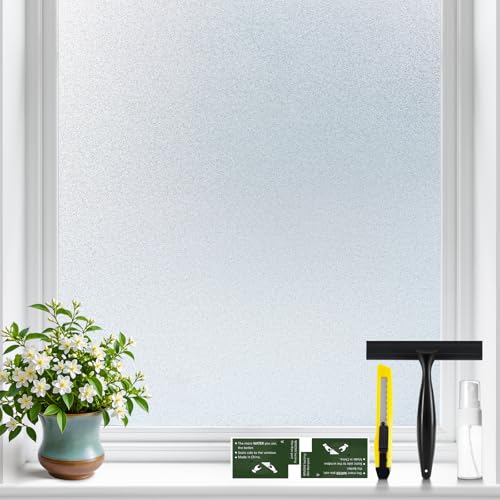
Frosted Privacy from Either Side: This is not a one-way mirror film. The translucent matte finish softens views from both sides at normal viewing distances while still allowing daylight through. At close range, outlines may remain visible, and privacy can vary with lighting.