
A small bedroom dressing table can range from a wall-mounted floating surface with nothing underneath to a tallboy vanity that stacks storage vertically instead of spreading it sideways.
The choice depends on whether you need the table to hold its own storage or whether you have somewhere else to keep products and tools.
A flip-top mirror with hidden compartments suits the first situation, while a bare floating table paired with under-bed storage handles the second.
The compact designs here stay narrow enough to tuck into corners, alcoves, and beside beds without taking over the room.
1. Storage Mirror
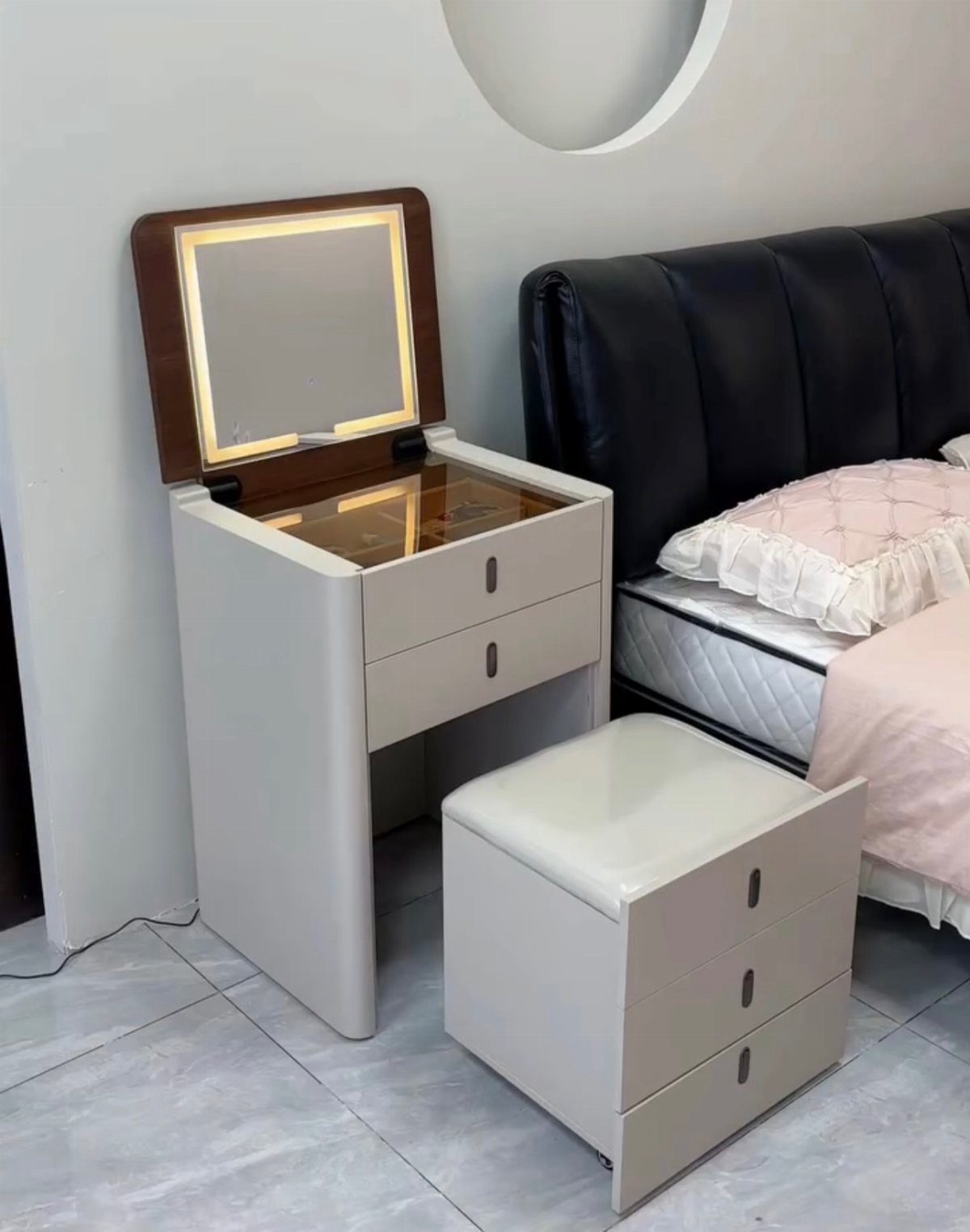
A dressing table with built-in storage behind or below the mirror cuts down on extra furniture.
The flip-top version here hides compartments under the mirror when it closes, keeping products out of sight between uses. The drawer base and matching storage stool add more space without widening the footprint.
This setup works when you need a vanity that disappears visually once you’re done.
The white finish keeps a small room feeling open, and the lighting built into the mirror means you don’t need a separate lamp taking up surface area.

Elegant Compact Vanity for Modern Living - Upgrade your space with a sleek compact vanity designed to fit anywhere. Its floating, space-saving design adds modern charm without taking up valuable room — perfect for bedrooms, apartments, or studio spaces.

Clear Reflection & No Distortion: Utilizing advanced high-definition float glass, this bathroom vanity mirror delivers a sharp, distortion-free 1:1 image for an accurate and true-to-life reflection—perfect for use in a bathroom, vanity, or above the sink
Versatile Design: This desk combines modern and classic design elements, functioning as either a writing desk or dressing table to suit various styles of home decoration
2. Wall-mounted Mirror
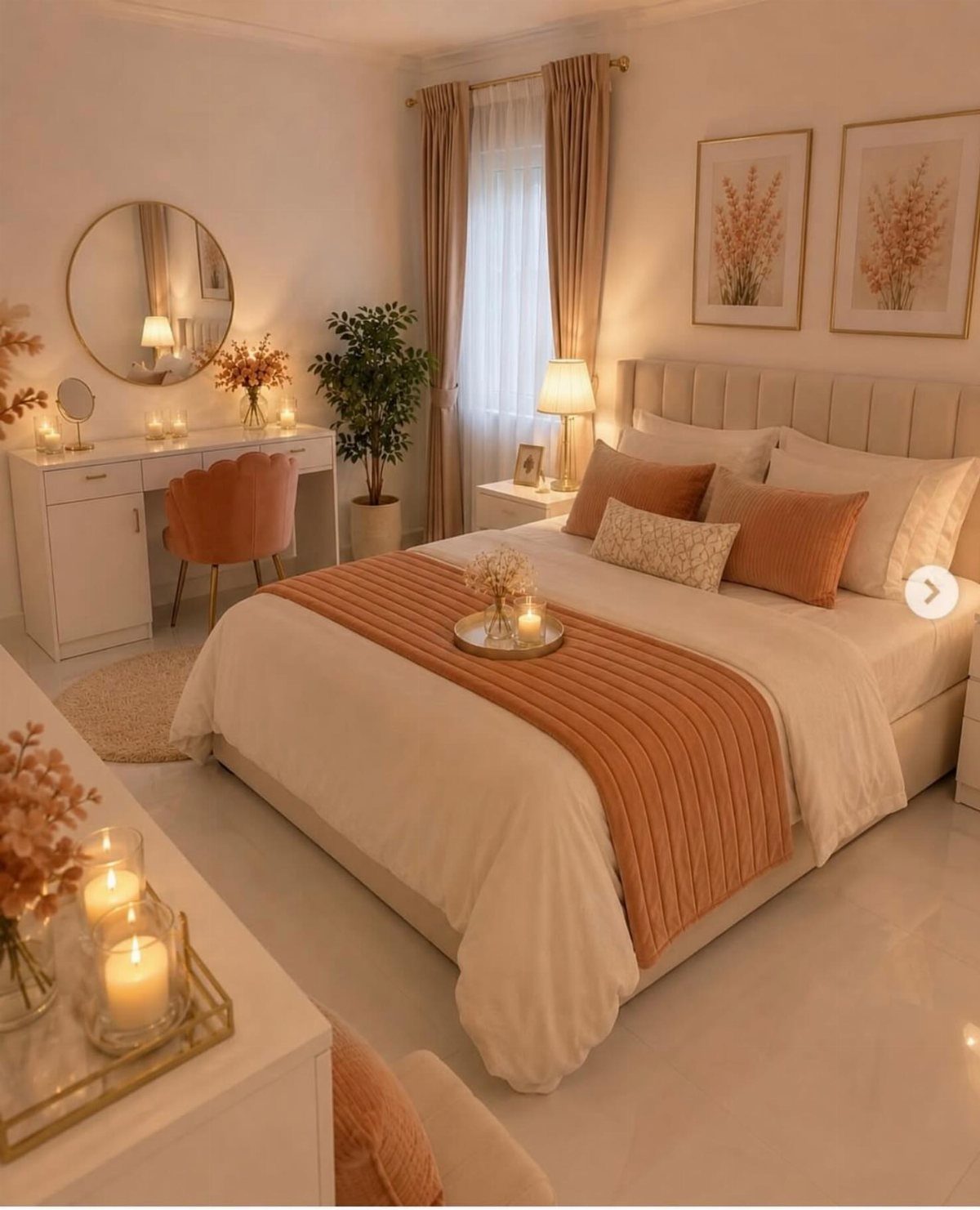
Mounting the mirror to the wall instead of resting it on the table opens up the entire surface for organizing makeup, skincare, and tools. You lose the stand and gain usable inches across the front of the table.
A round mirror softens the look in a room with straight-edged furniture, and the height is adjustable before you install it.
Position it so the center sits at eye level when you’re seated. This approach suits anyone who needs the table surface more than they need mirror storage.

1. Floating Vanity Makeup Table: This wall-mounted vanity desk maximizes your floor space with its sleek, compact design - perfect for small bedrooms, apartments, or bathrooms. Customizable height adjustment ensures the perfect fit for your space. More than just a vanity, this floating desk transforms into a stylish workstation, bathroom organizer, or salon station.

Mirror for Desk: 7 inch mirror makeup with 1 hanging port and 1 desk vanity mirror with U-shaped bracket for versatile use on makeup desk or dressing room.As a standing makeup mirror for your desktop, it is great and a great choice for friends and family.

Space-Saving Wall-Mounted Design: This floating vanity desk mounts directly to the wall, saving valuable floor space and making it ideal for small bedrooms, apartments, or bathrooms. The adjustable height allows you to customize the placement perfectly for your space and comfort needs. 💌【Easy to Contact Us】If there is any problem with this product, please visit our website Merax.com or contact us via this email: [email protected], call us: 626-912-8886
3. Vertical Storage Units Above the Dressing Table
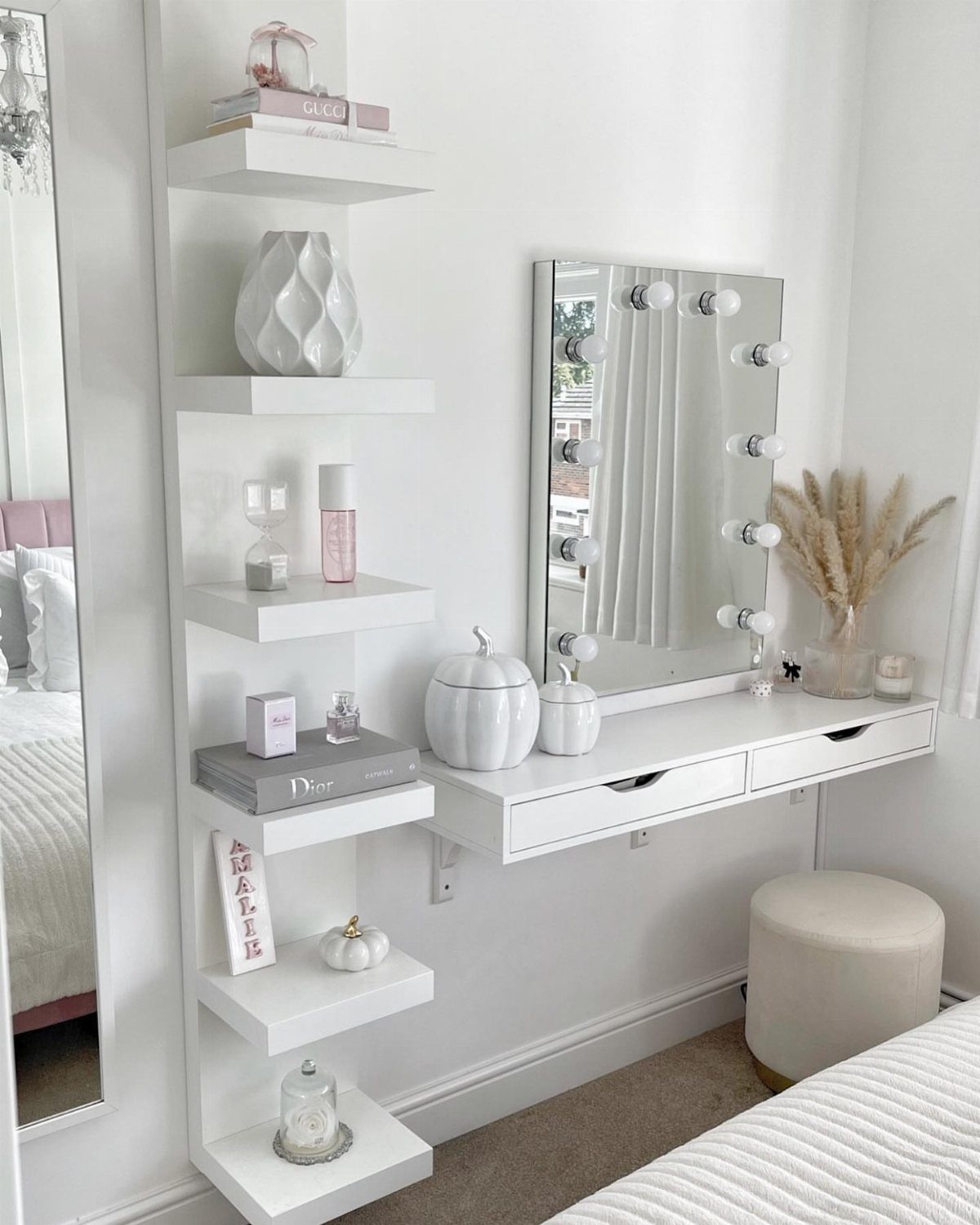
Adding shelves or a wall-mounted unit beside or above the dressing table pulls storage upward instead of outward.
Floating shelves or a narrow bookcase work equally well.
Keep the shelves shallow so they don’t visually crowd the table below. This idea suits renters who can’t build in storage but still need somewhere to keep things that aren’t drawers.
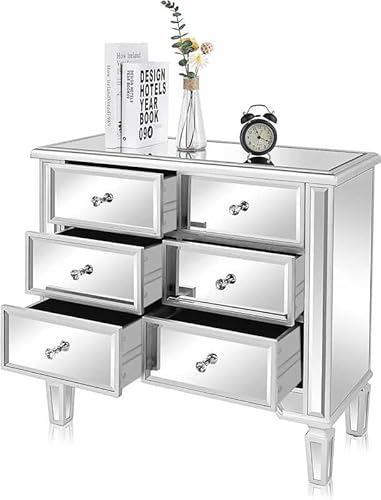
【ADD ELEGANT FEEL TO YOUR ROOM】 If you’re looking for GLAM, then this 6 drawer dresser are for you. The mirrors are beveled which give it a very high end look. It will enhance the surrounding decor with its mirrored Finish. Looks great in any space-living rooms, bedrooms, hallways, entryways, closets, nurseries, etc.

Product Size: 200 x 70 x 130 mm/7.9" x 2.6" x 5.1"

3-Level Adjustable LED Lighting: Features three color temperatures (warm/neutral/cool) with dimmable brightness. Provides ideal illumination for precise makeup application and skincare routines
4. Convertible Mirror Desk
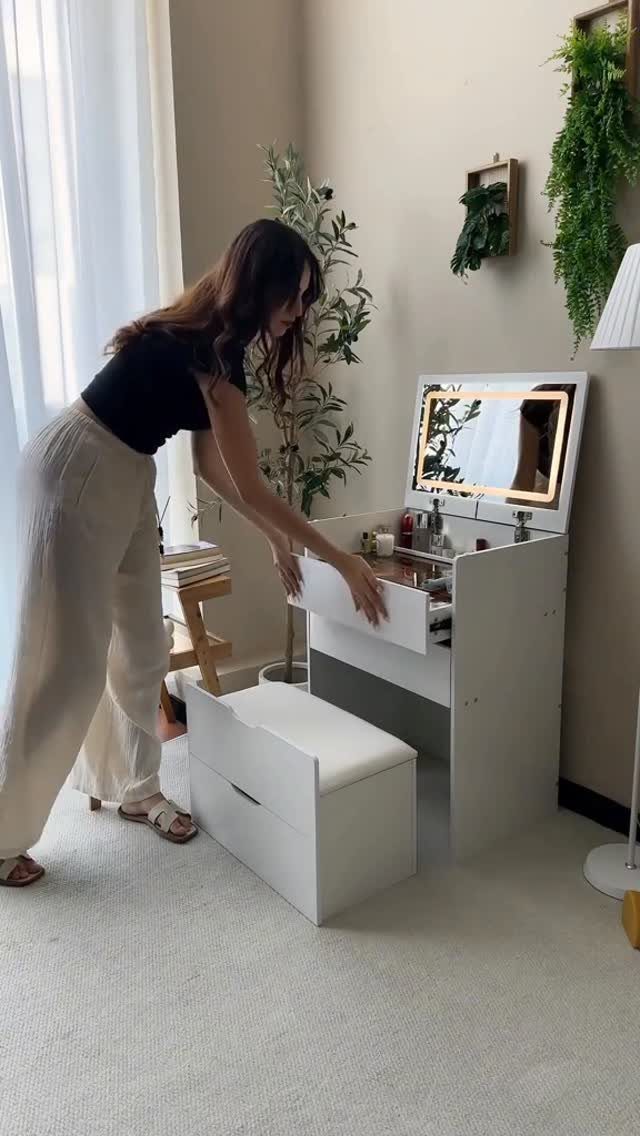
A desk that converts into a vanity gives you two surfaces in one footprint. The flip-top mirror reveals storage inside when open and closes flat for a clean workspace when you’re done getting ready.
The slim profile makes it easy to tuck into a corner or along a short wall.
Most convertible desks run about half the width of a traditional vanity. This works for anyone splitting a small bedroom between sleeping, working, and getting ready, or for a room that occasionally hosts an overnight guest.
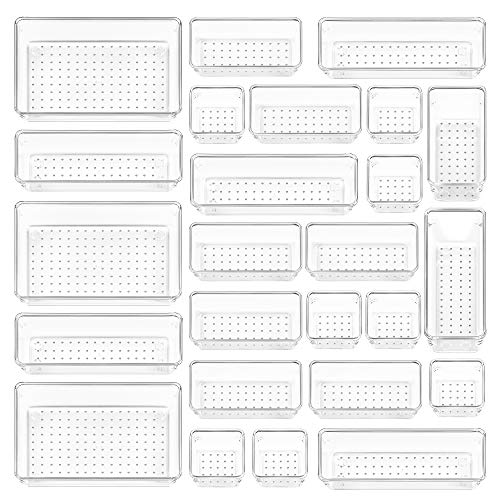
✔Make Everything Organized -- These clear versatile drawer dividers trays are perfect for any place in your home. Fit all kinds of drawers, such as vanity / bathroom / kitchen / office drawers/ craft room, ideal for organizing cosmetics, makeup tools, hair accessories, jewelry, pins, office supply, craft supplies, utensils, etc.

Premium Material:The drawer organizer is made of non-toxic plastic which may be safely used. The transparent design makes it easy to find what you need quickly

Ugraded 2-Tier 3-Drawer Bathroom Counter Organizer: Unlike other makeup organizers that only feature 2 drawers, ours offers an enhanced storage capacity. The top two layers can accommodate perfumes, skincare products, and face creams, while the three drawers are perfect for storing eyeshadow palettes, sunscreens, and more.
5. Floating Table
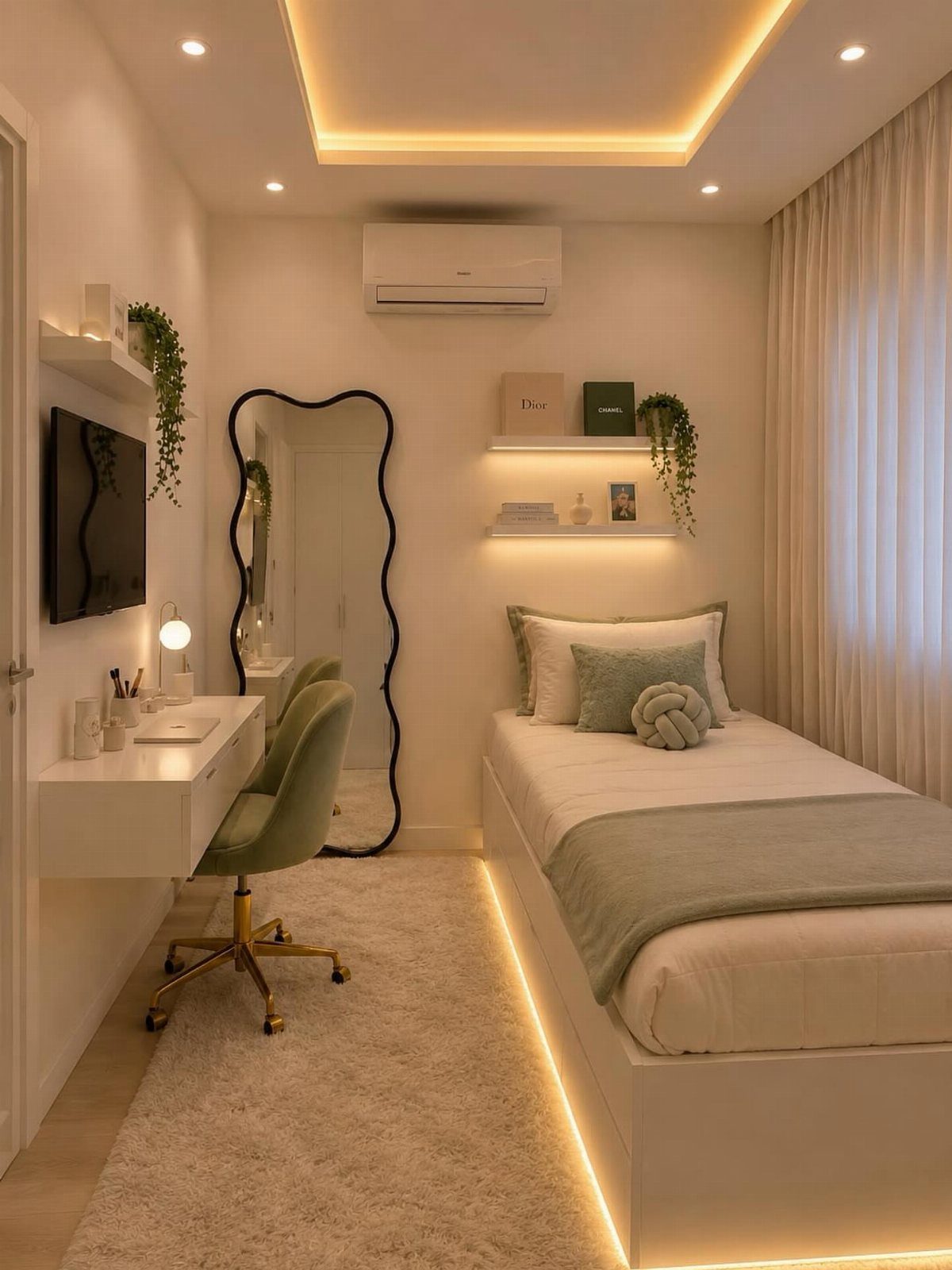
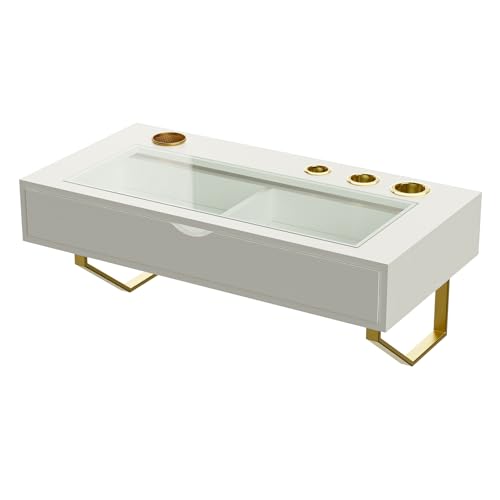
A floating table mounts directly to the wall and leaves the floor beneath it completely open. That visual gap makes a small bedroom feel less packed, and you can slide a chair or ottoman underneath when it’s not in use.
Installation requires finding studs and using the right anchors for the weight. Pair it with a leaning or wall-mounted mirror and keep a narrow tray or drawer organizer on the surface for smaller items that would otherwise roll off.

Hidden Storage Space: Lift the plush seat to find about 10L of hidden storage under the cushion, enough for makeup, cosmetics, magazines and other small items, keeping your vanity desk tidy and saving space

【ELEGANT DESIGN, ENDURING COMFORT】This ottoman boasts a chic velvet surface with an elegant tufting design, adding a stylish touch to your space. The double-layer fabric and high-resilience foam ensure lasting comfort for relaxation

🐰【Soft & Comfy】Wrapped in faux rabbit fur, the seat and back offer ultra-soft tactile comfort. Plush padding ensures a cozy experience for makeup sessions or relaxation, adding warmth to your bedroom.
6. Wardrobe Vanity
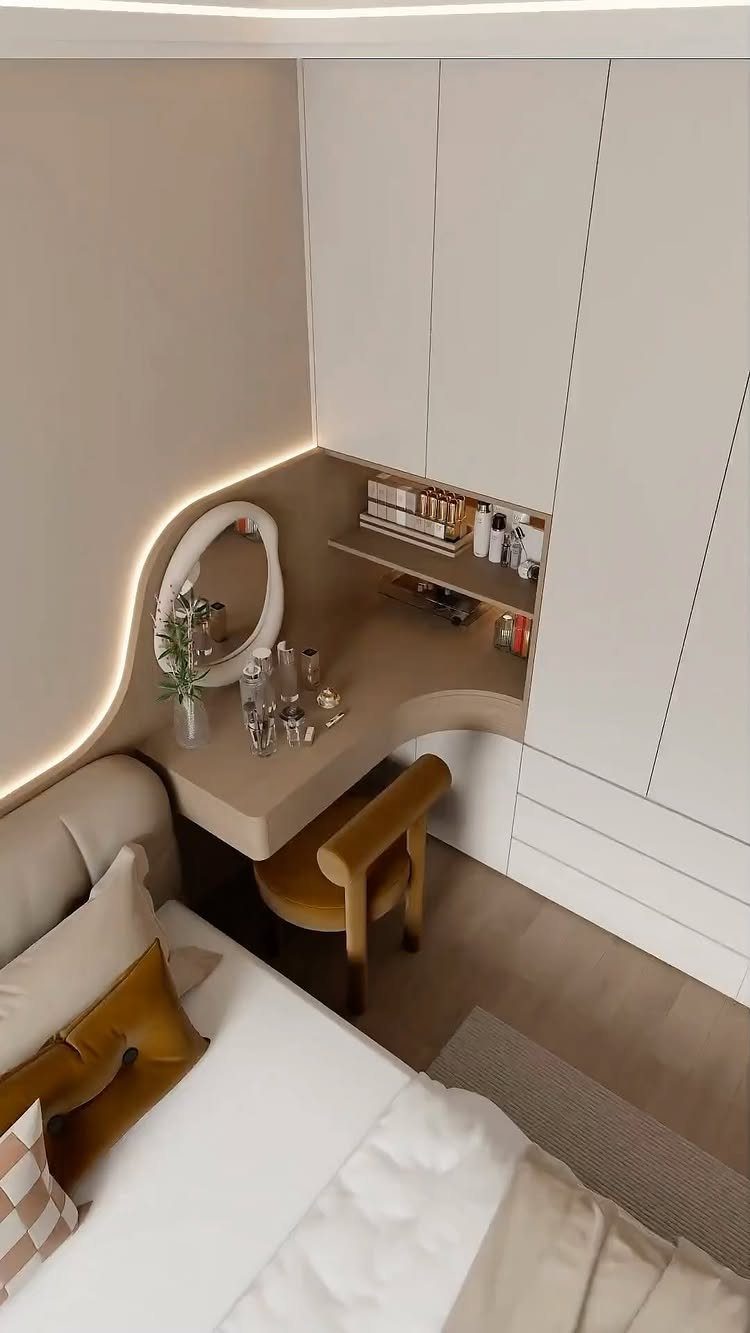
Building the dressing table into a wardrobe or closet keeps everything behind closed doors when you’re not using it.
The curved desk and circular mirror here sit between floor-to-ceiling storage, so the vanity shares its footprint with hanging clothes and shelving.
This works best in a fitted bedroom where you can dedicate one section of the wardrobe to sitting space. If you’re starting from scratch, give yourself enough knee room and surface area without the desk jutting out awkwardly.
For existing furniture, look for wardrobes with an open middle section or remove one set of doors to carve out the vanity nook.

Ample Storage Space: This space-saving hanging vanity has storage space next to the mirror to place the products you need, and there is a storage cabinet on it, which is enough to meet your needs

EARRING DISPLAY FOR STUDS & DROPS: The decorative Tree of Life branches and leaf openings provide convenient display points for stud earrings, drop earrings and lightweight jewelry. The open design keeps favorite pieces visible and easy to choose while turning everyday accessories into part of the wall decor.

【SPACE-SAVING & MULTIFUNCTIONAL DESK】Maximize your living space with this 31.5 x 16 x 5.5 inch wall mounted floating desk. Designed to free up valuable floor space, this compact yet functional desk works perfectly as a writing desk, laptop workstation, or bedside table for bedrooms, apartments, dorm rooms, and small home offices. Featuring a modern fluted design and minimalist brown finish, it blends effortlessly with contemporary, elegant, and modern home décor styles while keeping your space clean, stylish, and organized
7. Tallboy Vanity
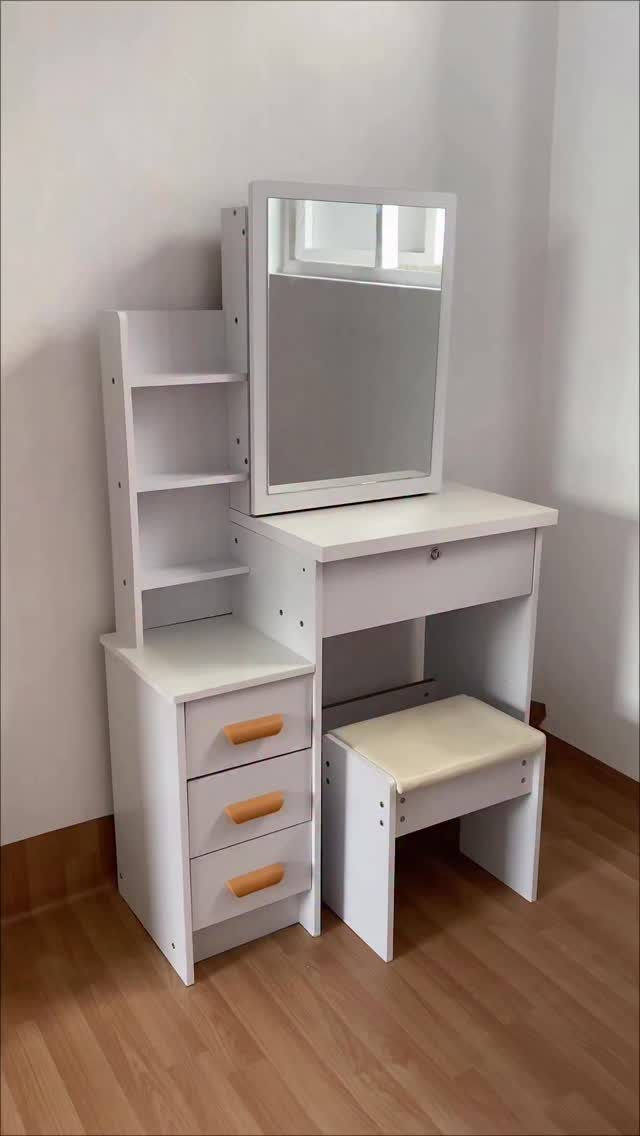
A tall, narrow dresser with an open counter section at sitting height combines a full dressing table with drawer storage in a footprint that takes up less floor space than a standard vanity.
Storage sits above and below the work surface instead of spreading left and right.
Match it with a wall-mounted mirror and a compact stool that slides out of sight when you stand up. This setup suits a bedroom where width matters more than depth.

MATERIAL & SIZE:This small mirror made of Environmental friendly material:ABS plastic, floating glass and Stainless steel metal to avoid peeling off. No assembly required. The portable mirror surface is made of HD smooth mirror without deformation. 7.9 x 6 x 0.7 inches stand mirror. Note: This is a single-sided makeup mirror, no magnification effect.

MATERIAL & SIZE:This small mirror made of Environmental friendly material:ABS plastic, floating glass and Stainless steel metal to avoid peeling off. No assembly required. The portable mirror surface is made of HD smooth mirror without deformation. 7.9 x 6 x 0.7 inches stand mirror. Note: This is a single-sided makeup mirror, no magnification effect.

Desk mirror : Measures just 6" x 8" and is only 0.5" thick when folded,suit for travel or camping.
Keep the Surface Uncluttered
If drawer space runs short, cupboard compartments or small boxes inside them do the same job without taking up more floor area. Keeping brushes, palettes, and bottles off the surface leaves room to actually use the table.
Under-bed storage handles the overflow.
Flat containers slide underneath and hold backup products, hair tools you don’t use daily, or seasonal items that would otherwise pile up on the vanity. That keeps the dressing area looking clean without adding furniture.
A floating table works well here because it forces you to keep the surface minimal. There’s no drawer bank to catch clutter, so everything needs a home elsewhere or it becomes obvious.

【THREE SPACIOUS DRAWERS】Overall Size: 11.7"L x 11.8"W x 23.8"H. Drawer Size: 8.3"L x 10"W x 4.5"H; Perfect nightstand to organize your books, magazines, TV remotes, charging cables, jewelry box, earphones, etc

Reflective Mirrored Table: The mirrors on the vanity reflect floors and furnitures and it looks gorgeous in the room. This vanity is perfect for dressing room, bedroom or living room and adds a touch of glamour

Tray mirrored--looks well and not , serves many purpose,mirrored tray vanity
Mirror and Lighting Choices
Mirrors reflect available light back into the room, which makes a small bedroom feel larger and brighter at the same time.
Positioning a full-length mirror across from a window doubles the natural light during the day and visually stretches the room. Warm lighting integrated into the mirror or mounted nearby gives you consistent light for makeup without adding a separate lamp.
Laminate finishes around the mirror and table keep the look cohesive and reflect more light than matte or textured surfaces. The combination of good placement and the right finish makes a bigger difference than the mirror size alone.

The lipstick organizer holds up to 18 lipsticks, each slot measuring at 1" x 1". The compartments are progressively deeper from front to back
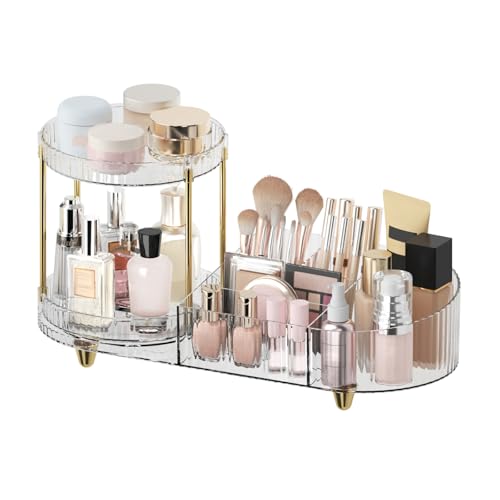
Rotating Makeup Organizer: Featuring 2 layers of rotating storage trays, this combine cosmetic and perfume organizer offers smooth and noiseless 360-degree rotation. Fit for desktop corners, making it convenient to access and place items

American made with high-quality, durable BPA-free clear plastic. Domestic production of this 6 compartment divided organizer provides you with the peace of mind that you're buying a product that contributed less carbon emissions to the atmosphere from creation to delivery than those produced overseas.
Frequently Asked Questions
What can I use instead of a dressing table?
A narrow console table or desk works in place of a traditional dressing table when you mount a mirror above it.
Position it against the wall or at the end of the bed, and add drawer organizers or small boxes to hold makeup and tools.
Glass or floating styles keep a small bedroom feeling open while giving you a dedicated space to get ready.
What is the best dressing table idea for small bedrooms?
A wall-mounted or floating table saves the most floor space because it leaves the area underneath completely open.
Pair it with a wall-mounted mirror and sliding storage underneath the table or inside a nearby wardrobe. The narrow footprint and open floor below make the room feel less packed while still giving you a full vanity setup.
Can I merge a dressing table with other furniture?
Yes. Building the vanity into a wardrobe or using a convertible desk that flips between workspace and dressing table combines two functions in one footprint.
Compact dressing tables or vanity-desk hybrids work best when floor space is tight and you need furniture to do more than one job.
How can I make a dressing table look more luxurious?
A high-quality mirror with warm lighting and a cushioned or upholstered stool immediately lifts the look.
Keep the surface clear with everything stored in drawers or compartments so the area stays visually clean. Laminate or glossy finishes reflect more light and read as polished, while minimal clutter makes the setup feel intentional rather than thrown together.