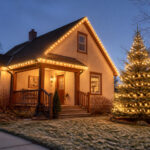

The most effective front porch Christmas decor ideas sit in the tension between looking generous and staying practical. A 30-inch wreath is the minimum that holds its own on a standard door; anything smaller shrinks to a green pimple from the sidewalk. What separates the porches that work from the ones that collapse into clutter is usually one hard limit: outdoor-rated hangers, because adhesive strips fail the moment the temperature drops below freezing, and by then the season has already started.
1. Garlands for Doors and Rails
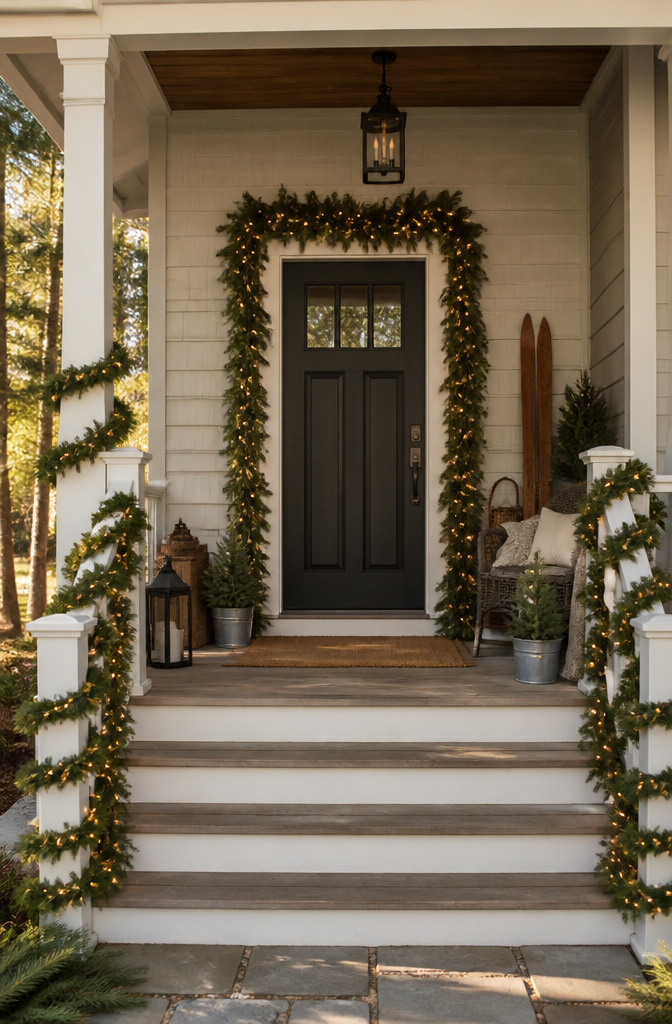
A pre-lit outdoor garland from Costco runs about $40 and strings together cleanly for a door frame, though two lengths are usually needed to wrap both sides and the header. I hang mine with heavy-duty hooks, the kind rated for outdoor weight, because the strands collect water and ice faster than you’d expect. Magnetic hooks work if your door surround has a steel strip, but adhesive strips fail once the temperature drops below freezing, and by then you’re already busy with other projects. Brick clips or a tension rod above the frame are safer bets for masonry or wood.
Even pre-lit garland needs thirty minutes of fluffing. The branches ship compressed, and the lights sit in flat lines until you bend the wire stems outward. That shaping is what makes the wrap look full against the rail rather than like a green hose.
Keeping things symmetrical on your front porch lends a sense of harmony, not chaos.
For rails, the same garland winds in a spiral and secures at the newel posts. The symmetry rule applies: match the door density to the rail density, or the eye reads the porch as two separate ideas.
2. Wreaths and Door Swags
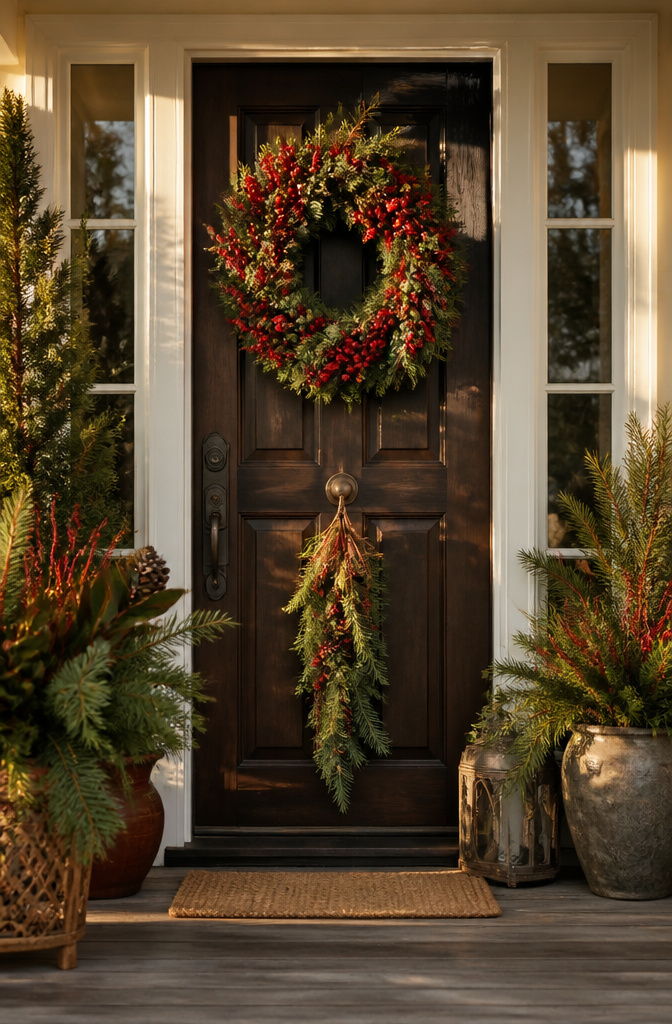
A wreath that looks generous on the store rack can shrink against a standard front door. I learned this the year I brought home a 22-inch wreath and hung it dead center; from the sidewalk it read as a green pimple, not a welcome. A 30-inch diameter is the minimum that holds its own on a 36-inch panel door, and a 32-inch or 34-inch wreath reads even better if your door is 42 inches or you have sidelights that widen the visual field.
Swags are the natural alternative when you want something less expected. A seasonal swag hung vertically from a door knocker or a ribbon-tied nail at the top third of the door draws the eye upward, which helps a low porch feel taller. Horizontal swags across the top rail of a Dutch door work too, though you need to check that the lower half still opens freely.
If you want to step away from greenery entirely, a hanging basket stuffed with red twig dogwood and battery-operated fairy lights carries the same weight as a wreath without the circular shape. Oversized bells, the kind sold in sets of three at craft stores through October, hang well on a ribbon cluster and clang satisfyingly when the door moves. Vertical wooden boards, painted with a simple house number or a seasonal motif, suit farmhouse-style porches and store flat in January. The board I tried was a 1×8 pine plank, sanded and painted, with a small galvanized bucket screwed to the lower third for a forced paperwhite; it cost under fifteen dollars and took an afternoon, though the bucket eventually worked loose and I replaced the screw with a threaded insert the following year.
3. Lanterns With Greenery or Candles

Lanterns do the heavy lifting after dark when the wreath and garland fade into shadow. A pillar candle inside a metal or glass frame reads as a single point of warmth, and filling the gaps around it with magnolia, cedar, or faux pine turns the fixture into something that looks considered rather than just lit. LED candles with a timer are the practical choice for any porch that sees wind, which is most of them. The flameless ones have improved enough that the flicker looks real from the sidewalk, and you are not running out to relight them every time a gust blows through.
Real candles on a screened porch were a mistake I will claim. The screens cut the wind enough that the flames stayed lit, but they also trapped the heat and smoke. Soot collected on the glass in a single evening, and the greenery tucked around the candle dried out faster from the warmth. One tipped slightly and scorched a magnolia leaf before I caught it. I switched to the timer LED the next weekend and have not gone back. The cords for those fairy-light wreaths I mentioned elsewhere? A lantern base hides them neatly if you need a power source closer to the door.
4. Mini Christmas Trees in Clusters
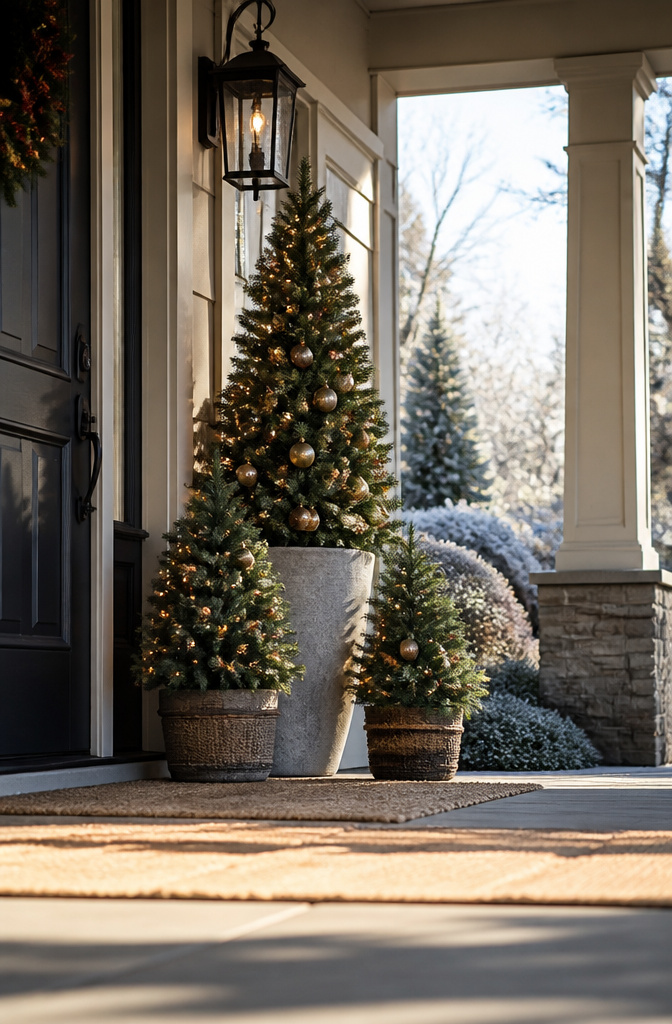
Two mini trees flanking the door is the arrangement most porches can handle, and it reads instantly as Christmas without asking for much space or money. A grouping of three at varying heights works better on wider steps or beside a bench, where the tallest sits in back and the smallest tucks in front so nothing blocks the door swing.
Faux topiaries in concrete bowls give the same effect if you already own planters that stay out year-round. Red ball ornaments and a quick spray of white paint on the foliage tie them to whatever else sits on the porch, and the whole setup breaks down fast after the holiday.
The mistake that wastes an evening is buying trees without checking whether the stands sit flat on concrete. Many are weighted for grass or a rug and rock on hard surfaces until you shim them with something that looks wrong or blows away. Test the stand on pavement before you decorate, or plan to set the whole thing inside a heavier pot you already own.
5. Seating Areas With Pillows and Throws
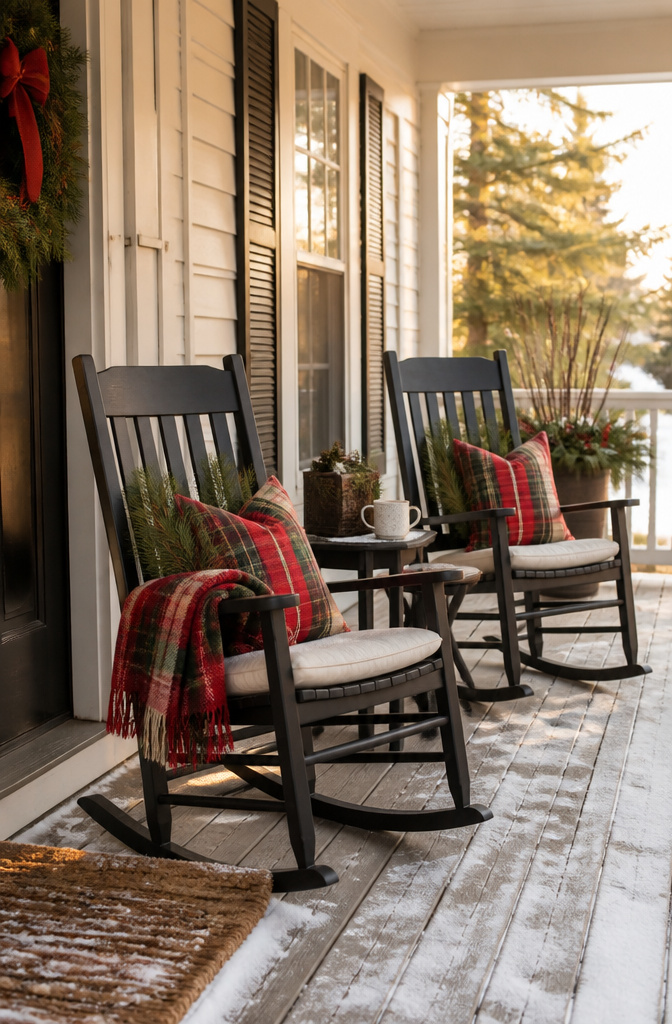
A pair of rocking chairs angled toward each other turns a bare porch corner into somewhere people actually sit, not just somewhere decor gets staged. The trick is bringing the cushions and throws inside when rain hits, because standard indoor fabrics will mildew fast once they soak through. Outdoor-rated pillows exist, but the selection runs thinner and the prints lean nautical; most of us end up using regular throws and accepting the chore. On my wrought iron bench, a couple of holiday pillows and one folded blanket did more for the look than any wreath I hung that year. The bench became the spot where I finished my coffee on cold mornings, which is the difference between decoration and a seating area that reads intentional. If the space is tight, skip the planters and keep the footprint clean; a crowded small porch looks like storage, not a nook.
6. Vintage Sleds, Skates and Nostalgia
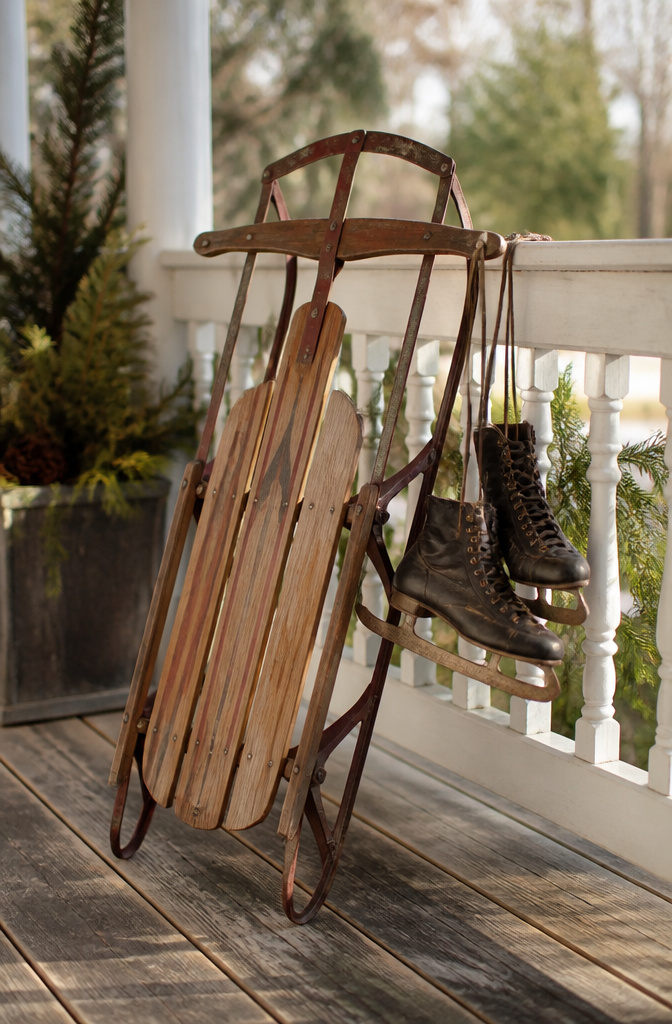
A vintage wooden sled, the kind built to take winter’s dry air without warping, anchors a porch in a way reproductions never quite manage. Mine came from Craigslist after I spent a week eyeing a neighbor’s. I finally knocked on her door to ask where she’d found hers, and she admitted she’d borrowed it from the house two doors down, a 1920s bungalow whose owner had pulled it from the garage rafters. The original owner had no memory of buying it; the sled had simply always been there. That conversation convinced me to stop hunting for perfect condition. The chips and worn runners are what sell the nostalgia.
Ice skates hung by their laces, galvanized buckets filled with greenery, a child-size chair painted the red of old barns: these pieces carry the same weight because they show use. Weathered beats restored every time on a Christmas porch. The skates should rattle when the door opens; the sled should look like it earned its scratches decades ago. Sources for this stuff remain scattered. Estate sales, garage sales, and the occasional Craigslist listing outperform antique shops on price, though the shops sometimes win on selection. The neighbor’s borrowed sled never did make it back to that garage. She bought the owner a replacement dinner instead, and the old one still leans against her porch rail each December, a little more faded every year.
7. Fairy Lights and LED Strands

Warm white LED lights give a front porch its real festive glow, and that color temperature is what most people picture when they think of Christmas. The strands work best when they are not trying to do everything at once. A simple line of warm white along a roof edge or woven through garland reads as intentional; mixing colors on the same rail usually looks like a hardware store exploded.
For something more programmable, Govee RGBIC Icicle Lights run 78-plus dynamic scenes through independently controlled LEDs. The app, Matter, and voice control let you shift from a slow gold fade to something bolder for New Year’s, and the all-weather build is meant to stay up through rain or snow. The RGBIC line is the one to look for if you want that level of control; standard icicle strands without the IC chips will not map colors per LED.
Govee’s regular Christmas string lights carry over 130 animated scenes and AI effects if you want the porch to move. Either way, the same rule holds: one color story at a time, and warm white as your default. The color options are there for the one night you want them, not for every night from Thanksgiving through January.
8. Color Accents That Tie It Together

Red and gold ribbon still reads as Christmas because it catches light from a distance, something a black front door swallows without help. I learned that the hard way on a narrow porch that turned into a shadow box every afternoon. The fix was alternating red and gold ribbon, tucking each strand into garland so the wire frame pinched it in place. From the sidewalk nobody sees the pinch point, only the flash of color.
The mistake that still stings: three reds that clashed. One was a blue-red, one an orange-red, one so dark it read burgundy in late light. They were beautiful alone and quarrelsome together. Now I lay every ribbon, bow, and ornament out on the concrete before I hang anything, checking them in the actual light they will live in. A single roll of good wired ribbon, maybe thirty or forty yards, costs less than three almost-rights and carries the whole porch. If the ribbon runs short, pipe cleaners and six-inch scraps fake the weave-through look from ten feet away. The eye believes continuity even when the material is broken.
9. Pinecones, Logs and Fresh Greenery
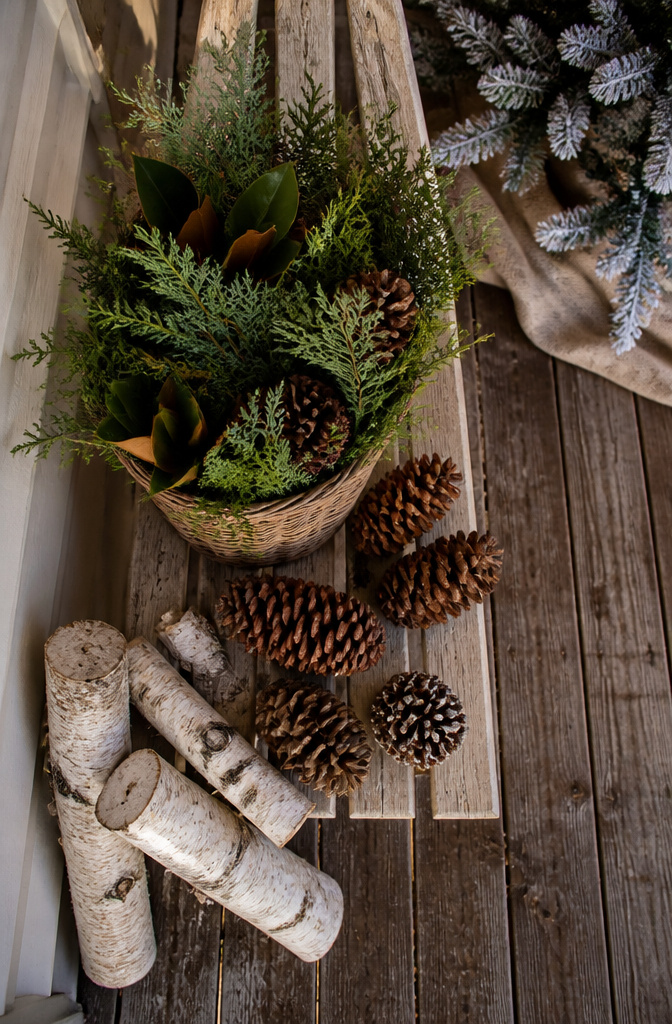
Fresh cedar and magnolia clipped from the yard fills baskets faster than anything store-bought, and the stems hold up surprisingly well against porch air. I mix in cut-apart faux pine when the live stuff runs thin, which stretches the look without stretching the budget. The trick is keeping the two textures close together so the eye reads them as one mass.
Oversized pinecones and birch logs finish the woody winter feel, especially tucked beside a weathered bench or under a flocked tree. Check logs for pests before you carry them onto the porch. I skipped this once and spent an afternoon watching ants relocate from a birch round into my door frame. A quick inspection beats that entirely.
Pre-lit garlands with natural pinecones and berries mixed into the greenery give the door a traditional foundation. String two together if the frame is wide, then layer ornaments or ribbon picks on top. The live greenery lasts longer outside than you’d expect; I have not had to replace any yet, even through weeks of frost.
10. Seasonal Doormats and Layered Rugs

A seasonal doormat does more work than it gets credit for. It catches salt and slush, sure, but it also sets the tone before anyone rings the bell. A plain coir or rubber mat underneath gives you the layered look that reads as intentional, not accidental, and it buys you a few extra inches of dry footing when the weather turns.
The gingerbread stencil trick works if you want something specific and do not mind an afternoon with white paint and masking tape. For most renters, though, a bought mat that says something seasonal handles the job without the commitment. Swap it back to plain after New Year’s and the porch still feels finished.
Planters flanking the door, a couple of lanterns with magnolia or plain greenery, and a small stack of wrapped gifts on the step fill out the entrance without crowding it. On a narrow landing, one planter and a single lantern by the door keeps the path clear. Layer a plain rug under your seasonal mat if you have the floor space; the contrast in texture does more than either piece manages alone.
How I Layer Decor for Depth

A flat porch reads like a stage set until something sits in front of something else. The first layer is almost always a rug under the welcome mat, which sounds fussy until you see how it frames the door and catches the eye before the mat itself does. From there, height becomes the real tool. A lantern with evergreen stems and berries placed at the base of a display pulls the gaze downward and balances heavy garland overhead; the cord hides inside, which matters more than I expected the first time I tried it. Pillows on rockers or a bench add the living-room warmth that makes a porch feel occupied, not decorated, and a small sled or vintage piece propped in front of greenery creates the depth that a single row of items never achieves. The mistake is treating the porch floor as one plane. Stack it in three zones: ground level with rugs and low accents, mid-height with seating and lanterns, and the frame above with garland or lights. Two layers is better than five scattered.
Repurposing Fall Decor Into Winter

The pumpkins still sitting on your porch in early December are not a failure of housekeeping. They are a head start on Christmas.
Last year I left three sugar pumpkins and a stack of mini gourds where they were, swapped the orange mum baskets for white ones, and wound a battery pine-cone garland around the same straw bales. The slightly bleached color of the pumpkins by that point actually read closer to the cream and sage palette I wanted for winter than anything I could have bought new. The trick is keeping only the pieces that have gone muted, not the ones still shouting harvest orange.
What did not work: trying to save a carved jack-o’-lantern. Even uncarved pumpkins soften eventually, and a collapsing gourd under a wreath arrangement is not the rustic look you are after.
One neighbor on my evening walks does this better than I do. She piles her leftover gourds into a weathered wooden crate, adds the same pine-cone wreath she used in October, and lets the white chrysanthemums carry over until the first hard freeze. The whole display costs her nothing extra and takes twenty minutes.
If your fall setup included lanterns or galvanized buckets, those stay too. The material does not care what season it is.
Smart Lights and App Control
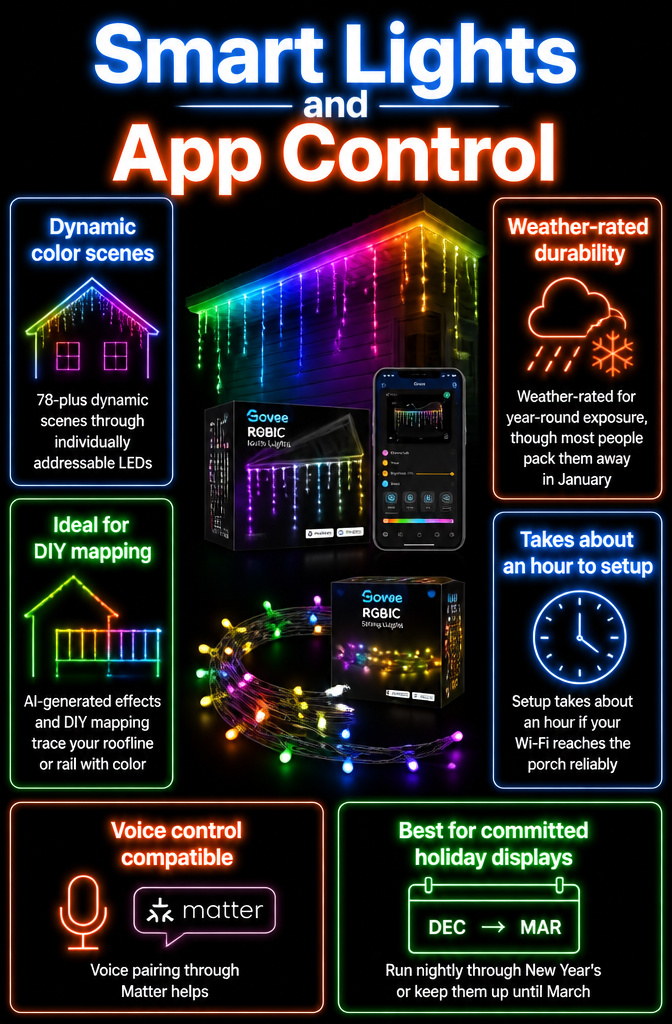
App-controlled lights change how a porch behaves after dark. The Govee RGBIC Icicle Lights run 78-plus dynamic scenes through individually addressable LEDs, so the color pattern actually moves instead of sitting static. String lights from the same line add AI-generated effects and DIY mapping, which means you can trace your actual roofline or rail and the colors follow it. Both are weather-rated for year-round exposure, though most people pack them away in January.
The setup takes about an hour if your Wi-Fi reaches the porch reliably. Voice pairing through Matter helps, but the real time sink is mapping the LEDs to your specific architecture. For a weekend project, that hour pays off only if you plan to run the lights nightly through New Year’s. Otherwise, basic plug-in strands get you decorated faster and leave the phone in your pocket. The app control wins for renters who want to program a show for a holiday party, or for anyone who keeps their lights up until March and would rather change the scene than the hardware.
DIY Oversized Presents and Nutcrackers

Cardboard boxes wrapped in paper pass for presents on a porch, though the trick is keeping them from looking like recycling day. I tried this two years running. The first season, empty Amazon boxes stacked by the door read as trash to every delivery driver and half the neighbors; the second season, I weighted them with river rocks so they wouldn’t wander in wind, which made them heavy enough that moving them for storms became its own chore. Keep the boxes empty, or keep them light enough to carry. The sources that mention this idea note the porch-pirate problem, suggesting you stage them just before guests arrive rather than leaving them out for days. That timing works for a party, less so for a month of December curb appeal.
Oversized nutcrackers built from hardware store materials sound better in concept than my craft skills delivered. Plywood cuts, paint that won’t take the weather, the question of how you store a six-foot figure the other eleven months. The Pinterest inspiration shows finished results, not the three weekends of cutting and sanding that precede them. For renters especially, the storage math matters as much as the build.
Why I Skip Designer Showcases

A front porch Christmas setup that took a crew and a four-figure budget makes me scroll faster, not slower. Those images rarely list prices, and the absence itself is the signal: the garland is real Fraser fir shipped overnight, the lanterns are brass, the rug is custom. If you cannot tell what an item costs, the source is not speaking to your budget. That matters because a renter or a first-home owner is usually working with a Saturday, a hundred dollars, and the tools already in the garage. The gap between a professional install and your own two hands is not a matter of taste; it is a matter of time, fasteners, and whether the structure can take the weight. I look for photos where the lights are clipped with the same plastic hooks sold at hardware stores, where the greenery is wired with paddle wire you can buy by the spool. Those details tell me the idea survives contact with a real house.
Frequently Asked Questions
What lighting is best for a front porch at Christmas?
Warm white LED lights give a front porch its real festive glow, and that color temperature matches what most people picture for the holiday. Keep the color story simple; one line of warm white along a roof edge or through garland reads as intentional, while mixing colors on the same rail usually looks messy. Programmable RGBIC strands like Govee’s offer dynamic scenes for special nights, but warm white should stay your default from Thanksgiving through January.
How do you dress up a front entrance for Christmas?
Start with a seasonal doormat layered over a plain coir or rubber mat for extra inches of dry footing and a framed look. Add planters flanking the door, a couple of lanterns stuffed with magnolia or cedar, and a small stack of wrapped gifts on the step if space allows. On a narrow landing, cut back to one planter and a single lantern so the path stays clear.
What can I put on my front door instead of a wreath?
A hanging basket stuffed with red twig dogwood and battery fairy lights carries the same visual weight without the circular shape. Oversized bells sold in sets of three at craft stores hang well on ribbon clusters and clang when the door moves. A vertical wooden board painted with a house number or seasonal motif also works, especially for farmhouse-style porches, and stores flat in January.
How do you decorate front porch rails for Christmas?
Wrap rails with the same pre-lit garland used on the door, winding in a spiral and securing at the newel posts. Match the density to your door garland so the porch reads as one cohesive idea rather than two separate displays. Fluff the branches for thirty minutes before hanging; the lights ship flat and need bending outward to look full rather than like a green hose.