Outdoor holiday displays are permanent or temporary fixtures placed outside a home during December, ranging from inflatable figures to wired light sculptures. The catch is that each type carries a hidden cost beyond the price tag: inflatables need constant power and tethering, blow molds demand rigid storage space, and animated pieces run cords through snow melt. A 250-foot LED lighting kit at $749 replaces annual string-light failures, while a single 42-inch blow mold candy cane at $99.99 outperforms a 20-inch inflatable on curb presence alone.
1. Inflatable Decorations
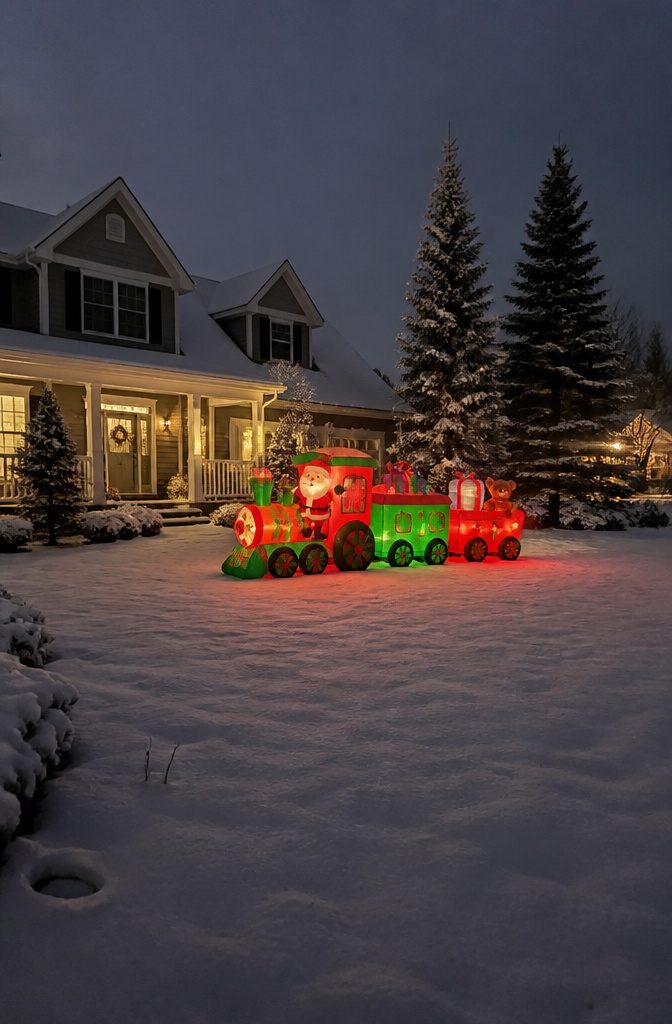
Inflatable decorations dominate the block because they scale up fast without scaling up the labor. A six-foot Santa or snowman unrolls from a storage tote, plugs into a standard outlet, and self-inflates in under two minutes. The built-in lighting means the display works after sunset without extra wiring, and the whole thing collapses to duffel-bag size by January 2.
For renters, this matters more than it first appears. Stakes and tethers leave only small holes that grass or snow hide by spring, and nothing mounts permanently to siding or fascia. The Mr. Christmas 6′ Outdoor Lit Inflatable Santa’s Express Train ran $269.99 and now sells at $129.99, which lands in the same range as a mid-size light set but fills far more visual space. A seven-foot Santa-and-tree pairing from the same maker sits at $89.99, so sizing up does not always mean paying up.
The catch is wind. Anything under twenty pounds of tethers becomes a hazard in gusts over 25 mph, and the motor running constantly draws more electricity than LED strings. Most owners treat inflatables as accent pieces rather than the whole yard, clustering two or three near the door where the impact is immediate and the takedown is one trip.
2. Blow Molds
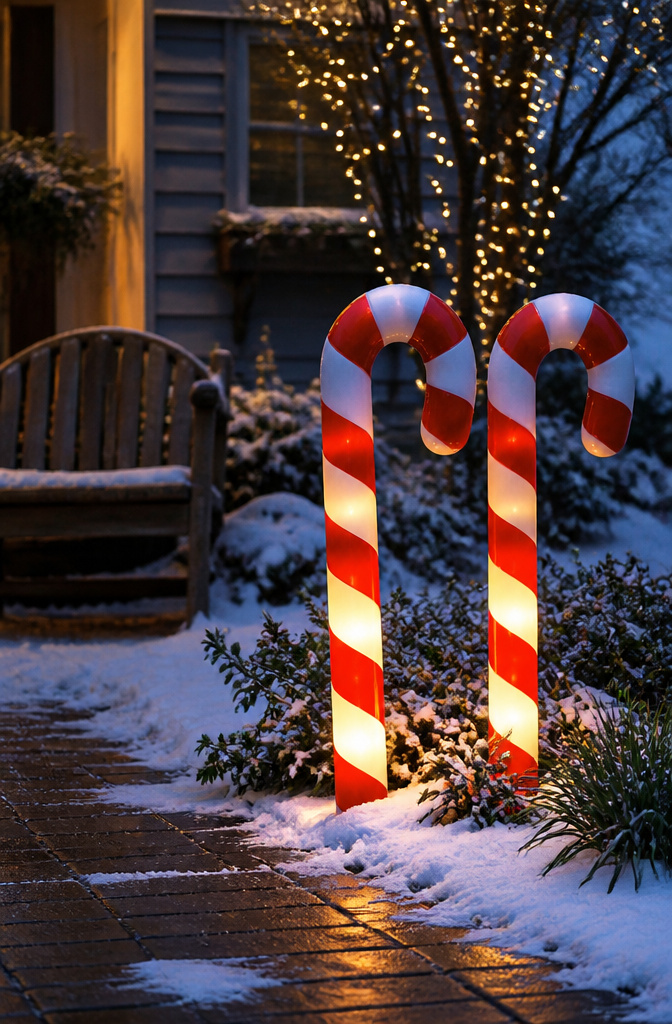
Blow molds are the one outdoor decoration my parents put out every year that still looked the same when they boxed them up. These hollow plastic figures, usually lit from within by a single bulb, were everywhere in the seventies and eighties, and the molds being sold now use the same polyethylene construction that lets them survive decades of freeze-thaw cycles.
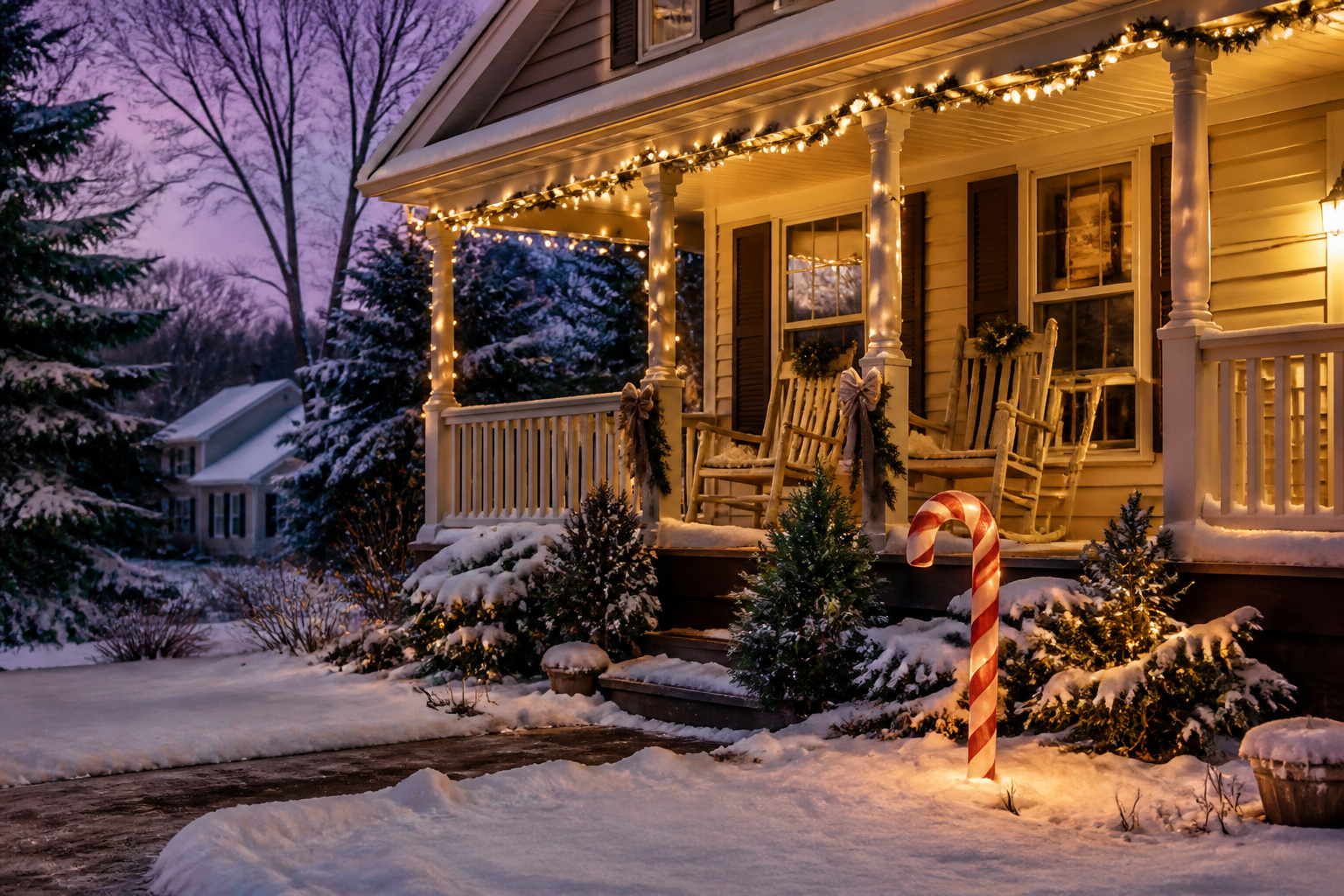
The Set of 2 40" Candy Cane Blow Mold runs $169 and turns a straight walkway into something worth driving past slowly. Each piece is bright red and white plastic, tall enough to read from the street without blocking the door. The 39" Set of 2 Red NOEL Candle Blow Mold at $139 works the same way: two candles you can flank a porch with, or buy multiple sets to run down a driveway edge. Both sets are new enough stock that they have not been sitting in a warehouse since the Reagan administration, which matters because old blow molds often arrive with cracked seams or faded pigment.
What plastic construction means for storage is simple. These do not fold, deflate, or nest inside each other. A 40-inch candy cane needs a 40-inch slot in a bin or a rafter, period. The hollow shell keeps them light, maybe three or four pounds each, but the shape is the shape. I store mine upright between a water heater and a wall, where nothing can lean on the curve and oval it out. If you are tight on space, that rigidity is the tradeoff you are signing up for: thirty years of use, but thirty years of finding a closet that fits them.
3. Yard Stake Decorations
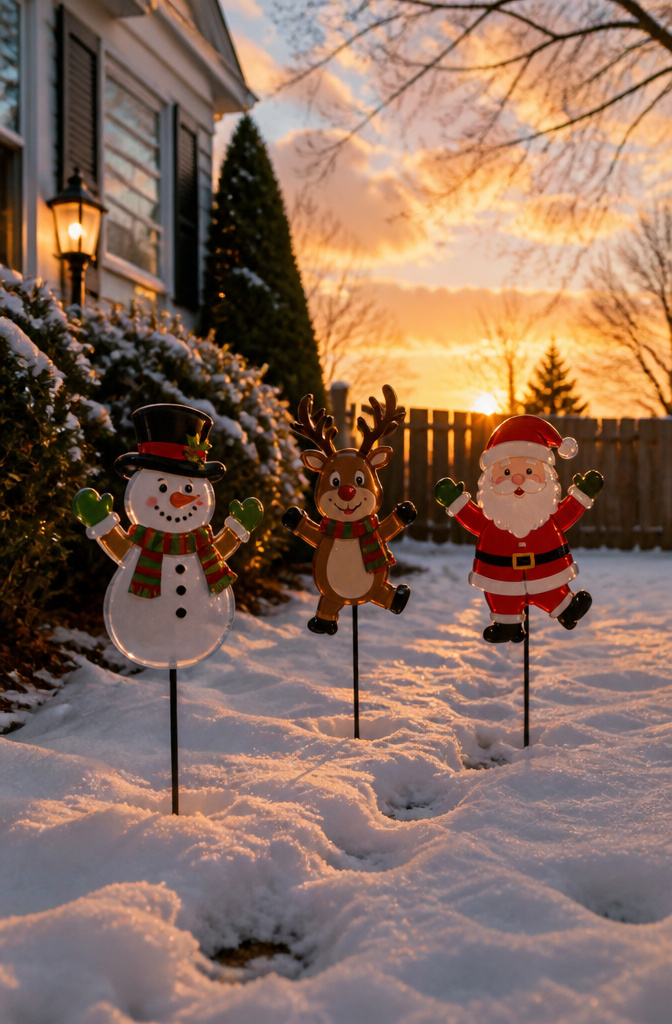
Yard stakes sit right at the sweet spot for anyone who rents or keeps a small lawn. A 25.5-inch character set with a snowman, reindeer, and Santa runs about $79 and stores flat in a closet come January. No ladder, no outlet drama, no landlord to ask.
The designs split two ways, and the material matters more than the shape. Metal stakes, like a 44-inch lit neon Christmas tree at $89.99 or a 23-inch wreath version at $149.99, cost more upfront but handle wet Decembers without sagging. Plastic and glitter finishes, including that 35.25-inch ornament stake at $54, read brighter from the road and weigh less, though the finish can dull after a season or two of freeze-thaw.
For a quick Saturday install, metal wins if you want to buy once and skip the repurchase cycle; plastic works fine if you treat the set as a one-off theme you will swap next year. Either way, the footprint is minimal: a few pushed-in stakes along a walkway or clustered by the mailbox, and the job is done before the coffee cools.
4. Lighted Decorations

Lighted decorations are where a modest yard starts reading as intentional after dark. The 250′ Outdoor Christmas Lighting Kit in Cool White/Red covers enough footage for a roofline, a few bushes, and the fence behind them; at $749, it is not a casual purchase, but it replaces the annual guesswork of whether last year’s strings still work. LED draws a fraction of the wattage incandescent strands pull, and the difference shows up if you are running more than a couple hundred bulbs off a single outdoor outlet. The Raz Lighted White Doe or Stag, at $329 to $369, sits at the other end of the scale: one sculptural piece with its own glow rather than a kit to wrap around what you already own. Both approaches work, though a 250-foot kit asks for a Saturday of ladder time while the doe or stag unpacks in twenty minutes. Cool white LEDs read brighter and bluer than the warm white most people expect from holiday lights, so match the temperature to the rest of your display or the mismatch will nag you every evening.
5. Christmas Flags
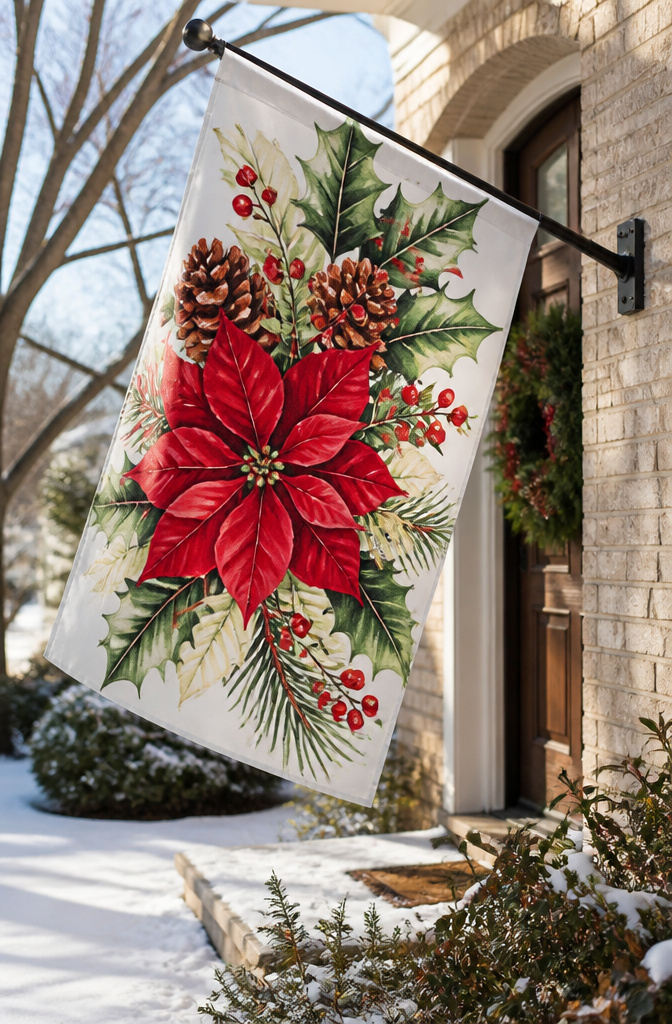
A small flag on a bracket by the door gives color without commitment, which makes it the first thing I consider when time or landlord rules run tight. Most holiday flags come in two sleeve widths, and the wrong match turns a five-minute job into a trip to the hardware store. The thinner sleeve fits the standard garden bracket sold at any big-box store; the wider one needs a pole with a thicker diameter, usually sold separately and often only online.
Winter weather is where flags separate into two categories. The lightweight polyester ones printed with Santa or snowmen start fraying at the edges after a few weeks of wind, and rain soaks through fast enough that the colors run if the dye job was cheap. Heavier canvas or lined flags hold their shape longer but need a sturdier bracket, since the weight in a gust can pull a flimsy mount right off the siding. I have watched a neighbor’s bracket leave a gouge in their rental’s trim that cost more than the flag ever did.
For renters, a magnetic bracket on a steel door or a standalone garden pole avoids holes entirely. Either way, bring the flag in during heavy storms; no outdoor fabric is meant to sit through a soaking freeze and then thaw and still look right.
6. Animated Decorations
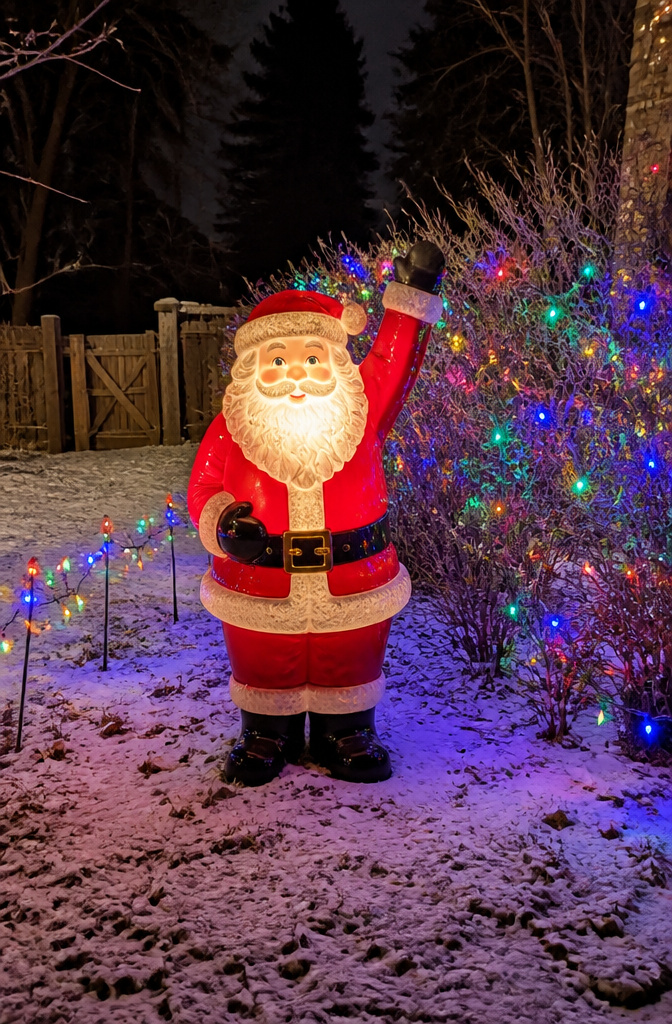
Motion-activated figures draw the eye in a way static displays never quite manage. A reindeer that lifts its head when someone walks past, or a Santa that waves, turns a yard into something people slow down for. The trade is power and complexity. Most of these run on outdoor-rated AC adapters, not batteries that will die mid-December, and the cord needs to sit where snow melt or puddles won’t pool around the connection.
Timers help, but they are not the same thing as the motion sensor itself. The timer controls when the unit can activate; the sensor controls whether it actually does. A poorly aimed sensor fires every time a car passes on the street, or fails to fire at all when guests approach from the side. I have watched a singing snowman burst into song at 11 PM for a stray cat, then stay silent through an entire family arriving for photos. Repositioning the sensor usually fixes this, though some cheaper units give you no adjustment angle at all.
More moving parts means more points of failure. A motor seizes, a gear cracks, and the whole figure becomes lawn clutter. The attention these pieces earn is real, but so is the maintenance. For a renter who stores decorations in a closet between seasons, the bulk and the fragility are worth weighing against the visual payoff.
7. Outdoor Christmas Trees
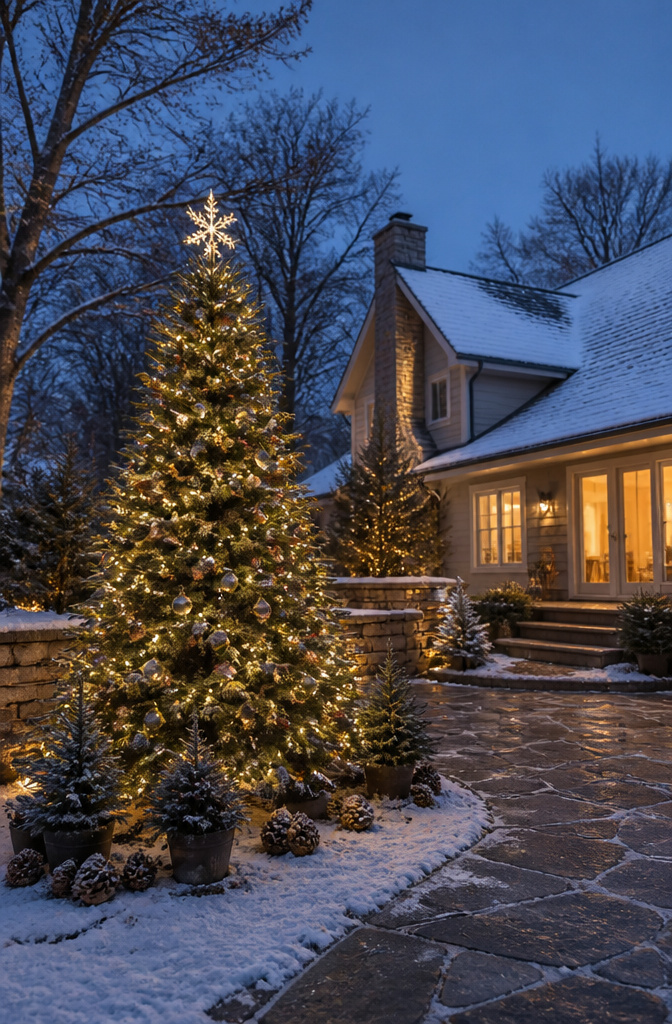
A pre-lit tree built for outdoor use cuts setup time from hours to about twenty minutes, since the lights are already clipped to every branch. The 7.5′ LED Christmas Tree in Warm/Cool White runs $2,499.00 and gives you a switchable color temperature, which matters more than it sounds: warm white reads traditional at dusk, cool white cuts through fog and reads crisp from the street. Weather resistance on these units usually means sealed sockets and UV-stabilized wire, but staking is what keeps a tree upright in wind, not weight alone. Most frames need four guy lines with corkscrew stakes at 45 degrees, plus a center pole driven at least six inches past the turf line.
The Brite Star 7′ LED Lighted Cone Tree Light Show runs $199.00 and takes a different approach: a cone frame wrapped in multicolor LEDs with a white glittered star at top, programmed to run a light show. That price gap reflects build more than height. The cone shape is self-supporting and needs less staking, though it still wants anchoring on exposed lawns. What you lose is the layered look of a traditional silhouette, which some neighbors read as "party" and others as "corporate event." For renters, the cone breaks down to a flat bundle that stores in a closet; the 7.5′ tree demands garage ceiling space or a rental-unit corner for eleven months.
8. Pathway Markers

Pathway markers are the one outdoor display that makes the whole yard feel intentional even when nothing else is lit. A dozen candy-cane stakes or small lantern posts running up the driveway give guests something to follow, and the repetition does the visual work for you.
Solar stakes win for renters and anyone who hates running cords through slush, though the tradeoff is dimmer light and a battery that quits by January if your days are short. Plug-in markers stay bright all season but need an outdoor outlet and a plan for burying or weighting the cord so it does not become a trip hazard.
Frozen ground is the real enemy here. Hammering plastic stakes into December dirt risks cracking them or leaving the whole thing tilted at a drunk angle. Thawing a narrow line with a kettle of water, or waiting for a warm afternoon, saves both the stake and your temper. Spacing matters more than height: about four feet apart keeps the line readable without looking like a runway, and staggering them slightly off the walk’s edge looks softer than a military file.
For the effort, pathway markers return the most cohesive look per minute spent. No ladders, no rooflines, no extension-cord algebra across the lawn. Just a box from the hardware store and an hour before the ground freezes.
What I Buy First on a Tight Budget
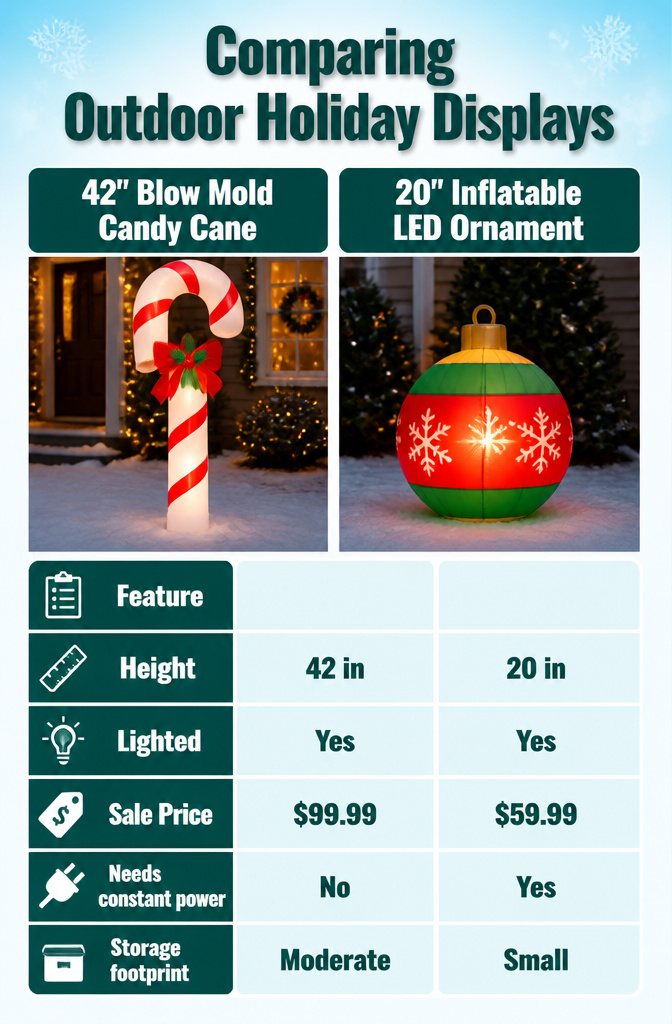
A 42-inch blow mold candy cane running $99.99 on sale beats a 20-inch inflatable LED ornament at $59.99 for pure curb presence. The candy cane stands more than twice as tall, and that height difference matters from the street. Inflatables pack down small for storage, but their motors fail, and a flat Santa in your yard on December 26 looks like yard trash until you drag it inside.
| Feature | 42" Blow Mold Candy Cane | 20" Inflatable LED Ornament |
|---|---|---|
| Height | 42 in | 20 in |
| Lighted | Yes | Yes |
| Sale Price | $99.99 | $59.99 |
| Needs constant power | No | Yes |
| Storage footprint | Moderate | Small |
For a first display on a few hundred dollars, one large lighted piece beats several small ones scattered around. A single 42-inch marker at the driveway entrance reads as intentional; three 20-inch ornaments look like you stopped halfway. Blow molds also survive rain and snow without a blower motor to burn out. If budget forces a choice, spend on height and light first, add width later with garlands or stake lights that cost less per foot.
weekend Setup Order That Saves Time
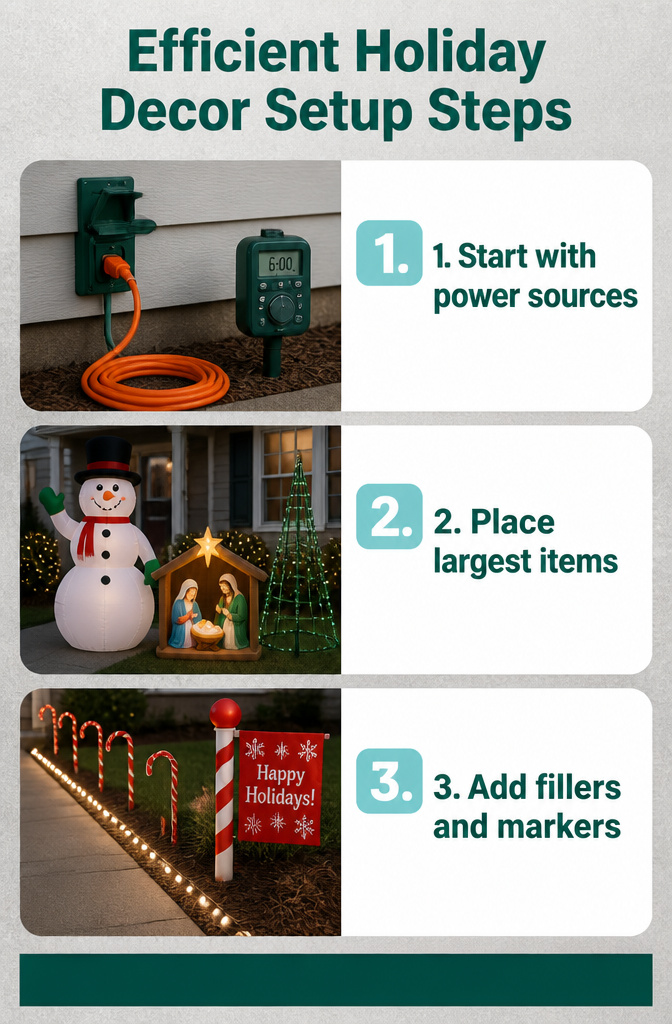
- Start with every power source before a single decoration leaves the garage. Extension cords, outdoor outlets, and timer locations set hard boundaries on where everything else can go. Running a cord across a walkway after the inflatables are up means either moving the giant Santa or tripping your neighbors for three weeks.
- Largest items go in next: the inflatable snowman, the blow mold nativity, the tree frame. These pieces claim territory fast, and their scale makes small adjustments impossible once they’re anchored.
- Fillers and pathway markers come last. Stakes, light strands, and flag poles thread through the gaps the big pieces left behind. This order keeps you from walking back across finished sections to squeeze something in, and it saves the delicate stuff from getting stepped on while you’re wrestling a ten-foot reindeer into place.
Which Lights Hold Up Outside

LED strings meant for the outdoors draw a fraction of the wattage incandescent bulbs do, which matters more than most people expect when everything runs on a timer. A single outdoor outlet with a basic mechanical timer can handle a surprising load of LEDs; swap in old-style bulbs and you may trip the circuit before the yard is half lit. The energy difference shows up in the electric bill, but the practical limit is how much you can plug into one outdoor receptacle without running extension cords across the driveway.
Color temperature splits the decision for me. Warm white LEDs, around 2700K, look close enough to incandescent that I stopped buying the old bulbs entirely for rooflines and garlands. Cool white, 5000K and up, reads as icy blue against snow and works better on bare trees or modern facades where you want contrast rather than nostalgia. Mixing the two on the same house looks accidental; pick one and stay with it.
IP ratings on the box tell you where a string can actually live. IP44 handles rain and splashing from the ground; IP65 or higher is what you want for anything buried in shrubbery or sitting in puddles. IP44 will not survive standing water, and retailers do not always make that plain. The rating applies to the wiring and sockets, not the plug where it meets your extension cord, so that junction still needs to stay off the soil.
Storage Mistakes I Have Made
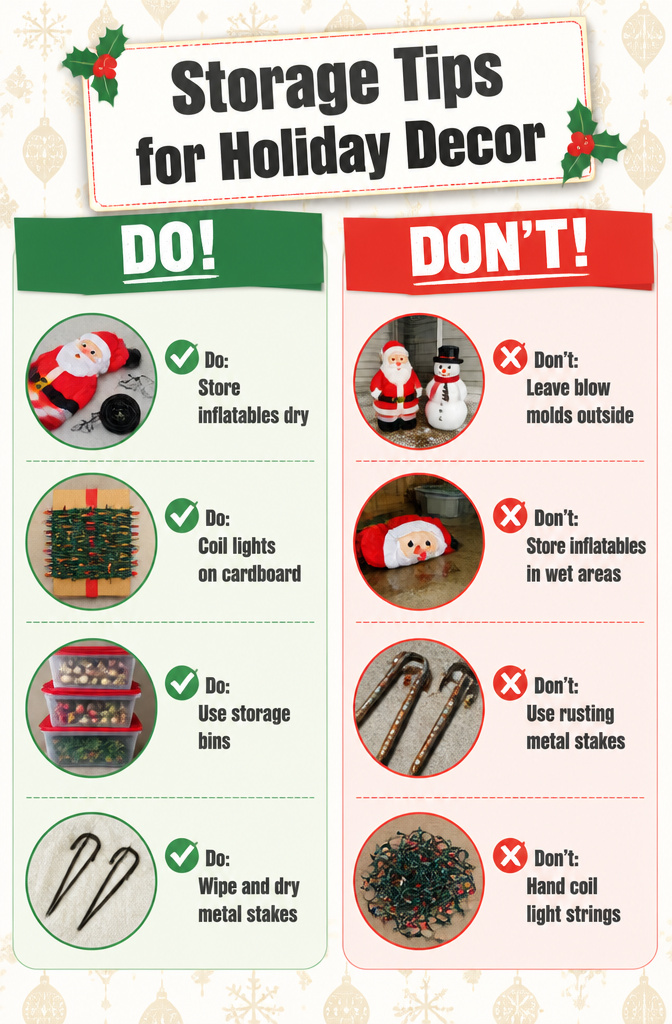
The week after New Year’s, outdoor decorations turn into a pile you trip over for eleven months. Inflatable Santas need completely dry storage or the fan motor corrodes and the fabric mildew stains, which means the garage corner that leaks in March is not the spot. Plastic blow molds left in unheated garages through freeze-thaw cycles develop hairline cracks you notice only when you pull them out the next November and the paint flakes off in sheets. Metal yard stakes rust where the coating chips, and once the shaft is pitted, pushing them into frozen ground bends them into curves that wobble all season. Light strings tangle because I used to coil them by hand instead of around something rigid; now I wind each set around a piece of cardboard with the ends taped down, and the hour it saves in untangling is worth the five minutes of fuss.
Frequently Asked Questions
What are the best outdoor Christmas decorations?
The best outdoor Christmas decorations include inflatables, blow molds, and lighted decorations. Inflatables scale up fast with minimal labor and store compactly. Blow molds survive decades of freeze-thaw cycles and maintain their look year after year. Lighted decorations, especially LED strings, make a modest yard read as intentional after dark while drawing far less wattage than old incandescent bulbs.
How can I decorate my yard for Christmas?
You can decorate your yard with inflatables, blow molds, lights, and yard stakes. Start with your power sources to set hard boundaries on placement, then put in the largest items like inflatables or blow molds before filling gaps with stakes, light strands, and flags. Pathway markers alone can make a whole yard feel cohesive even when nothing else is lit.
What types of inflatables are available for outdoor decoration?
Outdoor inflatables include characters like Santa, snowmen, and holiday-themed designs such as trains and ornament shapes. A six-foot Santa or snowman self-inflates in under two minutes from a standard outlet with built-in lighting included. Most owners use inflatables as accent pieces near the door rather than filling the whole yard, since constant motor operation draws more electricity than LED strings and anything under twenty pounds of tethers becomes hazardous in gusts over 25 mph.