I start by anchoring my space with five essential pieces: a quality sofa, media console, dining table with four chairs, bar cart or storage unit, and a sub-$200 coffee table. I allocate 10-15% for taxes and delivery, then prioritize multifunctional furniture. Storage ottomans, pullout sofas, and drop-leaf consoles serve dual purposes without crowding the room. I mix affordable staples with one or two invest-worthy items, shop secondhand for solid wood frames, and avoid trendy purchases until my foundation is set.
I light my apartment at three heights using ceiling fixtures, wall sconces, and floor lamps while placing mirrors across from windows to amplify natural light. I cover no more than 70% of surfaces to prevent clutter, measure doorways before buying, and furnish gradually with one piece monthly to maintain budget control and intentional selection. Each decision builds toward a cohesive, adaptable space that evolves with my needs rather than demanding immediate perfection.
What Should Your Apartment Decorating Budget Actually Cover?
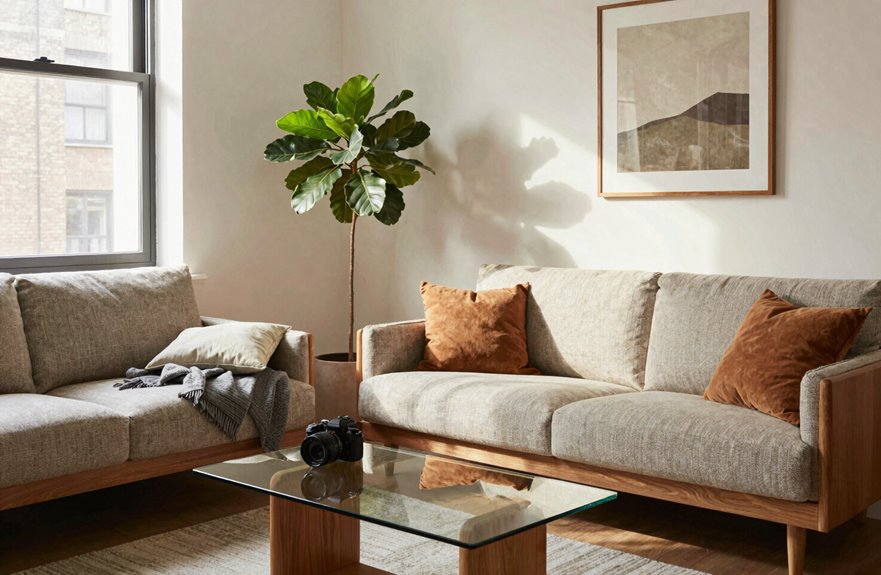
Where do you start when every Pinterest board shows a different version of “finished”? Smart budgeting means knowing what actually deserves your money.
Build Your Foundation
Your budget should cover core furniture with lasting value: a quality sofa, media console, and dining table. These anchor your space. Add flexible accents like lighting and rugs, which let you create three distinct looks over time without replacing everything.
Maximize Every Dollar
Prioritize multifunctional pieces. Ottomans with storage, pullout sofas, and drop-leaf consoles save space and money. Mix price points with affordable staples plus occasional invest-worthy items, and plan gradual upgrades.
Don’t Forget the Extras
Include decoration costs: art prints, plants, lamps. These transform rooms without major purchases. Finally, allocate 10-15% contingency for tax, delivery, and sales. This keeps actual spending aligned with your plan.

【3 Storage Space】Sofa sleeper has 3 hidden storage that can fit blankets, pillows, and more, which Maximize your living space and stay it tidy and organized.

【Easy-Lift Hidden Storage】This sectional couch measures 103” W x 60” D x 35.4” H and features spacious hidden storage under each seat. Simply pull the handle to lift the cushion and its supportive base panel for easy access. Once opened, the controlled lift-up design helps prevent sudden drops and pinched fingers, with flexible opening angles for safer family use.

Experience Deep-Seat Comfort That Lasts – Sink into 6-inch thick high-density foam cushions supported by premium serpentine springs and remains elegant even under the weight of up to 600 pounds. Unlike cheaper sofas that sag, ours provides firm yet responsive support, perfect for movie marathons or afternoon naps.
Buy These 5 Pieces First (and What to Skip)
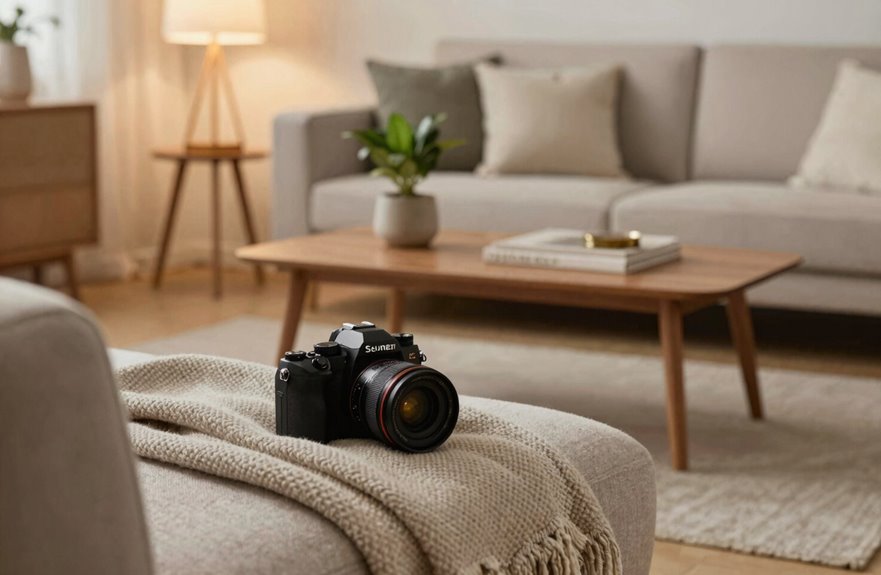
I’ll walk you through the five pieces worth buying first, point out where most people waste money, and show you what to skip without regret. Your sofa, wall unit, bar cart, coffee table, and art form the foundation, but I’ve seen too many renters blow budgets on trendy accent chairs they’ll replace in a year. Skip the matching sets, the oversized rugs, and the “investment” lighting until you’ve locked in these essentials and mapped your room’s flow.

Grand Stage for Entertainment: This large fluted TV stand provides a commanding and stylish base for TVs up to 80 inches; More than just a stand, it's the foundation for unforgettable movie nights and immersive gaming sessions

【Fluted Farmhouse Charm】Elevate your living room with this stylish entertainment center featuring a striking fluted door design that blends farmhouse warmth with modern aesthetics. This TV stand adds texture, character, and timeless appeal to your space, making it a perfect match for vintage, minimalist, or contemporary home styles.

【Fluted Farmhouse Charm】Elevate your living room with this stylish entertainment center featuring a striking fluted door design that blends farmhouse warmth with modern aesthetics. This TV stand adds texture, character, and timeless appeal to your space, making it a perfect match for vintage, minimalist, or contemporary home styles.
Essential First Purchases
Anchor pieces form the foundation of a functional apartment. These five items deserve your initial investment.
Five Essential Furniture Pieces
Start with these core furniture pieces:
- Versatile sofa – Choose durable upholstery that withstands daily use
- Scalable dining table – Select an extendable option for flexibility
- Functional storage unit – Prioritize vertical space for organization
- Budget-friendly media console – Keep electronics accessible and tidy
- Coffee table under $200 – Add surface space without overspending
Include a set of four dining chairs to maximize seating. Consider budget-stretch alternatives: a pullout sofa accommodates guests, while an ottoman with hidden storage doubles as seating and surface area.
What to Skip
Avoid trendy upgrades like formal accent chairs or oversized statement art. Choose timeless, mix-and-match pieces you can build on gradually.
Common Buying Mistakes
Many new apartment owners scatter their budget across too many small purchases before securing the pieces that actually hold a room together. Friends often spend hundreds on trendy decor while sitting on folding chairs, which defeats the purpose of creating a functional living space.
The Five Foundation Furniture Pieces
Focus your first dollars here:
- Sofa – Your room’s anchor. Quality options under $1,000 exist; under $500 is rare.
- Media console – Creates visual structure and storage.
- Dining table with four chairs – Establishes your gathering space.
- Bar cart or storage unit – Adds flexible function.
Staged Approach
Plan for roughly $3,000 total, prioritizing multi-use furniture pieces like pull-out sofas or storage ottomans. Mix price points, hunt secondhand finds, and time sales. This method builds a cohesive space where you actually want to spend time.
Strategic Skipping Tips
Where should your money go first? I recommend anchoring your space with five core pieces: a versatile sofa, functional media unit, dining table, four dining chairs, and a multi-use cart. These build your foundation.
Smart Priorities
- Target budget-friendly sofas under $700 with clean lines and proper leg height. Avoid bulky frames that dominate small spaces.
- Reserve funds for a standout media console; it anchors your room’s focal point and storage.
- Add one lighting option and a small coffee table for layered functionality.
What to Skip
Skip trendy, oversized items that lock you into one look. Instead, mix price points through secondhand finds combined with sale pieces to build flexibility. Keep non-essentials upgradable; your space evolves as your needs change.
Find Multifunctional Furniture That Earns Its Keep
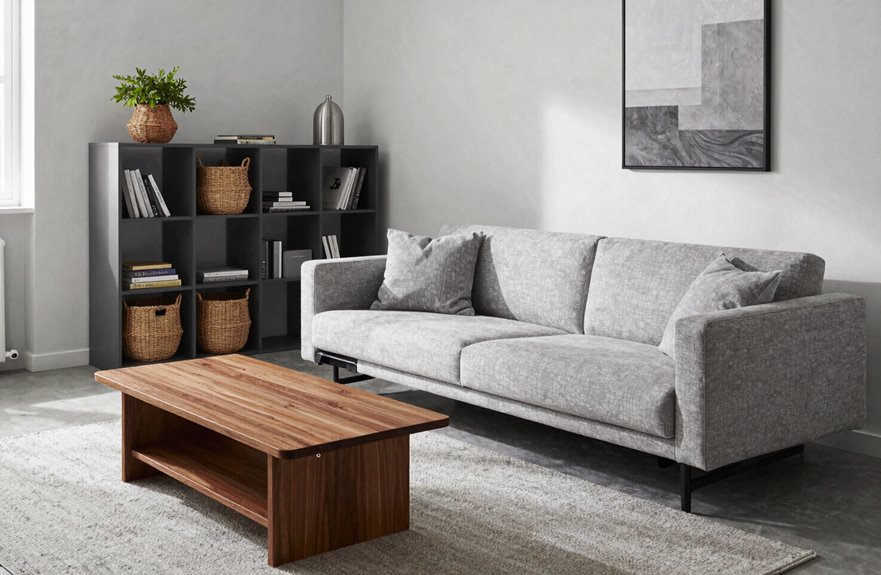
Why sacrifice square footage when your furniture can work twice as hard. Multifunctional furniture maximizes every inch of a small apartment.
Small spaces demand smarter solutions—let your furniture do the heavy lifting.
Hidden Storage Solutions
Ottomans with concealed compartments store blankets and books while providing seating.
Flexible Sleeping and Dining
Pullout sofas or drop-leaf consoles expand into guest beds or dining surfaces when hosting friends.
Adaptable Configurations
Modular pieces reconfigure as needs change without crowding the room.
Multi-Use Surfaces
Bar carts or versatile end tables serve as storage, display, and serving areas simultaneously.
Visual Space Preservation
Lightweight, open-base furniture with thin legs maintains sightlines and creates breathing room.

[43.3" to 59" Expandable Round to Oval Dining Table] Our multifunctional extendable dining table effortlessly stretches from a space-saving 43.3-inch round surface into a roomy 59-inch oval table, ideal for daily family dinners and bigger get-togethers alike. Equipped with a smooth sliding expandable system, this dining set table delivers sturdy support and hassle-free conversion anytime you need extra tabletop room for guests, meals or entertaining.
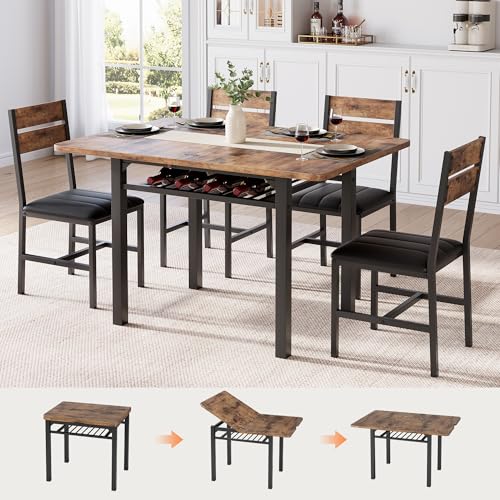
23-47" Extendable Kitchen Table: Designed with a flexible, extendable tabletop expanding when you need more space. When not in use, chairs slide neatly under the table, giving you more room to move around. Making it ideal for apartments, breakfast nooks, kitchens, and compact dining rooms.

5 Piece Dining Table Set for 4 – This complete kitchen table and chairs set includes 1 extendable wood dining table and 4 matching PU upholstered chairs. If needed, you can add extra chairs at the ends to accommodate 6 people, creating a functional and stylish dining solution for everyday meals, family gatherings, and casual dining.
Light a Dark Apartment Without Renovating
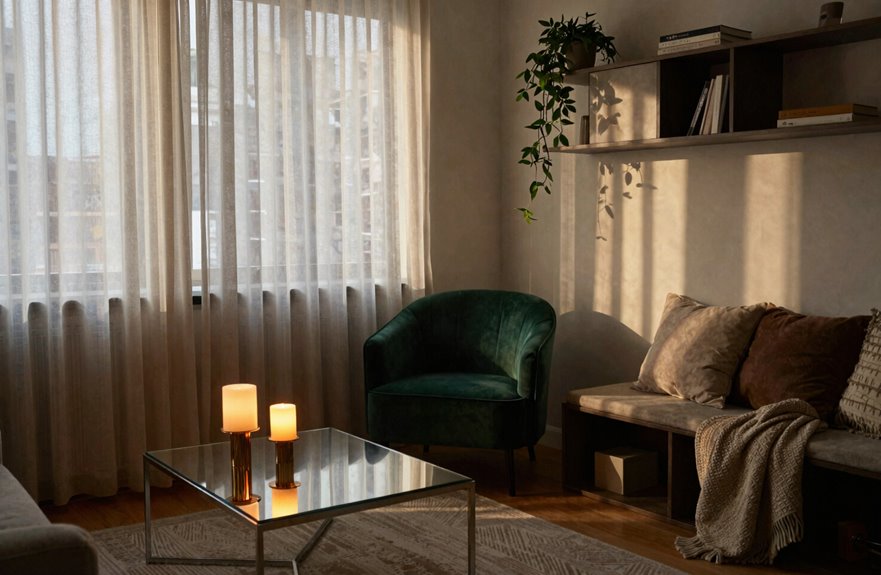
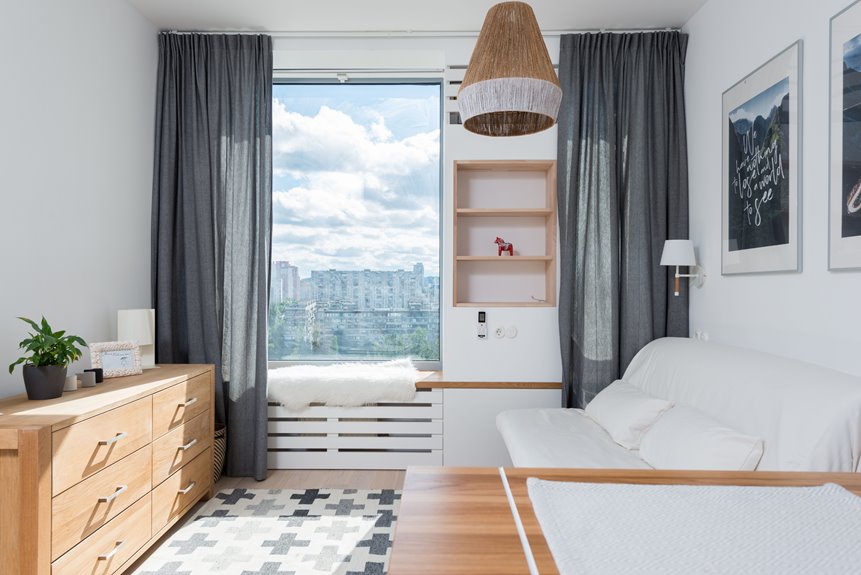
How can you transform a dim apartment into a brighter space without picking up a paintbrush or calling a contractor? Maximizing natural light is your most powerful tool. Start by swapping heavy curtains for sheer panels that filter sunlight without blocking it entirely. Keep windows completely clear of furniture and clutter to let daylight pour through unobstructed.
This approach works:
- Position reflective surfaces strategically to amplify natural light throughout the room
- Layer multiple light sources including floor lamps, table lamps, and wall sconces for evening brightness
- Select furniture with open bases and slender legs to reduce visual weight
- Place light-colored rugs and metallic accents to bounce existing light
- Maintain completely clear window areas by removing obstructive drapery hardware
These shifts create a welcoming, luminous home by allowing more light to enter and reflect throughout your space.

【Multifunctional & Foldable】The foldable dining table meets the limited space user needs with a modern and innovative design. The folding dining table fully open size is 60.2" L x 31.5" W x 28.5" H with 6-8 seats, which is suitable for serving guests. Closing this drop leaf table can act as a console table in 13" L x 31.5" W x 28.5" H. If you want to work, have coffee, or study, just half open this space saving dining table and achieve multi-scene.

Farmhouse Extendable Dining Table Design: Designed to suit small dining areas, this farmhouse-inspired dining table combines a clean rectangular profile with a space-saving drop leaf. The balanced proportions allow it to function as a console table when folded and a full dining surface when extended, supporting efficient use of limited floor space
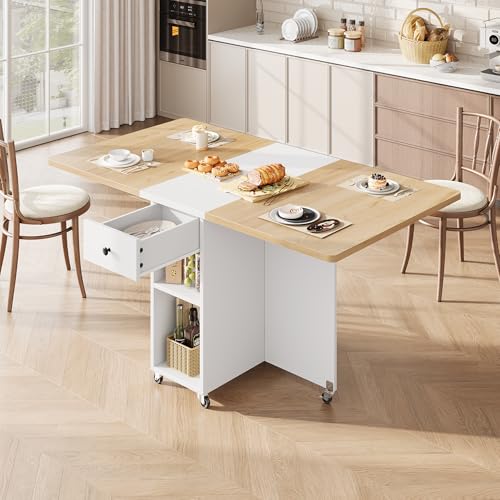
【3-in-1 Multipose Folding Table】Easily folds and extends to meet your changing needs. When fully expanded, it seats 2-4 for dinner or weekend brunch. Half-fold it to create a compact desk or kitchen prep station. Fold both sides down, and it becomes a slim console table that fits effortlessly in hallways or entryways.
Use Mirrors to Double Your Visual Space
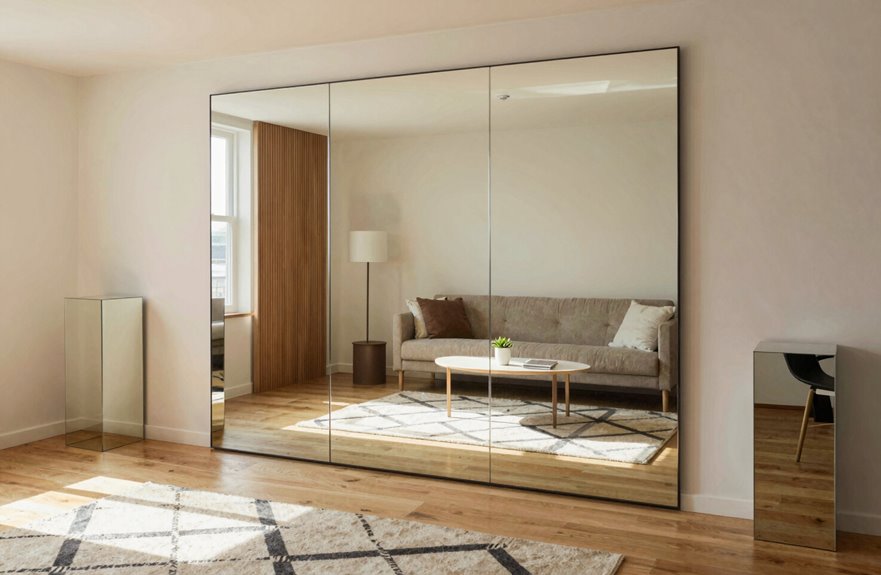
What makes a cramped room feel instantly larger? Mirrors. I use them strategically to transform tight spaces into airy retreats.
Position for Maximum Impact
I place mirrors across from windows. This reflects natural light and visually doubles my room’s dimensions. One large mirror works better than several small fragments; it amplifies light without creating visual noise.
Height and Placement
I mount or lean mirrors at eye level. This preserves clean sightlines and prevents the cluttered effect of poorly positioned reflective surfaces.
Complementary Choices
I pair mirrors with lighter wall colors and minimal surrounding decor. Busy reflections defeat the purpose. I also incorporate metallic frames or glossy furniture to distribute light beyond the glass itself.
These techniques cost little and deliver significant spatial transformation.

【Classic 3-Light Bathroom Light Fixture Design】This black vanity light is composed of a round metal wall mount and the matte black metal shade, add classy and elegant beauty to any space with its modern industrial look. Perfect for living room, bedroom, porch, kitchen, bathroom, vanity, cabinets and other places for decoration required.

【Industrial & Farmhouse Style Design】This 2-light bathroom vanity wall sconce lighting is designed simple, featured with matte black baking paint finish that creates a farmhouse look, which makes this black bathroom light fixtures match a variety of decorative styles, whether your house is modern or vintage. Enjoy the warmth and rustic charm them whlie installed this black sconce over mirror or a vanity.

E26 SOCKET: E26 base socket is compatible with various bulbs, such as LED, INCANDESCENT, CFL. Recommended Edison bulbs. Support 3 x 60W bulb (sold separately).
Hide Clutter in Storage That Looks Like Decor
I’ll transform your space by choosing furniture that works twice as hard for you. Ottomans with hidden compartments and console tables that expand when guests arrive store your belongings while serving daily functions. Tall bookcases and floating shelves lift storage off your floors, keeping only seven to eight meaningful items visible to maintain clean surfaces.
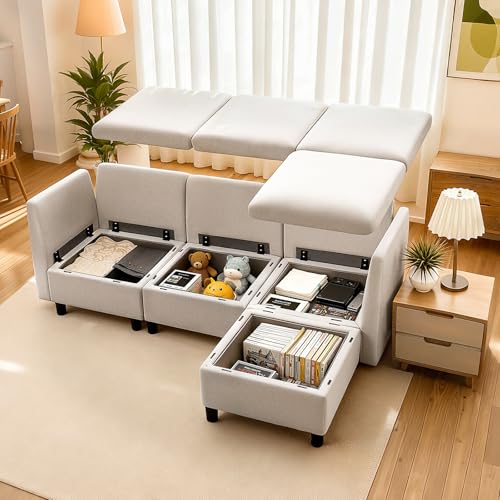
Comfortable Cloud Sofa: Breathable cotton-linen fabric provides a soft, skin-friendly touch, while plush cushions with high-resilience foam provide lasting comfort. A solid wood frame holds up to 250 lbs / 113.4 kg per seat—ideal for your living room set

【3 Storage Spaces】Built-in storage compartments under the chaise is roomy, perfect for stashing pillows, blankets and other household items. Also, there are 2 storage spaces on armrests for storing small items, helping you save space while ensuring comfort is always within reach
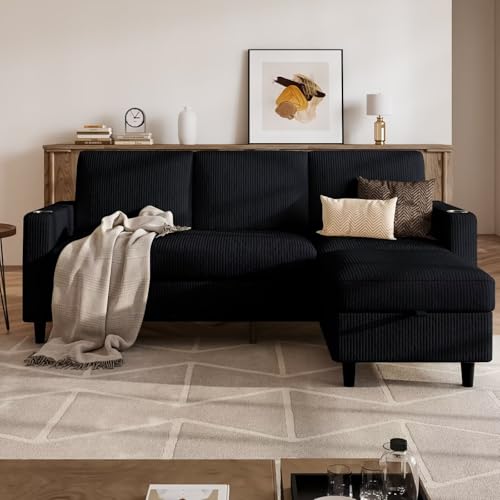
Smart Flexibility: The L shaped couch adapts easily to your space with a reversible ottoman that switches sides in seconds, creating cozy chaise sofas for lounging or movie nights. Built-in cup holders on the armrests keep drinks secure, making everyday relaxation feel effortless
Dual-Purpose Furniture Selection
Where should you store your belongings when square footage is limited? Multi-functional furniture transforms cramped apartments into efficient, welcoming spaces. Each piece must earn its keep.
- Ottomans with hidden compartments store blankets and remotes while serving as seating or coffee tables
- Drop-leaf consoles expand into dining tables, then retract to free floor space
- Bar carts roll linens, towels, or dishes into any room, blending storage with display
- Pullout sofas eliminate guest room needs, maintaining tidy living areas daily
- Slim-profile pieces with concealed storage preserve visual openness through open bases and thin legs
These selections allow you to host friends, work from home without clutter, and relax without visual overwhelm. Your apartment functions larger than its actual measurements.
Concealed Storage Solutions
How do you keep everyday essentials within reach without letting them dominate your space? I rely on concealed storage to maintain order without sacrificing style.
| Concealed Storage Solution | What It Hides | Best Placement |
|---|---|---|
| Ottoman with hidden storage | Blankets, toys, magazines | Living room corner |
| Lift-top coffee table | Remotes, chargers, coasters | Center of seating area |
| Tall slim storage unit | Books, linens, electronics | Empty wall space |
I choose furniture with concealed storage drawers built into bed ottomans and sofa armrests. These hide everyday items completely. I also use floating shelves and woven baskets under consoles. They stash clutter invisibly while looking intentional. Vertical storage frees floor space in small rooms. Every piece serves double duty, keeping surfaces clear and making your space feel organized and intentional.
Shop Secondhand for Character at Half the Price
With a bit of patience, I’ve cut my furniture costs in half by shopping secondhand without sacrificing style. You can build a space that feels genuinely yours while keeping money in your pocket.
- Browse Facebook Marketplace and Craigslist daily for new listings
- Inspect solid wood frames, which outlast particle board
- Negotiate prices respectfully; sellers often expect it
- Mix one statement vintage piece with simpler modern items
- Clean and refinish surfaces to match your aesthetic
Secondhand shopping rewards those who wait for the right piece rather than settling immediately. Pre-owned items carry stories new furniture cannot replicate, and your apartment feels more collected than decorated. This approach works particularly well for starter homes where every dollar matters and personality trumps perfection.

Postmodern Arched Wood Design: Inspired by postmodern minimalist aesthetics, this 4-door sideboard features elegant arched-front panels and natural wood-grain texture for a refined architectural look. The clean lines and soft curves elevate dining rooms, living rooms, or entryways, while detachable long metal handles allow easy style customization.

【Artistic Mid-Century Aesthetic】Blending modern minimalism with timeless elegance, this natural oak tv stand seamlessly adapts to various home decors. Featuring a striking design with 4 unique arched doors and safe rounded corners, this mid century modern tv stand serves as an eye-catching centerpiece that instantly elevates the aesthetic of any room.

Farmhouse Vintage Design: Classic hollow carved cabinet doors, antique brass ring pulls and elegant cabriole legs create a charming vintage farmhouse look, while the blue finish adds a refined accent to living rooms, dining rooms and entryways.
Rent Furniture When You’re Not Ready to Commit
Renting furniture provides flexible living solutions when you’re not ready to commit to permanent pieces. You can test different layouts and styles without depleting your savings, making it a cost-effective option that adapts to your changing needs. Whether you need temporary seating for guests or a short-term home office setup, this approach provides access to quality items without long-term obligations.

Space-Saving Extension: Keep the table compact at 47.2" for everyday dining, then open it up to 63" whenever extra seating is needed. The flexible size comfortably supports 4–6 people while making efficient use of apartments, kitchens, and smaller dining areas.

[43.3" to 59" Expandable Round to Oval Dining Table] Our multifunctional extendable dining table effortlessly stretches from a space-saving 43.3-inch round surface into a roomy 59-inch oval table, ideal for daily family dinners and bigger get-togethers alike. Equipped with a smooth sliding expandable system, this dining set table delivers sturdy support and hassle-free conversion anytime you need extra tabletop room for guests, meals or entertaining.

[Solid Wood Kitchen Table Set for 4]This dining table set includes 4 dining chairs and a lovely butterfly leaf table to enhance the charm of any restaurant with its classic vintage style. There are three colors to choose from. All colors are the best color combinations that bring beauty to decorate your living room or dining room and add some elegance to your home. Your family and guests will love it.
Flexible Living Solutions
Why commit to a $2,000 sofa when you’re still figuring out your style? Furniture rental offers the flexibility needed to create a space that feels like home without locking yourself into permanent choices.
- Test different layouts and aesthetics before investing in permanent pieces
- Avoid large upfront costs while maintaining quality furnishings
- Adjust or extend rental terms as your living situation evolves
- Furnish temporary spaces cohesively without long-term obligations
- Blend rented items with owned pieces for balanced, affordable decor
This approach lets you belong in your space now, not someday. Whether you’re in a starter apartment or transitioning between homes, rental services provide practical solutions. You build your environment deliberately, learning what works before making lasting commitments.
Cost-Effective Commitment
How do you furnish a space you’ll only call home for a year? Furniture rental solves this dilemma without draining your savings or locking you into permanent choices.
Why Rental Works
Furniture rental keeps money in your pocket while you figure out what you actually need. You avoid being stuck with a desk you’ll hate in six months or a dining table that won’t fit your next apartment.
Practical Applications
- Rent desks and shelving for a home office that disappears when your lease ends
- Add seating and dining surfaces when guests visit, then return them
- Test different styles and room scales before you ever buy
This approach lets you build a functional, welcoming space now. You can establish a comfortable living environment during your temporary stay without committing to long-term purchases.
Temporary Style Options
Where do you start when you want a polished space without committing to permanent choices? Furniture rental offers the flexibility you need to create a home that feels like yours, even when your situation feels temporary.
- Test different living and dining layouts before committing to any single arrangement
- Access essential pieces, desks, seating, tables, without draining your savings
- Adjust your setup as life shifts: new job, growing family, or frequent relocation
- Experiment with three distinct budget-friendly looks using interchangeable items
- Choose rent-to-own or short-term leases that match your financial timeline
You don’t have to sacrifice cohesion for convenience. With rental options, you’ll build a space where you actually belong, one adaptable piece at a time.
Transform Rental Walls With Paint and Textiles
The blank canvas of rental walls doesn’t have to stay that way.
Paint Strategically
Washable, low-odor interior paints work well for rental spaces. Test colors in small areas first. Light, sheer window treatments hung higher and wider expand rooms visually and maximize natural light.
Layer Textiles
Textiles introduce color without permanent changes. Area rugs, throws, and cushions add texture instantly. Fabric wall hangings, tapestries, or framed textiles create warmth while keeping walls damage-free.
Consider Removable Options
Removable wallpaper and wall decals offer pattern without commitment. These peel away cleanly when you move.
These methods transform sterile rentals into spaces that feel like yours without creating landlord conflicts.

Quick Folding Design: Designed with convenience in mind, this quick folding mechanism of the folding dining table allows for easy storage in narrow spaces or using it as a console table. Simply fold the legs and flip the tabletop to transform your space in seconds.

【Folding Multifunctional Table】Our dining table has a foldable modern design that can be used for many purposes such as a writing desk in half-expanding, or a small stand in folding placed in a corner. At the bottom of drop leaves, there are holes for hidden buckle to lock up the active table plates. It's pretty cool to have this table that can fold up easily but also convert into a full size dining table for 4 or even a side table for 2-3.

NO ASSEMBLY REQUIRED: Skip the headache of complicated instruction manuals and tools. This small wood kitchen table arrives fully assembled and ready to use straight out of the box.
Measure Your Space (and Doorways) Before You Buy
Once you’ve settled on colors and textures for your walls, you’ll face another challenge: getting furniture into your space without complications. Skipping measurements leads to costly mistakes. Before buying anything, grab your tape measure and record every dimension that matters.
Measure twice, buy once—skip the tape measure and you’ll pay for it twice.
Use this systematic approach:
- Measure doorway widths and ceiling heights to establish maximum furniture sizes
- Record wall lengths and clearance around doors for proper placement
- Document architectural features that could obstruct layout options
- Map entry points including stairwells and corners for delivery routing
- Re-check measurements after placement, accounting for rugs and traffic flow
These steps ensure your pieces fit through the door and function properly in the room. Precision prevents costly errors and installation problems.

⭐【Superior Quality】These black and gold finish sconces wall decor set of 2 are made of high-quality steel and aluminum, not easy to rust and fade, and have strong corrosion resistance. perfect for damp spaces. The thick clear glass shade is used, which is not easy to break and has strong light transmittance, illuminating various spaces in your house.

Installation Options: Choose between plug-in or hardwired for your black wall sconce. The plug-in allows flexibility and easy relocation without rewiring. Hardwired offers a seamless, permanent look with no visible cords. Customize your décor effortlessly.

Modern Unique Design:Modern wall sconce featuring brushed brass finish and sleek metal lampshade for an industrial mid-century aesthetic. Perfect for mid-century decoration styles and combines the contemporary and vintage industrial style.
Cover 70% of Surfaces Max: The Anti-Clutter Rule
Why does a barely furnished shelf often look more expensive than one packed with trinkets? Restraint signals intention. Limiting surface coverage to 70% creates breathing room that makes your space feel larger and your choices more deliberate.
Apply the Rule
- Cover coffee tables, consoles, and shelves partially, never completely
- Leave walls and tabletops partially bare to balance visual weight
- Reserve that 30% negative space for the eye to rest
This approach prevents the cramped feeling that overwhelms small apartments. You’ll highlight what matters: a sculptural plant, one striking art piece, or a functional lamp. Surface coverage becomes a curator’s tool, not a hoarder’s habit. Your belongings gain presence through isolation, and your apartment finally feels edited and breathable.
Light Your Room at Three Heights
Beneath the ceiling, across the walls, and along the floor, light operates in layers that you can harness strategically.
Your lighting strategy determines how welcoming your space feels. Natural light should be your foundation, with artificial light built upward and downward from there.
- Hang curtains higher and wider than windows to expand visual space and maximize daylight entry
- Select lighter wall colors and furniture tones to reflect ambient light throughout the room
- Install sheer drapes instead of heavy fabrics to filter rather than block sunlight
- Position mirrors across from windows to bounce natural light deeper into the space
- Layer ceiling fixtures, wall sconces, and floor lamps to maintain consistent brightness at every level
This three-tier approach prevents any corner from feeling dark or neglected. You’ll create depth, eliminate shadows, and establish an environment where occupants can settle in comfortably without strain or visual fatigue.
Furnish Slowly: The Case for One Piece Per Month
Where does a cohesive apartment come from? I’ve found it grows from patience, not impulse.
Furnish Slowly: The Case for One Piece Per Month
Purchase one furniture piece monthly. This strategy spreads costs into manageable investments, replacing overwhelming upfront expenses with steady progress.
Why This Works
- Budget control: You’ll avoid debt while building your space.
- Intentional selection: Each furniture piece receives proper consideration.
- Flexible upgrading: Start with essentials, then add styling items as funds allow.
I mix price points freely. Secondhand finds and sale items maximize impact without strain. Your tastes will evolve; this approach lets you adjust before committing to major purchases.
Over months, these furniture pieces accumulate into something unified. You’ll inhabit a space that genuinely reflects you, built deliberately rather than rushed.