Outdoor Halloween decorations range from a $10 PVC cemetery gate to full animated scenes with built-in lighting, and the right choice depends on how much October weather your yard actually sees. Rain and frost kill exposed incandescent bulbs and paper props before the first weekend, so the sealed LED housings and resin tombstones that survive those conditions are what separate decorations you store from ones you trash.
1. Outdoor Halloween Lighting

Light does the real work after sunset. A yard full of props goes flat and invisible without it, and the right glow turns a few pieces into something the neighborhood slows down to see.
The market for halloween outside decor now runs past 2,100 items, so the lighting choices have expanded well beyond the single strand of orange bulbs I used to wrap around a porch post. Animated pieces with built-in LEDs do double duty, giving you both the prop and the illumination in one stake or inflatable. The Animated Light-Up Clown Tug Of War Halloween Decoration is one example: it carries its own light source, so it reads from the street without your having to position a separate spotlight just so.
Weather resistance matters more for lighting than for anything else you put out. October in most of the country means rain, frost, or wind, sometimes all three in the same week. Plastic housings and sealed LED units hold up; paper-thin fabric shades and exposed incandescent bulbs do not. Check the label for outdoor rating before you buy, and expect to spend a few dollars more for the housing that will survive until Halloween night rather than fizzling out by the first weekend.
2. Porch or Patio Decor
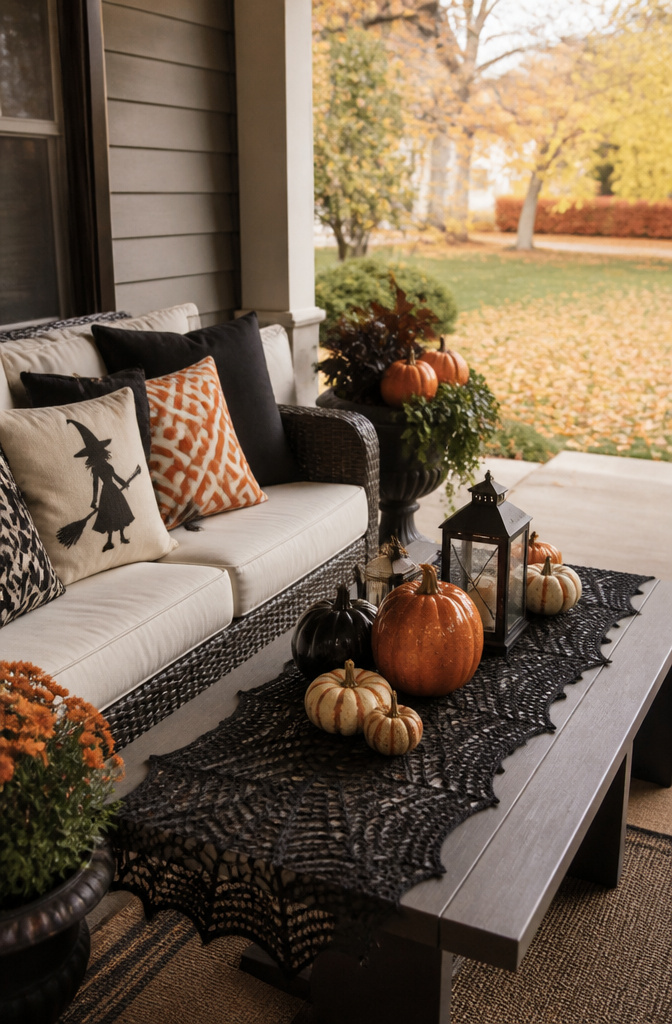
A porch or patio with seating already has the bones for Halloween outside decor that feels lived-in rather than staged. Seasonal throw pillows and pumpkins do the heavy lifting here, but the trick is making them read as one story instead of random props. Last year I tried mixing a vintage witch motif with modern geometric covers and the eye kept catching the clash, not the mood. Weather-resistant materials matter more on a porch than anywhere else, because October brings rain, dew, and the kind of wind that turns a lightweight cushion into a lawn ornament. Outdoor-rated pillow inserts and fabrics marked for UV and mildew resistance hold their shape through the season, and a quick spray of fabric protector on anything questionable buys insurance. For pumpkins, the real ones soften and attract squirrels; resin or foam versions with a matte finish look convincing from the sidewalk and survive until November. The fabric tie-in is the detail that pulls it together. A single spiderweb runner across a side table, or a throw in the same burnt orange as the pumpkins, repeats the color enough that the space feels intentional. Coordinated sets help if you do not trust your eye, though mixing two or three matching pieces with your own finds usually looks less catalog-perfect and more like someone actually lives there.
3. Window Scenes
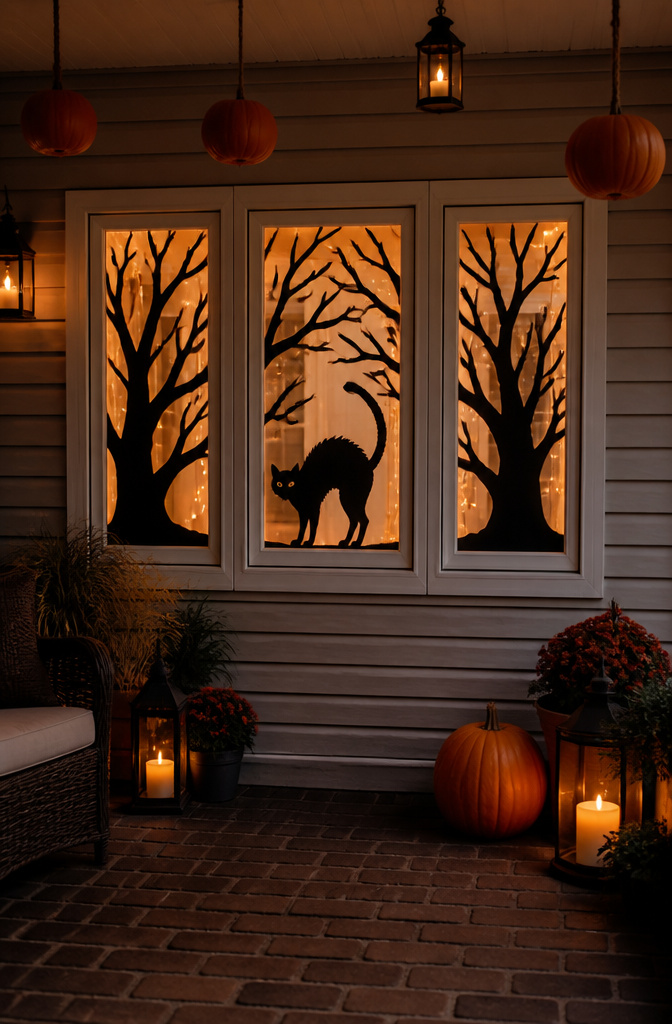
Black construction paper and a pair of scissors will get you a window scene that reads from the sidewalk better than anything store-bought at that price. The trick is backlighting: a lamp or even a string of white LEDs behind the cutout turns the paper into a solid black silhouette and makes the edges glow. Renter-friendly, too; tape the paper to the inside of the glass and peel it off November 1 with no marks left on the sash.
A single window with a branching tree or a cat arching its back reads as a vignette. Three windows in a row, each with a stage of the same story, start to look like a display. The porch railing or the yard stakes you already have outside set the scale; keep the cutouts bold and simple so they read at that distance. A spiderweb with fine lines looks like a smudge from twenty feet away. A witch’s hat, a coffin lid, a reaching hand: those shapes carry.
Construction paper runs a few dollars a pack. One evening with a podcast and an X-Acto knife, and you have enough to fill the street-facing windows. The paper fades if rain hits it, so this stays inside the glass, not out. That limitation is what makes it work for apartments and rentals; you are decorating the air between the pane and the curtain, not the facade itself.
4. Pumpkin Luminaries
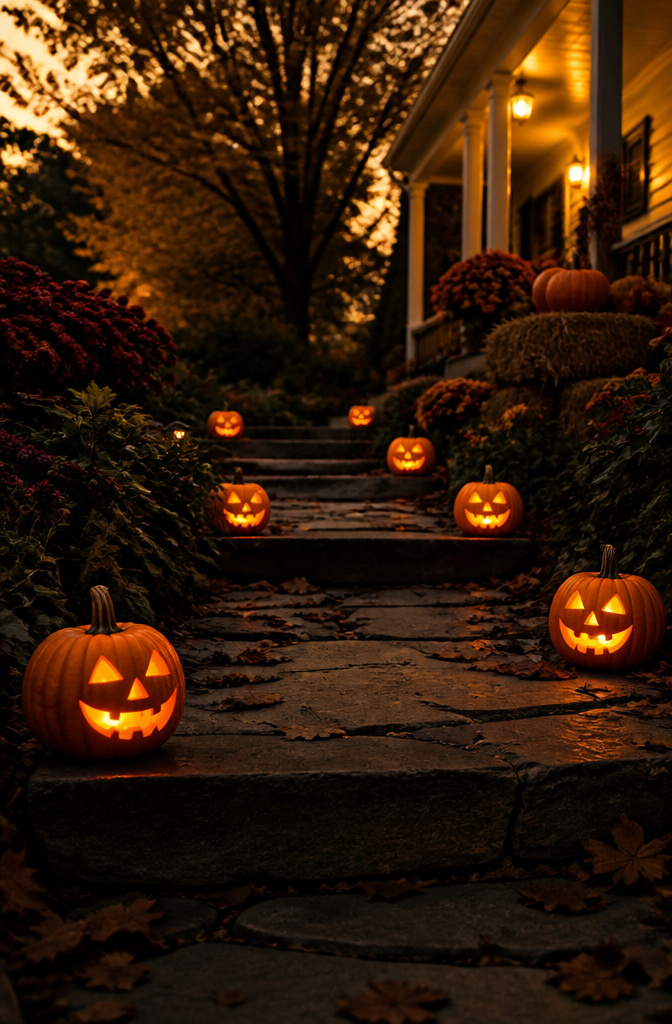
Small pumpkins, hollowed and hung along a walkway, give off a light that feels handmade in a way store-bought plastic never quite matches. The glow through carved faces or simple geometric holes turns an ordinary path into something that guides trick-or-treaters by instinct rather than by porch light alone. What convinced me, reading through a dozen of these setups, is that the scale matters more than the carving skill: golf-ball-sized pie pumpkins spaced every three or four feet read as intentional, while basketball-sized specimens every ten feet look like an afterthought.
The weather is where this idea lives or dies. A carved pumpkin in October rain turns to soup in forty-eight hours, so lining the interior with petroleum jelly buys you two to three extra nights before collapse. For anything longer, the artificial route wins: craft-store foam pumpkins take a flickering LED tea light without the rot, and you can reuse them for the Thanksgiving table if you paint over the faces. Two ways to play this: commit to real pumpkins and plan on a Thursday carve for Saturday’s party, or buy the foam once and store them with the Christmas lights. The foam wins if your October runs wet and cold; real pumpkins win if you want the smell and the seeds.
5. Cemetery Gate Build
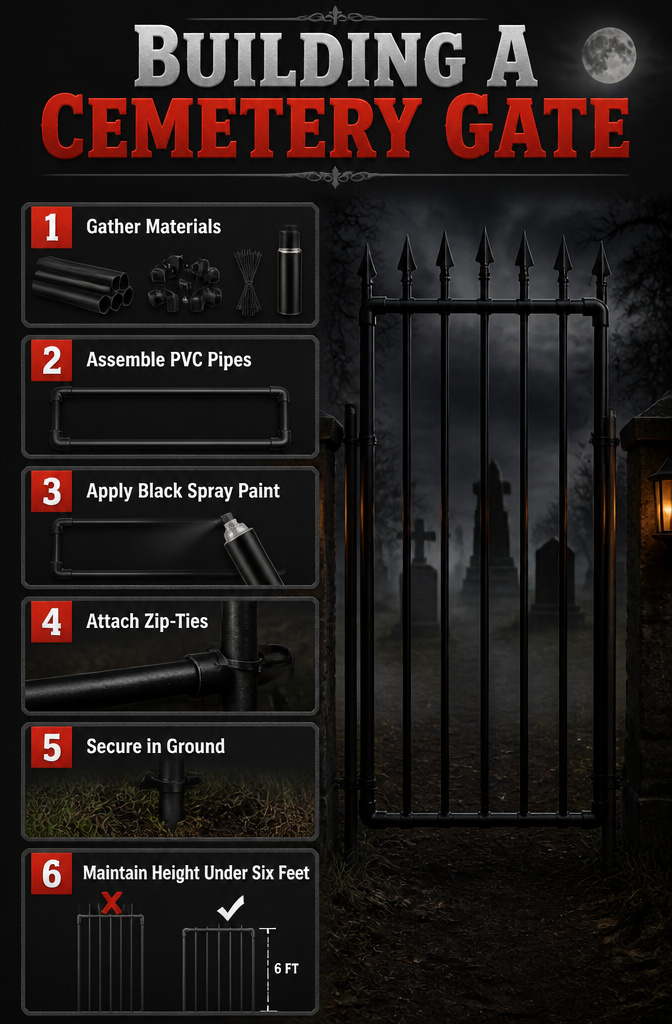
A cemetery gate built from PVC pipe and black spray paint can frame your yard entrance for under $10, which is about what a single foam tombstone costs at the seasonal pop-up stores. The pipes slip together at the corners with elbow joints, no cutting required if you buy the pre-threaded lengths from the hardware aisle. Black paint hides the plastic sheen; a few drips down the uprights read as wrought-iron rust from ten feet away.
The gate swings on zip-ties looped through fence stakes, so it moves in wind without tearing anything loose. That matters if you are renting and the deposit hangs on intact lawn. I have seen versions stretched with cheesecloth between the bars to catch backlight, though that pushes the budget closer to $15 if you do not already own the fabric.
What fails is going too tall. Eight feet looks dramatic in the garage but catches gusts like a sail. Six feet reads as imposing at sidewalk level and stays upright through October without guy-wiring.
6. Yard Graveyard
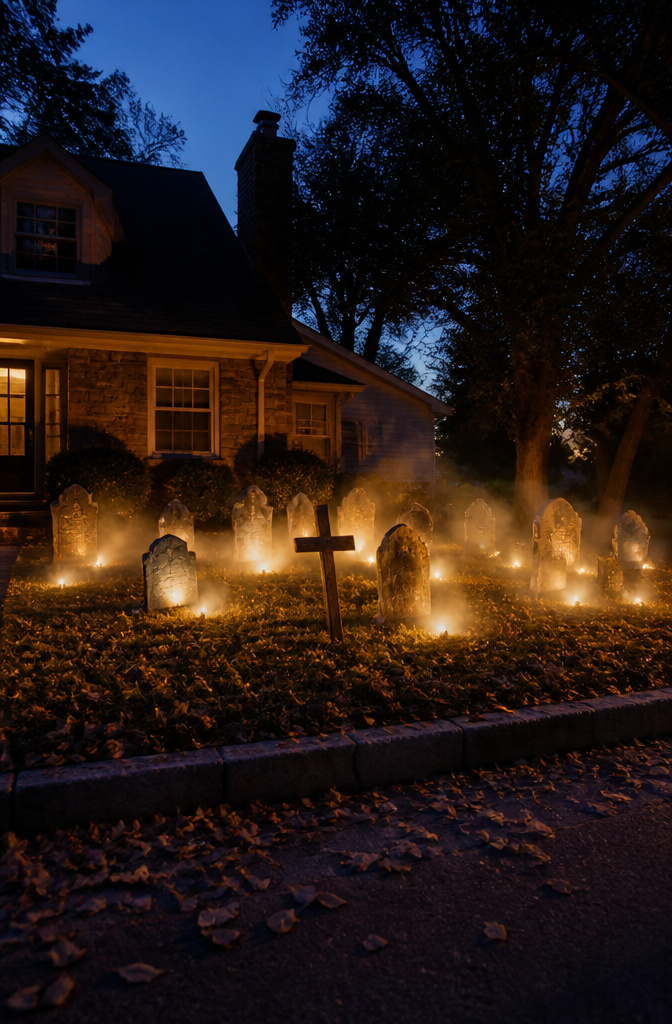
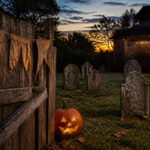
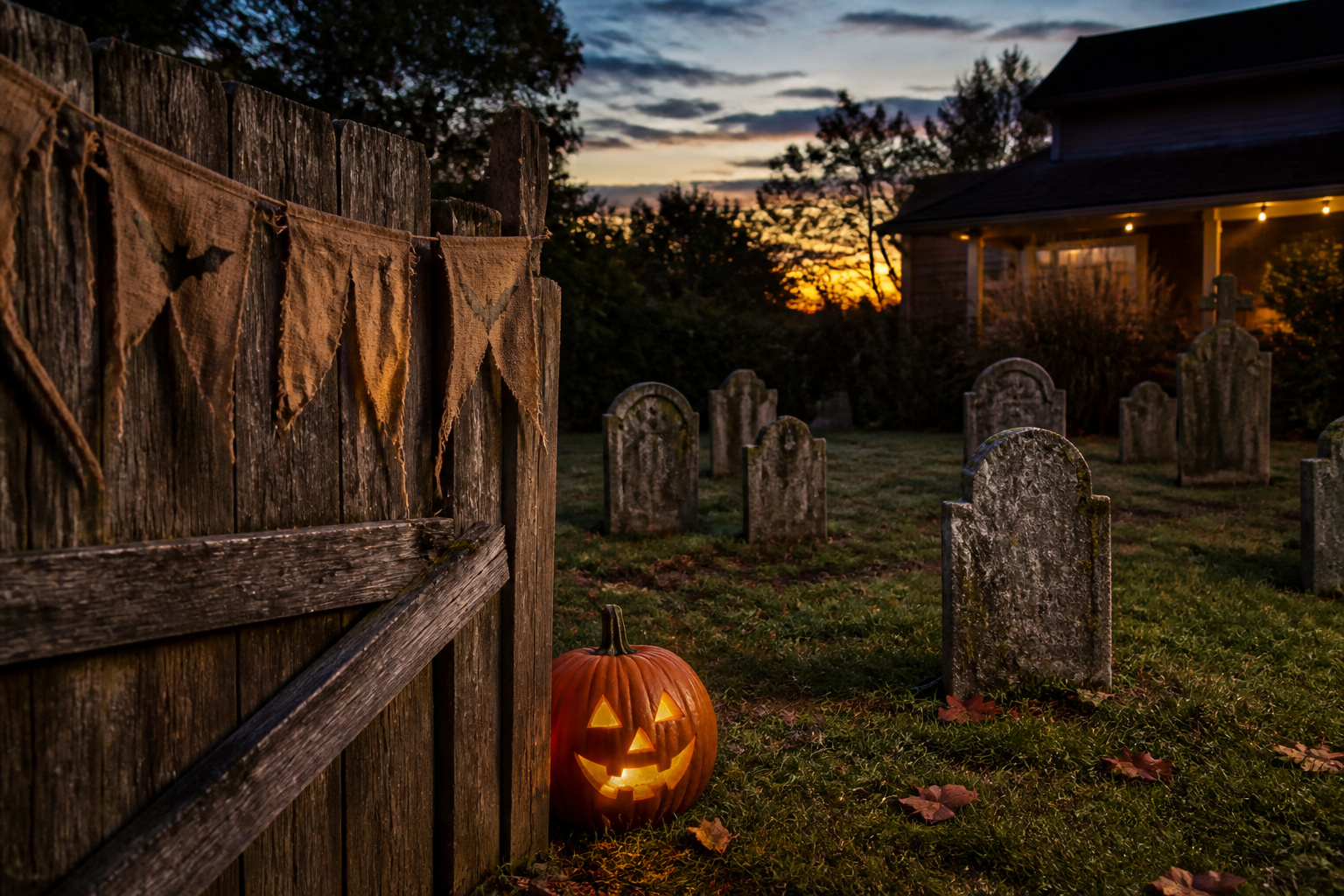
A yard graveyard only reads as spooky if every piece looks like it belongs to the same neglected cemetery. Mixing a polished resin tombstone with a weathered pallet cross breaks the illusion immediately. I learned this the hard way the first year I tried it, and now I plan the whole look before buying anything.
Weather-resistant materials matter more for this theme than for almost any other outdoor display. Tombstones sit low where rain pools and dew collects, so foam or untreated wood swells and warps within a season. The durable yard decorations that last use PVC, resin, or sealed hardboard rated for outdoor exposure. Ground breakers and stakes need the same treatment, or they soften and lean by week two.
For a cohesive story, pick one era of neglect and stick to it. All pieces should show roughly the same degree of fading, the same style of lettering, the same moss or rust accents. Coordinated sets help here, but you can also unify mismatched pieces with a single wash of diluted gray or brown exterior paint. LED lighting and motion-activated props work best when they share a color temperature; warm white flickers read as candlelit, while cool white looks like failed electricity. Choose one and repeat it.
7. Front Door Theme
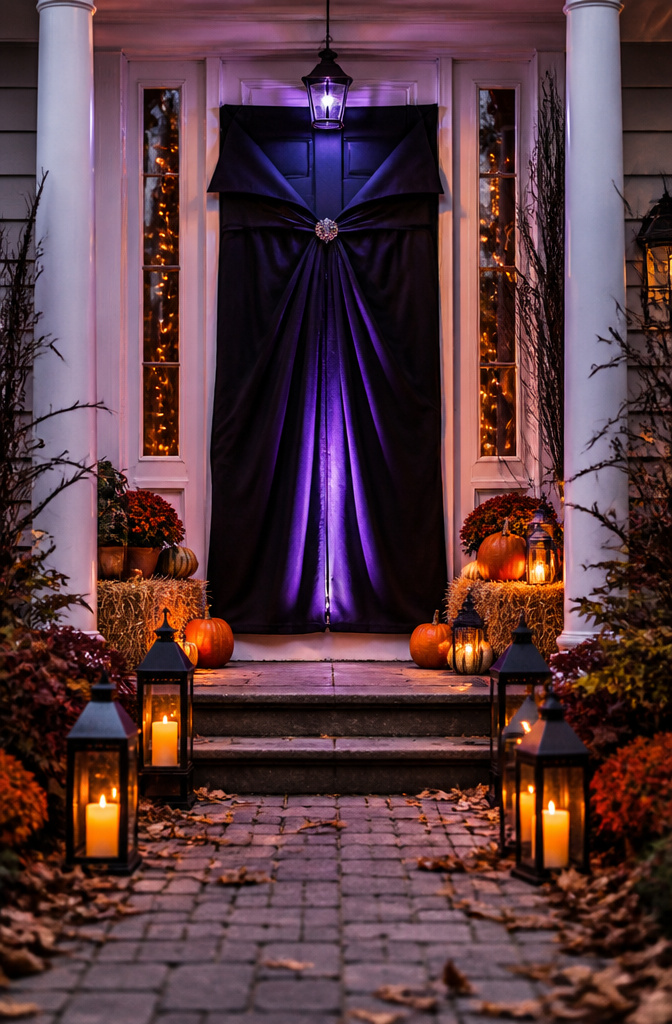
A front door theme is the fastest way to make your halloween outside decor feel planned instead of scattered. Two years ago I tried the witch-door approach after seeing it done with a cheap black tablecloth draped as a cape, a DIY hat, and green uplighting from a hardware-store bulb. The whole thing cost under $30 and took one evening, but the real payoff came when I repeated the green light in the walkway pumpkin luminaries I carved the same week. That repetition, door to path, is what makes a theme read as intentional rather than a pile of props.
The door also sets the rules for everything behind it. A villain lair calls for darker tones on the porch, maybe purple string lights and a raven silhouette. A friendlier pumpkin-patch door wants orange in the windows and hay bales that match. The mistake I made that first year was treating the door as its own island; the yard looked like two different houses. Now I pick the door’s color palette first, then carry one element of it, light or material, at least six feet in each direction. The door stops being a decoration and starts being the title card for the whole display.
8. Spooky Jack-o-Lantern Scarecrow

A scarecrow with a carved pumpkin head hits differently than the standard burlap face, and the Sleepy Hollow association is hard to shake once you see one in person. The trick is building the body so the head sits at a believable angle; a too-perpendicular pumpkin reads cute, while a slight forward tilt catches porch light in the hollows and looks properly hollow.
Weatherproofing matters more than the carving. A real pumpkin lasts maybe three October nights before collapse, so a foam craft pumpkin with a battery tea light inside gives the same flicker without the rot. The body can be thrifted clothes stuffed with plastic bags over a two-by-four frame, nothing fancy.
For renters wanting height without storage bulk, inflatables fill the same visual slot. The Inflatable Light-Up Ghost Dog with Jack-O’-Lantern Treat Bag Halloween Decoration at 35 inches gives you the pumpkin-and-spook pairing in something that packs to shoebox size. The ghost dog reads more whimsical than sinister, which works for yards with younger trick-or-treaters. Either route, the jack-o-lantern head is what stops the eye after dark.
9. Monochromatic Approach
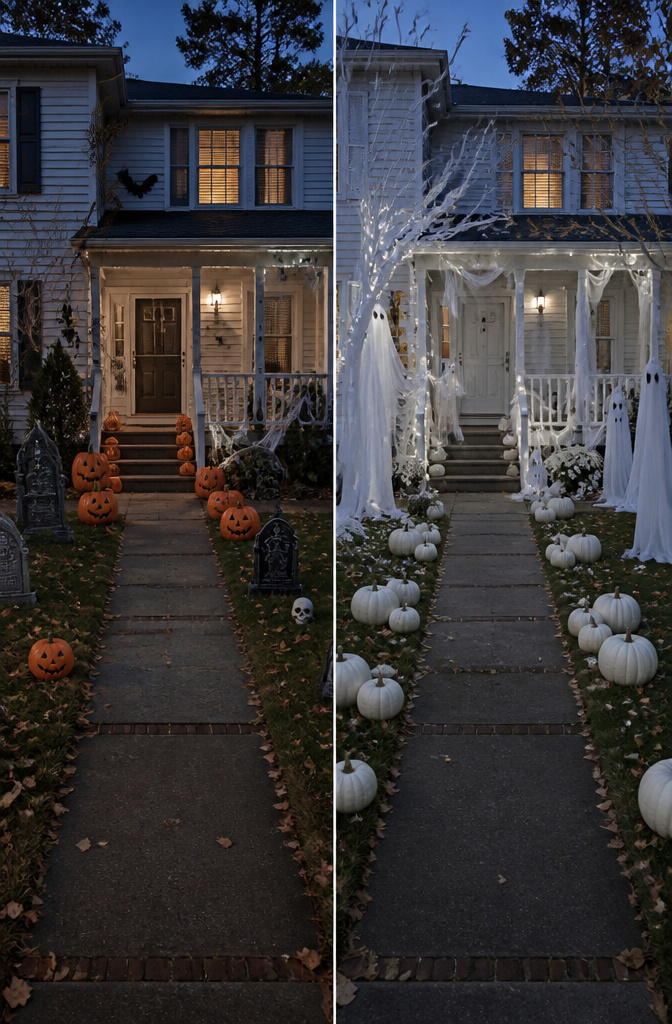
A single color stretched across your whole yard does more of the visual work than a cluttered mix ever could. Last year I tried orange pumpkins, purple lights, and green fog all at once, and from the sidewalk it read as noise, not atmosphere. One tone, carried from door to mailbox, tells trick-or-treaters they have stepped into something intentional.
White is the easiest place to start. Gauze strips on the porch railings, pale painted branches in planters, and a few thrifted sheet ghosts share a palette without needing to match in shape. The eye reads them as one installation instead of separate props. Black works the same way: matte spray paint unifies plastic skulls, garden stakes, and even old lawn chairs into a coherent scene.
The real payoff comes after dark. A monochromatic setup needs only one light color to hold together, so a single strand of cool white LEDs or a warm amber flood does the job. You spend less on electricity and less time troubleshooting strands that clash.
Renters get an extra benefit here. A white-on-white or black-on-black scheme reads as decoration, not alteration, so landlords rarely blink. My neighbor ran white cheesecloth through her chain-link fence last October and took it down in twenty minutes November first, no marks left behind.
10. Killer Entrance

The entrance sets the tone for every Halloween display, and darkness is what makes or breaks it. A few years back, I strung orange lights along my porch railings and called it done; the effect vanished against the streetlamp glare. What actually worked was layering the light sources so something remained visible from every angle a trick-or-treater approaches.
Start low. Ground-level path lighting, whether classic jack-o’-lanterns or LED stakes, defines the walkway and casts upward shadows that read as spooky even before the door comes into view. Add a single focused wash on the door itself, maybe a green or purple LED spot, so the porch becomes a stage. The color matters less than the contrast; a warm door against cool light, or vice versa, reads as intentional rather than leftover Christmas hardware.
Motion activation helps, but sparingly. One prop that triggers as kids climb the steps adds surprise; three in a row trains them to flinch at your house and parents to hurry past. Sound falls into the same trap. A single audio element, timed or motion-activated, carries further than overlapping tracks from multiple decorations.
For renters, the investment stays portable: light strings, a battery spot, and a timer you can move to the next apartment. The effect depends on placement, not permanence. A dark entrance with one well-lit focal point outperforms a yard full of dim props every time.
Types of Decorations
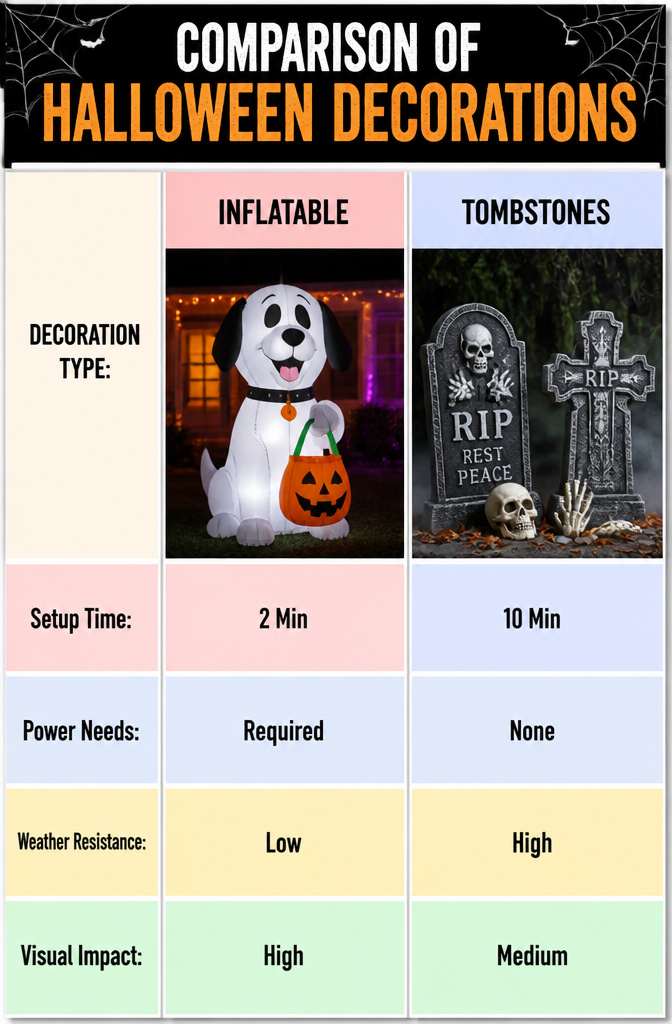
Outdoor Halloween decorations fall into three main categories, each with its own trade-offs for a weekend setup.
- Inflatable decorations pack the most visual punch per dollar. The 35-inch Inflatable Light-Up Ghost Dog with Jack-O’-Lantern Treat Bag takes about two minutes to set up and stores flat the rest of the year. Larger pieces like the 9-foot Airblown Inflatable Light-Up Rainbow Wave Green Spider become instant yard landmarks. The catch is the fan noise and the need for a grounded outlet within reach of the cord.
- Tombstones and groundbreakers build atmosphere without mechanics. The Grave Breaker Headstone with Skull & Skeleton Arms and the RIP Rest in Peace Cross-Shaped Tombstone work as anchor pieces that do not need power or stakes beyond basic lawn spikes. Weather-resistant blow-mold or resin holds up against rain far better than hollow plastic or thin fabric, which is the difference between storing a piece for next October and hauling it to the curb in November.
- Animated props draw the crowd but demand more setup. The Animated Light-Up Clown Tug Of War runs on a motor and sensor system that needs shelter from direct downpour even if labeled outdoor-rated. Motion-activated sound helps, yet the speaker quality varies enough that I would test it at volume before the first trick-or-treater arrives.
For a real budget and a single weekend, two inflatables plus three tombstones cover a front yard without the wiring headache of a full animated scene.
Themes and Lighting
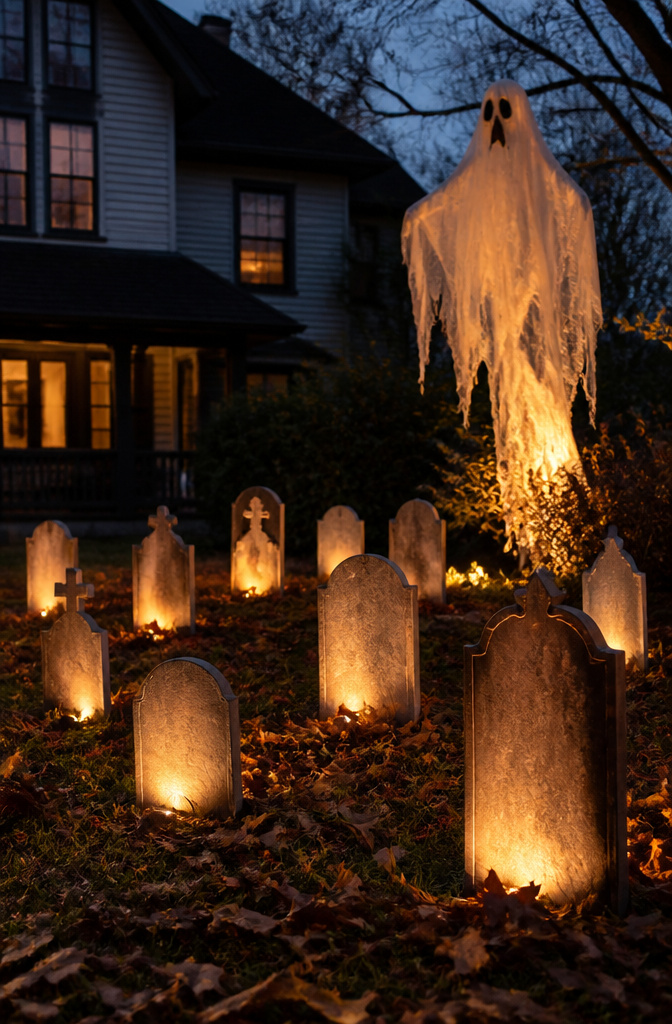
A graveyard theme only works at night if the light lets visitors actually see the tombstones. String lights tucked behind foam-core headstones cast long shadows across the grass, and a single amber flood from below turns a sheet-ghost into something that actually floats. Last year I tried relying on my porch light alone; kids walked right past the spiderweb I’d spent Saturday on because the porch bulb washed it into gray nothing.
The sweet spot is two temperatures: warm white for faces and figures, cool white or green for fog and background trees. Mixing them in the same line of sight looks muddy, but separated by even ten feet they read as moonlight against firelight. Battery-powered puck lights are the easiest renter option since they leave no stakes in the lawn and survive a drizzle if the seal looks intact.
Whimsical themes need the same discipline. A cluster of painted wood pumpkins and a waving skeleton read as a set only if they share a single light source, not if each carries its own clip-on LED competing for attention. I group mine around one extension cord run through a garden bed, then hide the cord under mulch I already own. The result feels intentional rather than accumulated, and the cleanup takes twenty minutes on November first.
Frequently Asked Questions
What are some outdoor Halloween decorating ideas?
Outdoor Halloween decorating ideas include animated light-up props, porch and patio setups with weather-resistant pillows and resin pumpkins, backlit window silhouettes cut from black construction paper, pumpkin luminaries lining walkways, DIY cemetery gates built from PVC pipe, yard graveyards with coordinated tombstones, themed front doors, scarecrows with jack-o’-lantern heads, monochromatic color schemes, and layered lighting for a dramatic entrance. Each idea works best when you match materials to October weather and carry one color or motif across multiple elements so the display reads as intentional rather than scattered.