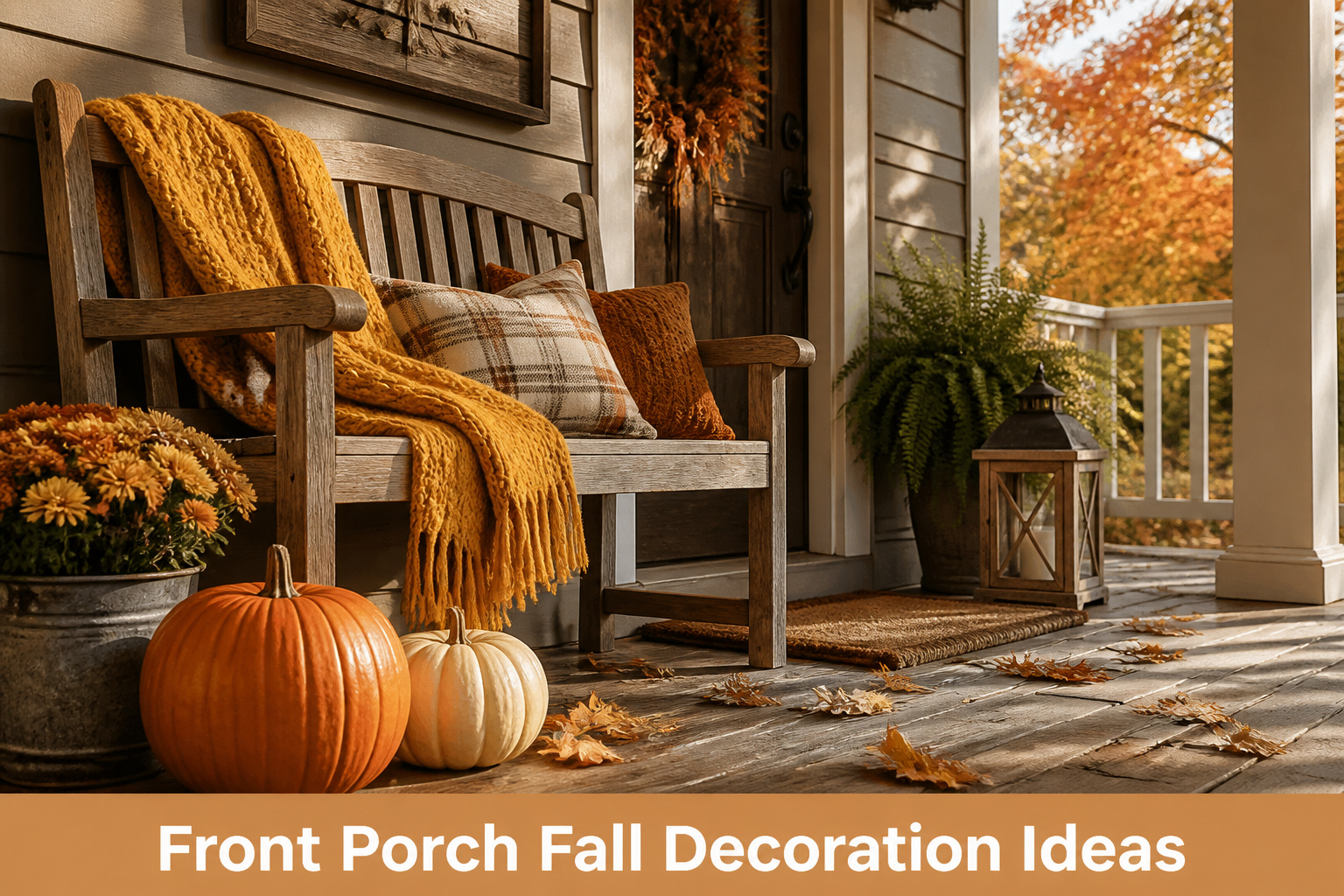
The best fall decorations front porch setups run from a single wreath and a few foraged pinecones to full layered rugs, timed lanterns, and cornstalks tied to every pillar. What separates the two is not budget but square footage: a deep wraparound can carry seven elements without clutter, while a 4-by-6 stoop collapses under the same load.
The detail that trips most people up is the door swing. Thirty-six inches of clear floor space is the minimum for safe passage with arms full of groceries; anything less and you are bumping furniture every trip. I learned this when a 40-inch bench I ordered blocked my own door by four inches, handsome and useless, and had to be repacked the same afternoon it arrived.
1. Fall Wreaths
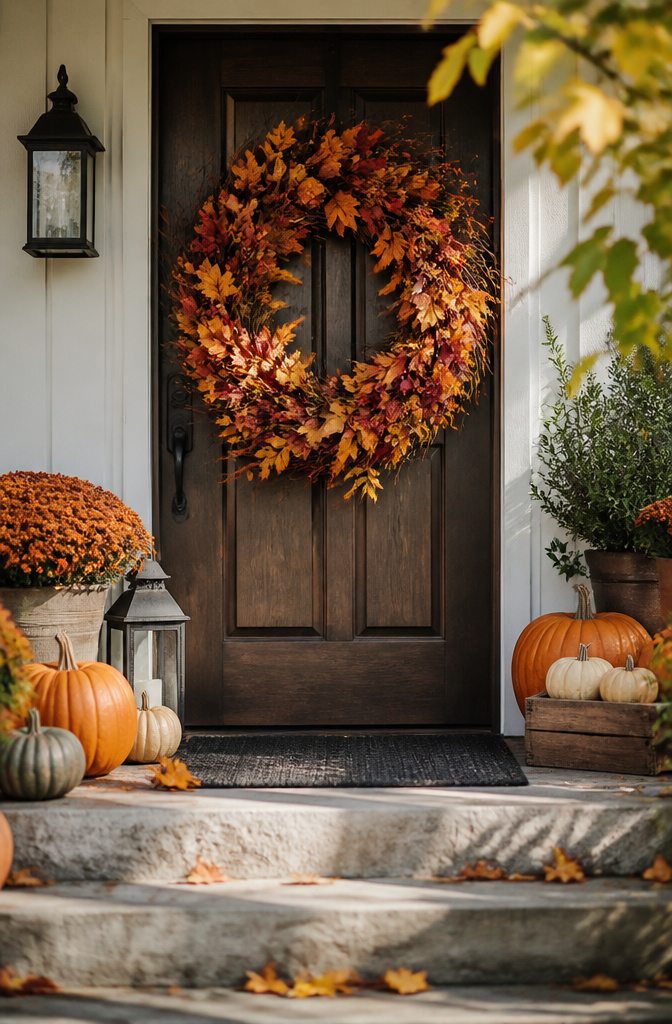
A large, full wreath is the fastest way to make a front door read "fall" before anyone steps onto the porch. Five separate guides I read all start here, and the consistency surprised me at first. It makes sense once you try it: the wreath sits at eye level, it works on a tiny stoop or a deep wraparound, and it frames the entrance like a picture frame.
Store-bought wreaths run expensive, so I keep an eye out for grapevine bases and craft-store picks. Those plus a few minutes of tucking in foliage will fill a door for a fraction of the cost. For no cost at all, foraged pinecones and dried gourds from the yard twist into swags that read rustic rather than retail. Either way, the door gets dressed before the rest of the porch, and that single step sets the tone for everything that follows.
2. Layered Rugs
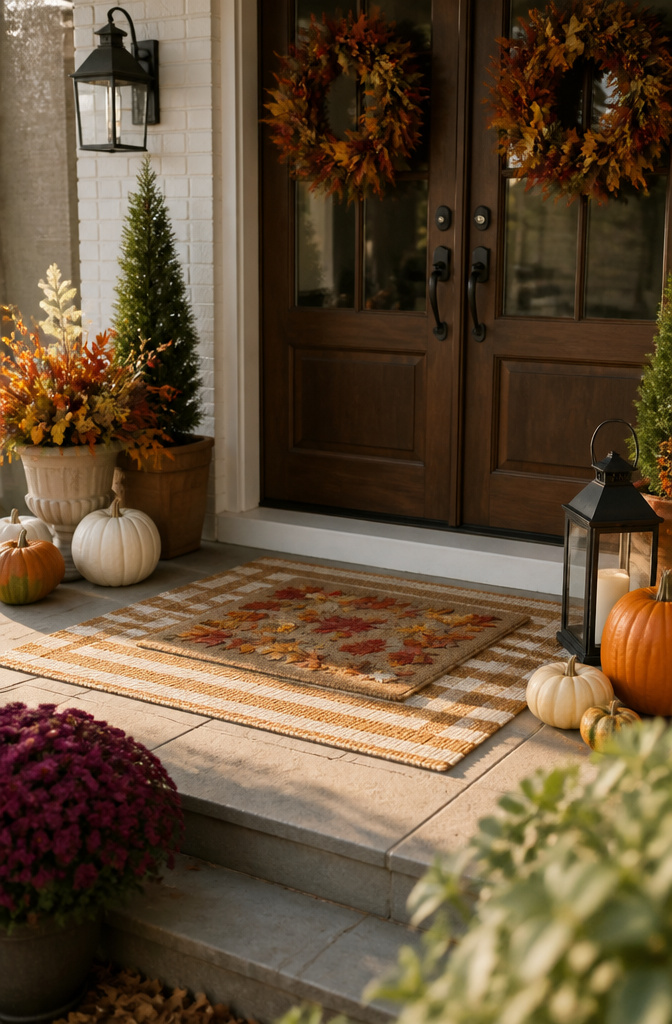
A 4′ × 6′ outdoor rug underneath everything gives the porch its shape before a single pumpkin appears. The large base stays year-round; swapping the top mat handles the seasonal shift for far less than replacing a whole rug each fall.
For double doors, a wide estate doormat layered on top anchors the entry without looking lost. On a smaller porch, the base rug should fit neatly in front of the door so the layers don’t crowd the step. The seasonal top mat, something like a "hello fall" or "Hello, Pumpkin" design, runs cheap enough to replace when the print fades or your taste changes.
The stripe or pattern of that bottom rug does the actual work of warming up concrete or wood. After six years of weather, mine still washes up fine, though I retired the original this season when the edges finally frayed. The top mat took the wear instead.
3. Mums and Planters
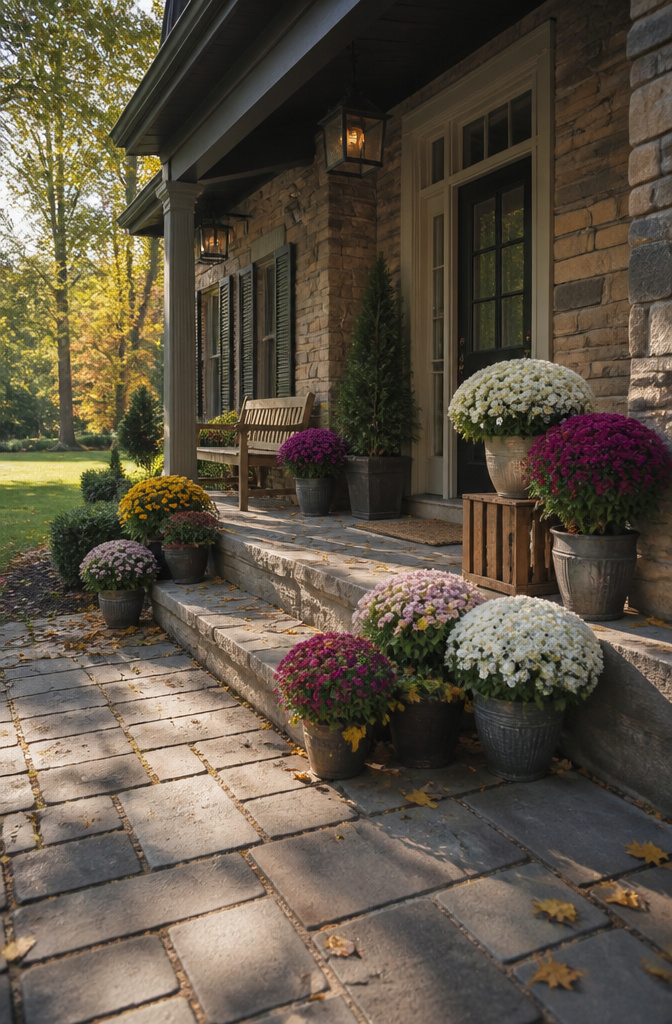
Mums in planters are the one fall decoration I never skip, mostly because I have killed enough of them to know what actually matters. Keep the soil moist at the roots; these plants are thirsty and the porch heat dries pots faster than garden beds. I used to set the container on the stoop and forget it, and by week two the blooms were crispy. Now I check with a finger to the second knuckle every couple of days.
Color choices have widened past the traditional yellow, orange, and red I grew up with. Purple and white together read as fall without shouting it, and that combination works against painted doors where rust and gold would clash. The common palette runs yellow, rusty red, gold or orange, purple, white, even pink, so matching your existing exterior is easier than it used to be.
Height is where most porch arrangements go flat. Sources describe the same mistake: everything sitting on the ground at one level, invisible from the street. Stack a planter on an overturned pot, set a smaller mum on a stool, let the steps themselves create tiers. Frame the door with that variation and the whole porch reads intentional without any single piece needing to be large or expensive.
4. Pumpkins and Gourds
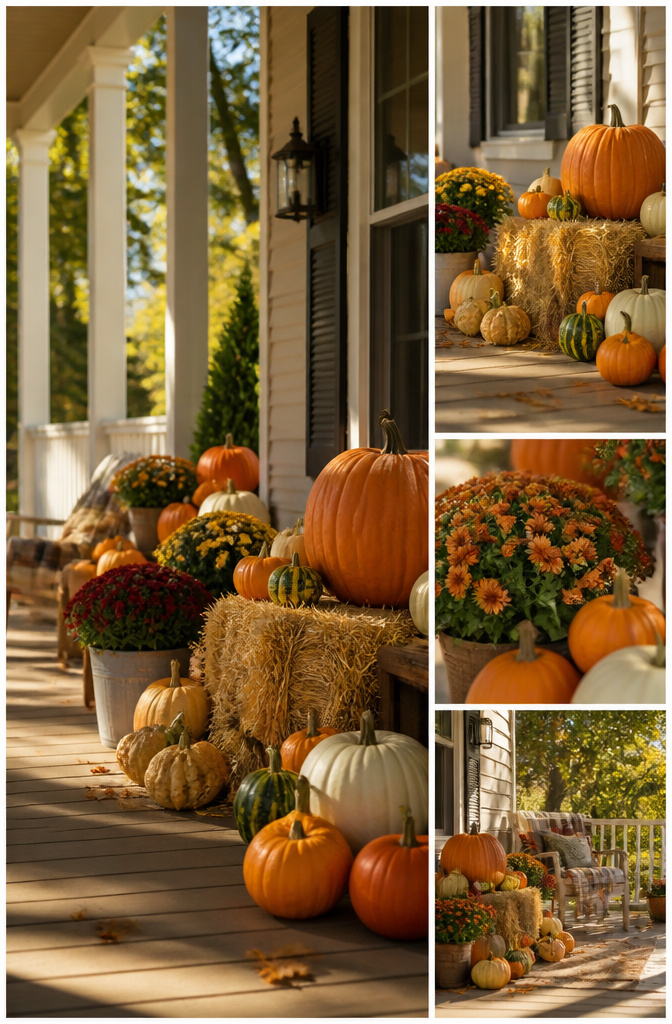
Pumpkins and gourds anchor almost every fall porch I have studied, and the numbers behind them are simpler than most people guess. The rule that stopped my scrolling was this: one pumpkin per foot of porch width, with three to seven total for a small porch. That range keeps a narrow stoop from looking like a produce stand while still feeling intentional.
Real pumpkins win on texture and color, but the math shifts fast when you replace them yearly. Faux pumpkins, especially foam ones, pay for themselves after two or three seasons. A jumbo orange or a white craft-store pumpkin touched up with paint blends in well enough, and the minis from dollar stores hold their own once grouped in threes or fives. The odd number matters more than the material.
Height is where these arrangements live or die. Sitting everything flat on the porch floor wastes the sight line from the street. Layer pumpkins around planters, rest them on urns, or tuck bumpy gourds between mum pots so the eye travels upward. Smooth surfaces against warty ones keep the display from reading too uniform. When the light fades, what reads from the curb is that vertical rhythm, not the individual pumpkin.
5. Cozy Lighting
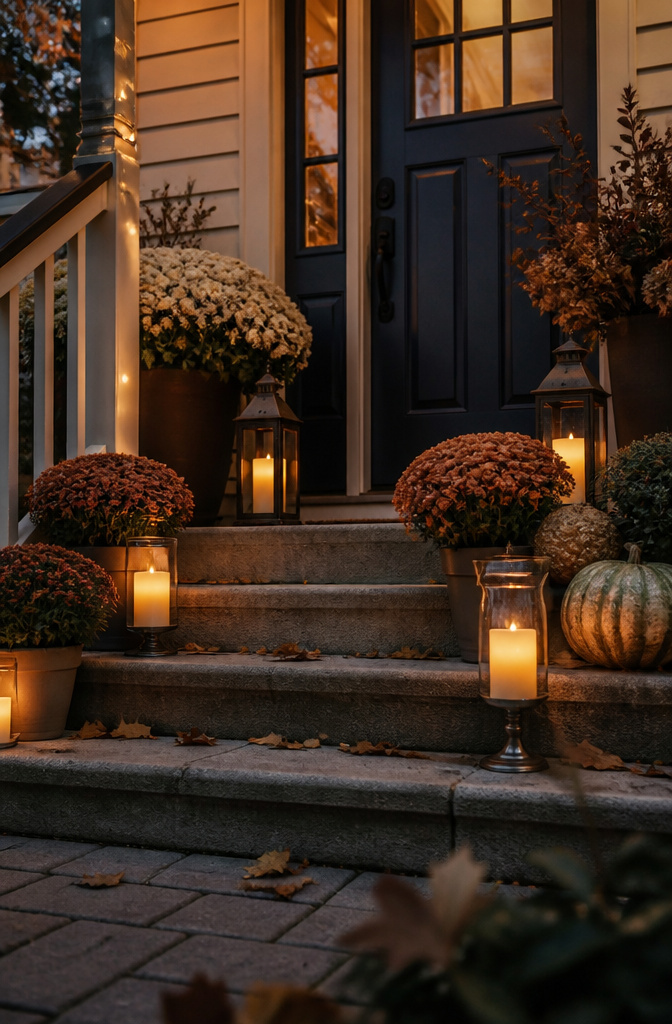
Short days make a porch disappear by six o’clock unless you rig some light. Battery-operated candles with timers solve the problem without an outlet: they flick on at dusk and run until you’re ready to call it a night. Two lanterns flanking the door or the steps give enough glow to read by, and the timer means no trudging out in pajamas to switch them off.
String lights work if you’ve got a railing or overhead beams to drape them from. Soft white keeps the warmth of the pumpkins rather than turning everything carnival-bright. Solar lanterns along the walkway pull the eye outward so the porch feels larger than its footprint; the ones I keep coming back to have sat through summer and still charge enough to matter in October dimness.
Flameless pillars inside hurricane jars add flicker without the wind problem. Real candles on a porch in fall end up being more babysitting than ambiance, and the battery versions have gotten convincing enough that the trade is easy. The whole setup buys you two or three usable hours after sunset, which is most of the time you’ll actually spend out there once the temperature drops.
6. Seating
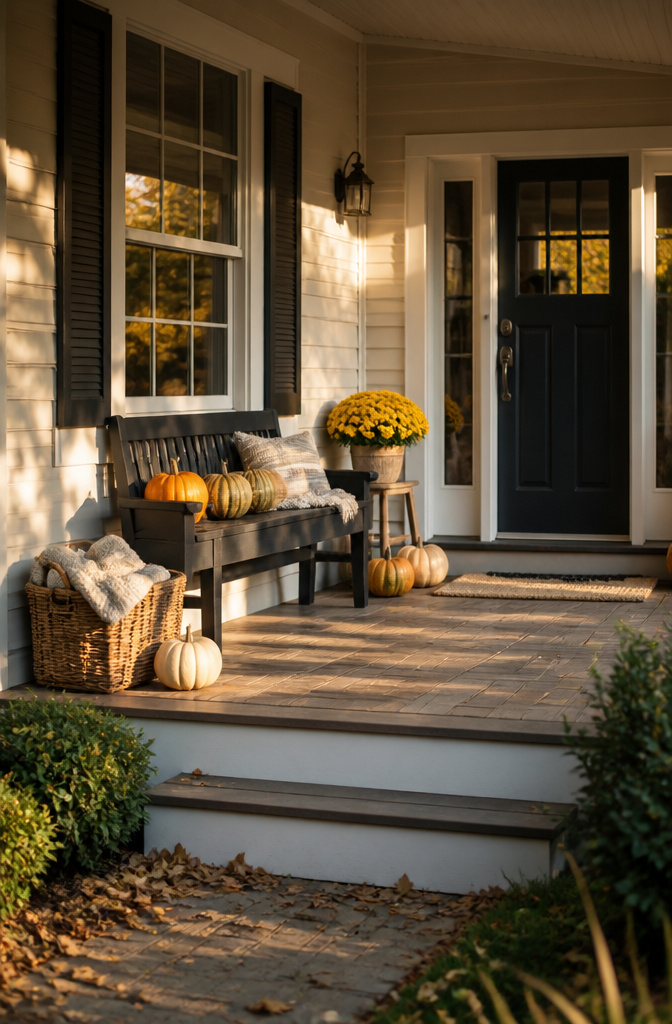
A bench or a pair of chairs turns a decorated porch into one people actually use. The sources that stuck with me were the ones that admitted space is the real gatekeeper: a black bench on a narrow porch, a single chair with a pillow when that is all the depth allows, even a stool holding a basket of pumpkins. What they skipped, and what I had to learn the hard way, is the clearance you need at the door. Thirty-six inches is the minimum for safe passage with arms full of groceries or a kid; anything less and you are bumping furniture every trip.
On my own small porch, I once ordered a 40-inch bench with a slatted back that looked right in the photo. It arrived, it was handsome, and it blocked the door swing by four inches. I returned it. A 32-inch version with a lower profile fit the same footprint without the fight. The larger pieces belong on deep farmhouse porches with swing seating and wicker rockers grouped around a coffee table. For renters and weekend projects, measure first and buy second, or you will be repacking boxes instead of sitting outside.
7. Natural Elements
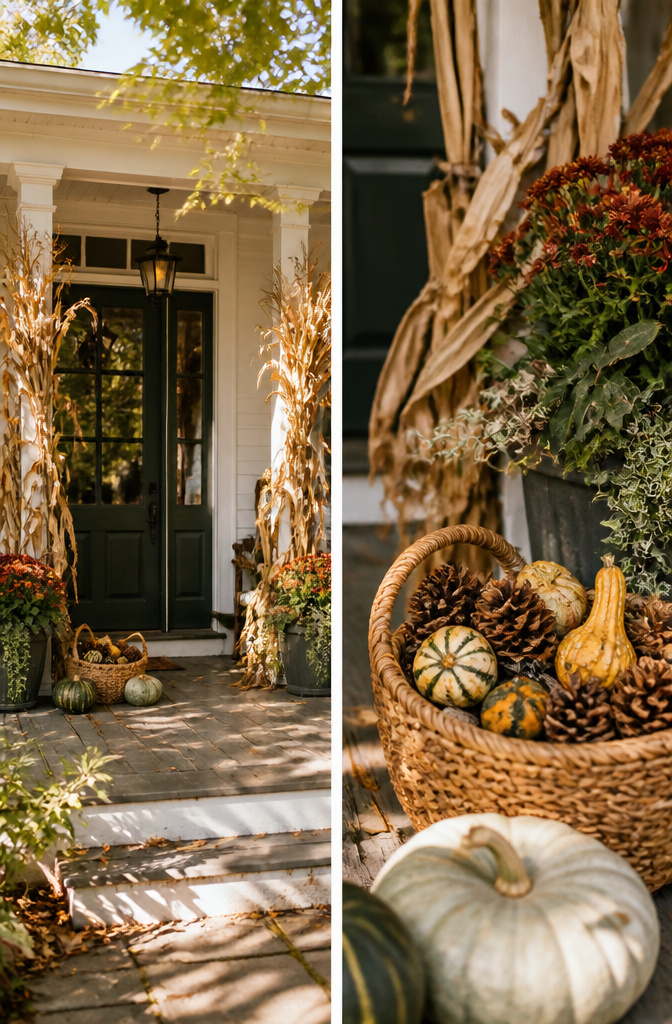
Cornstalks are the move if you live anywhere near a field or know someone who does. A few years back I cut mine from the edge of a property across the road and tied them directly to the porch pillars with jute twine, two stalks per pillar so they flanked the door at different heights. They stayed upright through six weeks of wind and the occasional rain, and the total cost was zero. Dried grasses and bare branches work the same way for texture; I foraged mine from a roadside ditch after the first hard frost, and a bundle of three or four leaned in a corner lasts the full season without shedding.
Pinecones and dried gourds are the other half of this look. I keep a basket of pinecones on the porch floor by the door, mixed with a few gourds I dried myself from last year’s farmer’s market rejects. The whole arrangement reads as rustic without trying hard, and the materials are free or close to it if you plan even a day ahead. Storage is the only catch: cornstalks flatten fine against a garage wall, but gourds need a dry shelf or they mold by spring.
Color Schemes
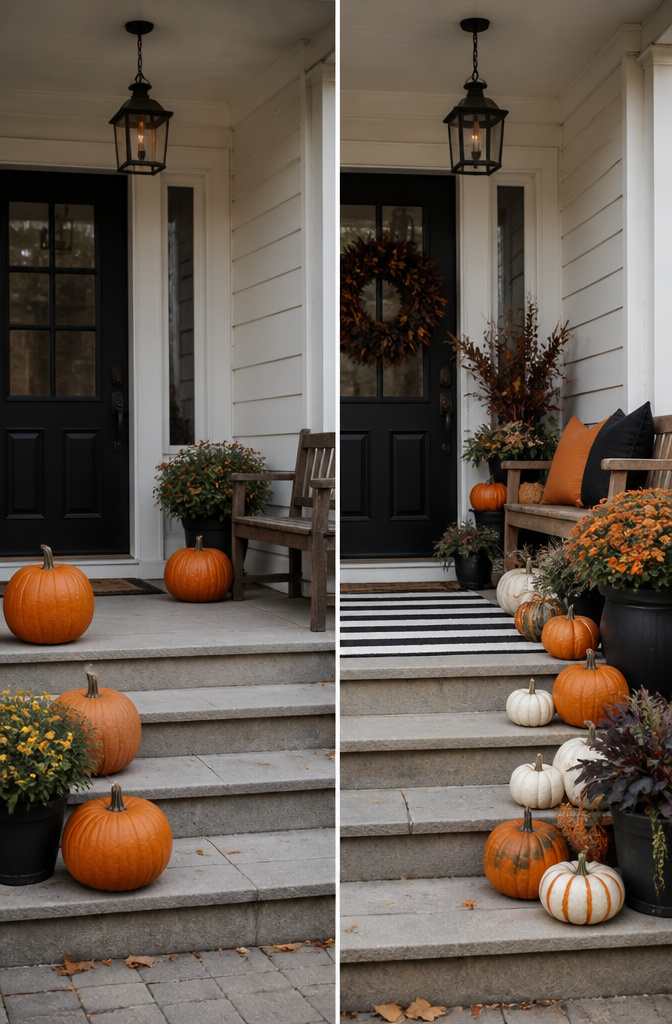
A tight color palette is what separates a porch that looks intentional from one that looks like a clearance rack exploded on your steps. Limiting yourself to two or three main colors keeps the eye moving smoothly instead of bouncing between competing hues. Black, orange, and white work particularly well for fall because each color can repeat across multiple elements without shouting for individual attention. Black shows up in planters, bench frames, and striped rugs. Orange lives in the mums, pumpkins, and wreaths. White fills in with smaller gourds or painted accents. That repetition is what decorators lean on to create cohesion, and the sources that rank for this topic hammer it consistently.
I ignored this rule one year and paid for it. I had rust-colored lanterns fighting against burgundy mums, a navy doormat, and orange pumpkins that suddenly looked neon by comparison. The porch felt busy even though I had used fewer items than the year before. The clutter was visual, not physical. I swapped the navy mat for a black-and-white stripe and moved the burgundy to the back patio, and the same arrangement suddenly looked pulled together. The lesson cost me an extra Saturday, but it stuck.
Budget-Friendly Options
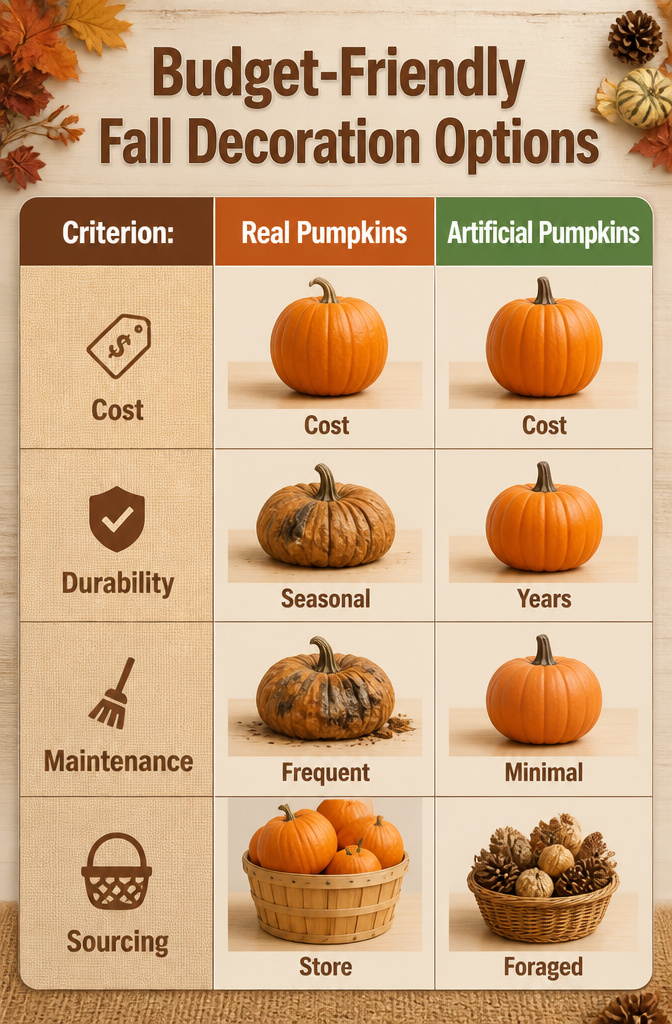
The first fall I tried to decorate our stoop with real pumpkins, I spent about forty dollars and three weeks later they were soft, sagging and attracting something I didn’t want to name. Switching to artificial pumpkins saved that annual forty-dollar cycle, and the foam ones I bought four years ago still stack the same way every September.
Faux florals work the same trick. The sources I trust on this point to mixing: a few artificial stems with clippings from the yard, sage or even grasses, so the eye reads the whole arrangement as real. A bushel-basket planter from a nursery runs cheaper than assembling from scratch, and keeping any summer plants that handle cooler weather means you are not starting empty.
Foraged finds cost nothing. Pinecones, dried gourds, clippings from the land. The only expense is the time to gather them, and against the replacement cost of a porchful of real décor every October, that time pays back fast.
Small Porch Solutions
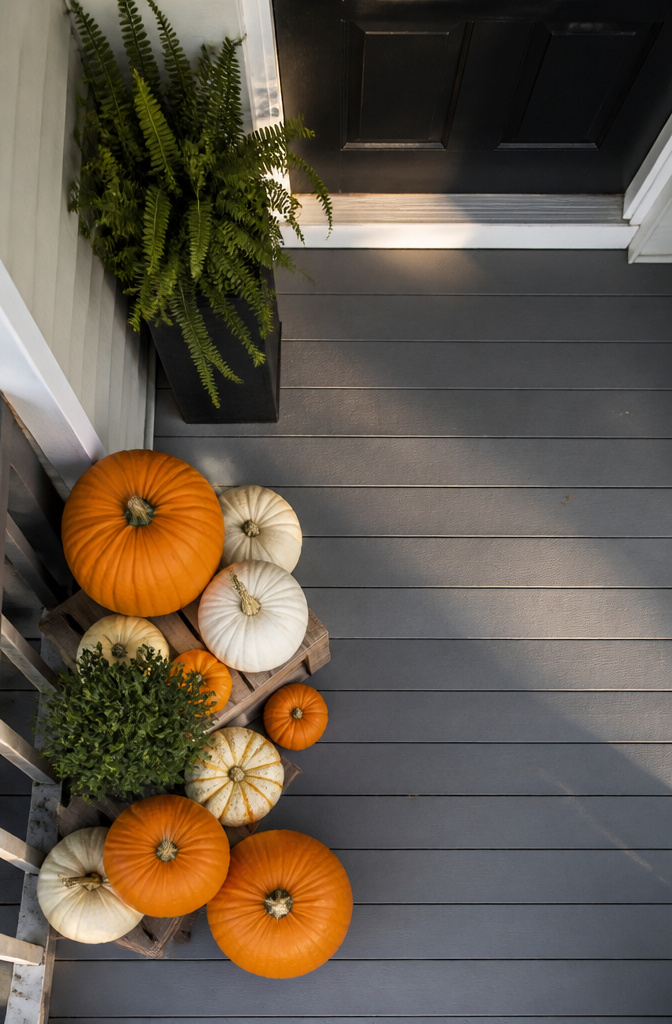
Vertical space is the only way a small porch earns its moment. Stacked pumpkins, a tall planter, or lanterns on risers pull the eye up and leave the floor clear for the actual work of walking through the door.
I learned the hard way that three feet of clear space at the door is the line between decorated and obstructed. Last year, a 24-inch mum pot I loved sat just inside that zone; guests had to angle around it with grocery bags, and I moved it after two days. Now anything deeper than 18 inches lives off to the side or goes vertical on a stand.
A tight color palette helps too. Two or three colors read as intentional; four or more read as clutter on a 4-by-6 slab of concrete. I keep layouts to one or two planters, a layered rug, and a few pumpkins. The porch feels fuller than it is because the elements repeat rather than compete.
If the porch itself is tiny, spill a pumpkin or small planter along the walkway. It extends the visual footprint without taking the one square foot you need to fumble for keys.
When to Start and How to Transition
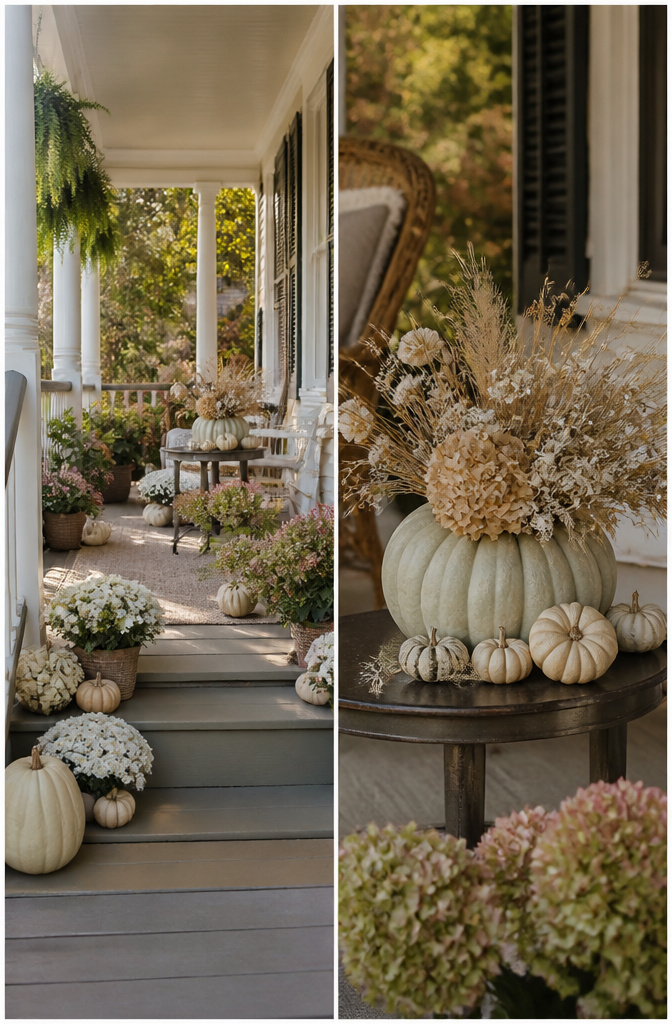
Most sources point to late August or early September as the right window to start swapping out porch decor. The mums and pumpkins you set down then will carry through the season with basic watering and a little deadheading, so the timing is practical, not just eager.
The transition itself can be gradual. White mums and white pumpkins sit cleanly against whatever summer flowers are still fading on the porch, giving a muted hint of fall without the clash of bright orange against pink or violet annuals. Peach-colored heirloom pumpkins work the same way if the white feels too stark against your existing pots. I have watched neighbors rush straight to rust and plum the first cool weekend, and the effect lands jarring when the window boxes are still full of zinnias. The softer palette buys you two or three weeks of overlap without looking like two seasons colliding.
By mid-September the summer colors will have dulled on their own. That is when richer tones and extra layers, lanterns or a second rug, can come in without fighting what is left outside.
Frequently Asked Questions
How do you arrange mums and pumpkins on a porch?
Frame the front door and place your mums, pumpkins, and other fall decor at different heights. The only real mistake is sitting everything flat on the ground where it cannot be seen from the street. Stack planters on overturned pots, rest pumpkins on urns, and let steps create natural tiers so the eye travels upward.
What color mums look best together?
Traditional fall combinations of yellow, orange, and red still work well, though purple and white together read as fall without overpowering a painted door. The common palette now includes yellow, rusty red, gold or orange, purple, white, and even pink, so matching your exterior is easier than it used to be. Pick a combination that coordinates with your door and siding rather than defaulting to the classic trio.
When should I start decorating for fall?
Most people set out fall porch decor in late August or early September. Mums and pumpkins placed then will last through the season with basic watering and deadheading, so the timing is practical, not just eager. Start with softer palettes like white mums and white pumpkins if summer annuals are still fading, then add richer tones and extra layers by mid-September when the warm-weather colors have dulled.