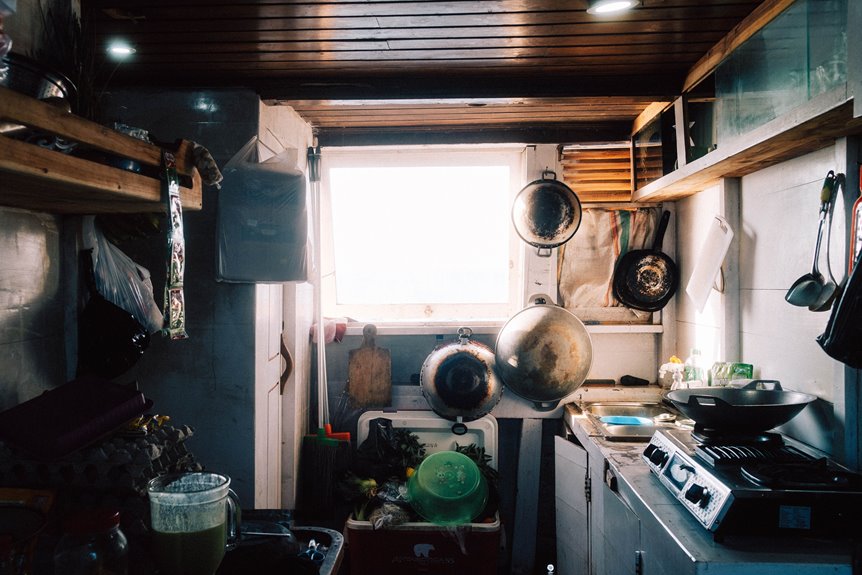
Mount a wall rack on open wall space or your backsplash to hang pots, pans, and utensils.
Install ceiling rods or peg rails overhead to free counters while keeping cookware accessible above work zones.
Add sturdy open shelving with cast iron brackets for immediate reach to daily pieces.
Slide pull-out drawers below your cooktop for arm-level storage with full-extension visibility.
Hook pot lids inside cabinet doors to reclaim shelf space.
Stack nested pans with felt or silicone liners between layers to prevent scratches.
Roll in a sturdy two-tier cart near your stove for flexible, mobile storage that moves when you need floor space.
Each method maximizes vertical space and reduces clutter without renovation. Continue for detailed installation guidance and product recommendations tailored to compact kitchens.
Mount a Wall Rack for Pot and Pan Storage
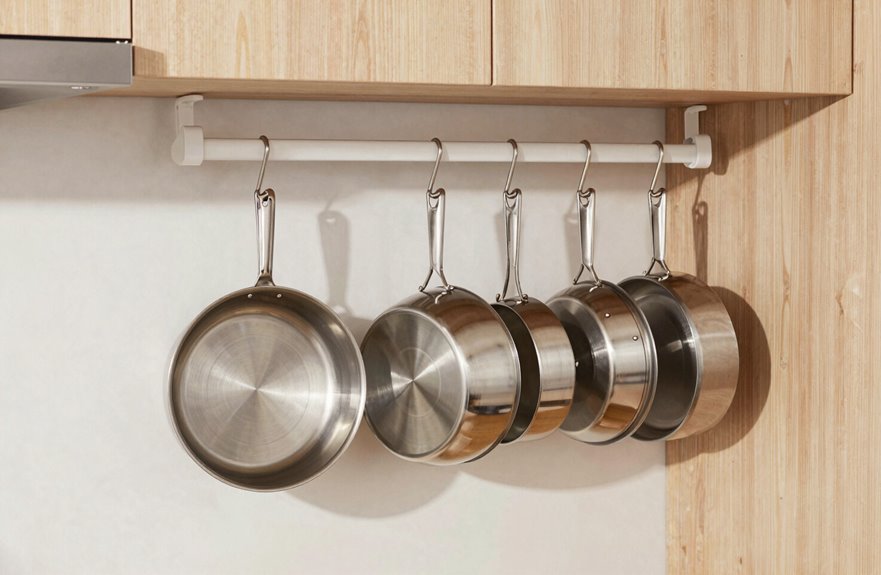
When cabinet space is tight, mounting a wall rack transforms unused vertical areas into functional storage. A wall rack keeps pots and pans within easy reach while reclaiming precious cabinet space for other items.
Benefits of Wall-Mounted Storage
A wall rack complements small-kitchen layouts by utilizing vertical space and reducing countertop clutter. You’ll free up surfaces for food preparation while keeping cookware accessible.
Maximizing Your Setup
Hooks on the rack or nearby cabinet doors provide additional storage for utensils and lids. This layered approach maximizes accessible storage without overwhelming your space.
Installation Considerations
Mount your wall rack on a backsplash or open wall area. This adds decorative value while organizing frequently used items. Open display works well for cast iron and non-stick pieces, keeping walls unblocked and your kitchen functional.
Hang Pots From Ceiling Rods or Peg Rails
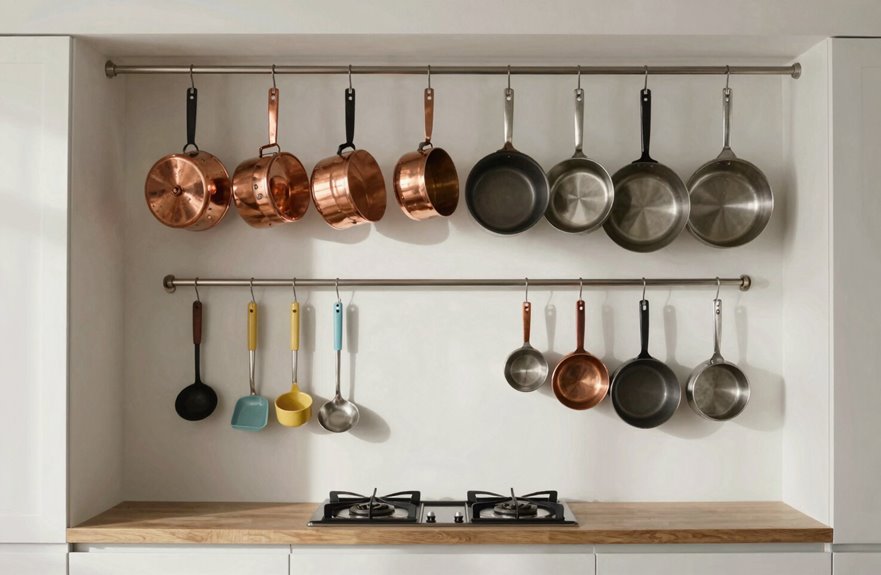
Ceiling rods and peg rails offer distinct advantages for overhead pot storage. Stainless steel or powder-coated rods work best for heavy cast iron, while wooden peg rails suit lighter cookware and add visual warmth. Both options free cabinet space and keep pans accessible. You’ll need sturdy S-hooks and strategic placement over work zones to prevent wall damage.
Ceiling Rod Benefits
Ceiling Rod Benefits
Several practical advantages make ceiling rods and peg rails worth considering when cabinet space runs short.
Vertical Efficiency
A ceiling rod maximizes unused overhead space, keeping cookware off crowded walls and counters. Suspending pots directly above the work zone frees cabinet real estate for storage containers and prep areas.
Accessibility and Protection
Positioning the rod near the stove provides immediate reach during cooking. Heavy pans distribute evenly along sturdy hooks, eliminating wall damage from repeated contact. This arrangement prevents the dents and scratches common with crowded pegboards.
System Integration
Pairing a ceiling rod with open shelving underneath builds a cohesive system where frequently used items hang within arm’s reach, while lesser-used pieces rest on shelves below. This approach maintains visual openness while preserving functionality.
Peg Rail Options
How can you expand your kitchen’s storage capacity without sacrificing accessibility? Peg rails are among the most adaptable wall-mounted storage solutions for compact kitchens.
Why Peg Rails Work
Peg rails maximize vertical space, freeing cabinets and counters by letting cookware hang visibly within reach. Install them on walls or above work zones to reduce clutter and keep pots accessible.
Installation Tips
- Mount rails with S-hooks for flexible, reconfigurable arrangements
- Position above stoves or prep areas for efficiency
- Select finishes like burnished steel to blend storage with décor
Expandable Options
Pair peg rails with magnetic strips or additional hooks for lids and utensils. This creates cohesive, open-shelving aesthetics while significantly increasing capacity. The system adapts to different pot sizes without permanent reconfiguration.
Install Open Shelving for Pot and Pan Display
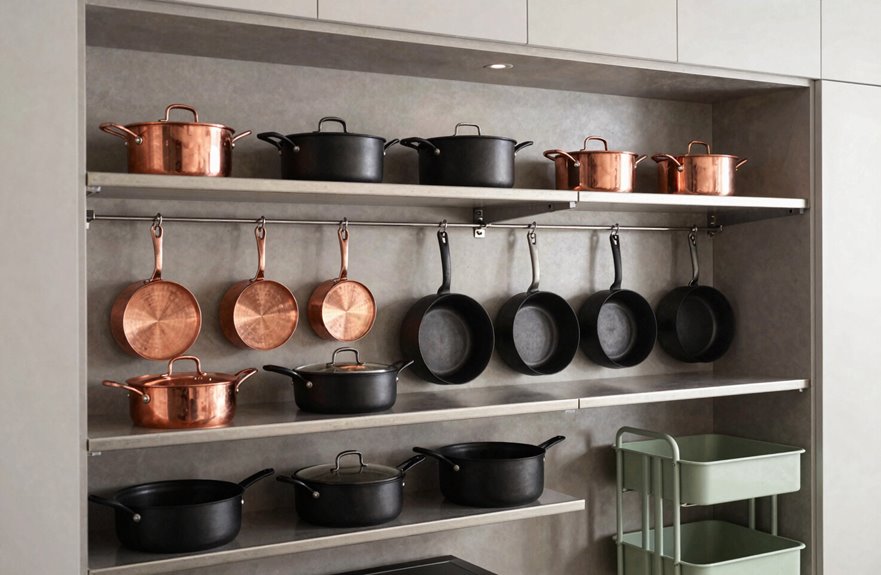
Open shelving transforms your cookware into a functional display while reclaiming precious cabinet space. Install sturdy shelves with cast iron brackets on exposed brick or drywall for reliable support. You’ll gain immediate access to frequently used pots and pans, eliminating rummaging through dark cabinets. This cookware display integrates with thrifted finds and bright accents, creating visual cohesion. Vertical wall usage reduces countertop clutter significantly. Pair your open shelving with peg rails for seamless organization.
| Feature | Benefit |
|---|---|
| Cast iron brackets | Decorative, sturdy support |
| Vertical storage | Reclaims wall space |
| Visible arrangement | Easy access, aesthetic appeal |
Exposed storage merges practicality with design. Your kitchen reflects intentional choices and lived-in warmth. This approach builds a space that balances efficiency with personal expression.
Add Pull-Out Pot and Pan Drawers Below Your Cooktop
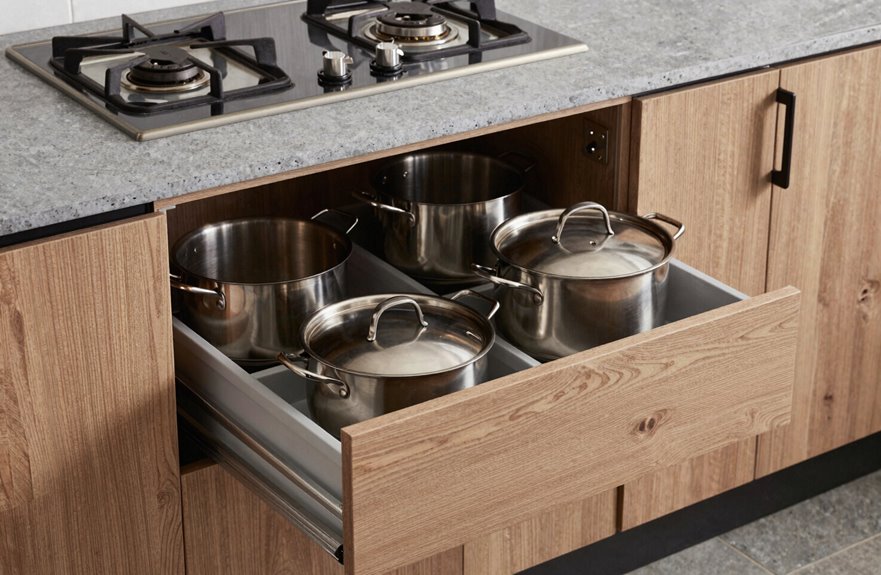
While open shelving puts your cookware on display, concealed storage below your cooktop keeps everything within arm’s reach of where you actually cook.
Why Pot Drawers Work
Installing pot drawers below your cooktop transforms dead space into functional small kitchen storage. Heavy cookware remains accessible without lifting stacks overhead or bending into deep cabinets.
Design Specifications
- Select shallow-depth compartments to maximize drawer width and prevent tipping
- Specify deep, full-extension slides for complete access to stacked items
- Align configurations with heat zones to maintain proper ventilation and control access
Organization Systems
Pair your drawers with labeled dividers or modular inserts. This maintains order and eliminates the frustration of digging through unorganized stacks during meal preparation.
This approach delivers professional-grade efficiency in compact spaces.
Install Hooks Inside Cabinet Doors for Pot Lids
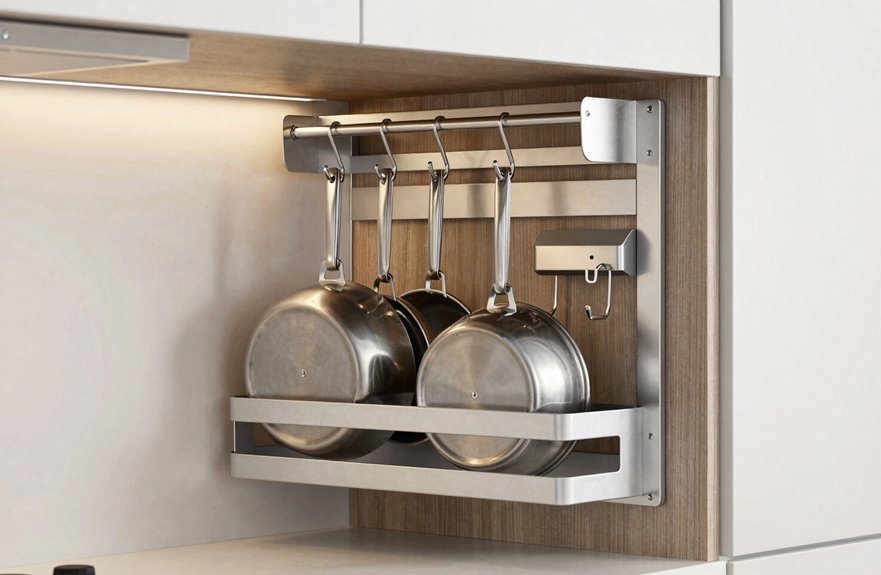
Three inches of unused space behind most cabinet doors can solve your lid storage problem. I install hooks on interior door panels to hang pot lids vertically, freeing shelf space for cookware stacks.
Choose Your Hardware
Select slim adhesive hooks, screw-mounted racks, or magnetic organizers based on your door material. Test hinge clearance before mounting to ensure doors close fully.
Position Strategically
Align lid storage directly above or beside your primary pot storage. This creates intuitive workflow: grab pot, lift matching lid, start cooking. No rummaging required.
Scale Your System
Pair individual hooks with tiered lid organizers to sort sizes. Small lids hang higher, larger lids below. This kitchen organization method keeps pot lids visible, accessible, and sorted without consuming a single shelf inch.
Stack Pans With Protective Liners
I stack my pans with protective liners to prevent surface damage, placing felt pads or paper towels between each piece so the non-stick coating stays intact. This method maximizes vertical space by nesting smaller pans inside larger ones without wasting cabinet height. I organize by size, keeping the widest pans at the bottom and building upward to create a stable, accessible tower that fits neatly in a single drawer or shelf.
Prevent Surface Damage
How do you stack pans without ruining their surfaces? Proper surface protection starts with what you put between layers.
Use Protective Liners
Slip silicone, felt, or parchment liners between stacked pans. This prevents scratches on non-stick coatings and extends cookware life. You can buy purpose-made liners or improvise with clean dish towels.
Stack Strategically
When stacking, place bottom pans on their sides with felt or silicone pads. This eliminates metal-to-surface contact that causes abrasion. Match identical or similarly sized lids and pans to minimize shifting. Alternate liner materials, such as silicone against one pan and microfiber against another, to reduce friction between layers.
These steps protect your investment and keep pans ready for daily use.
Maximize Vertical Space
Vertical storage transforms cramped cabinets into efficient cookware zones. Stacking pots and pans with protective liners prevents scratches on non-stick surfaces while reclaiming precious vertical space. This method stores more cookware without expanding your kitchen footprint.
To maximize vertical storage effectively:
- Place nesting cookware inside tall drawers to eliminate horizontal clutter
- Insert sturdy dividers between stacked items so lids remain accessible
- Pair protective liners with stackable organizers to maintain separation and visibility
- Mount pegboard systems for vertical stacking of frequently used pieces
Stacking with liners preserves your cookware investment and creates orderly, accessible storage. This approach is particularly valuable for small kitchens where every inch of space has functional importance.
Organize by Size
A few simple sizing rules transform chaotic cabinets into orderly storage systems. Stack pots by size, nesting smaller pans inside larger ones to reclaim precious storage space. Always place protective liners between layers; they shield non-stick surfaces from scratches and extend cookware lifespan.
| Stack Position | Item Type | Purpose |
|---|---|---|
| Bottom | Heaviest, widest pots | Stability and safety |
| Middle | Nested pans with liners | Space efficiency |
| Top | Lids and light pieces | Easy access |
Position the heaviest pots at the base for balance, with lighter lids above. For compact storage, use detachable handles on cookware. Tuck nested sets under appliances or in drawers to free cabinet space while keeping everything within reach.
Add a Rolling Cart for Pot and Pan Storage
Where can you find extra storage when cabinets overflow? A rolling cart provides flexible, mobile storage that transforms tight kitchen spaces.
A rolling cart serves as a dedicated cookware hub. Position it near the stove for instant access, then roll it away when you need floor space. Two-tier pull-out wire baskets maximize visibility and reach for daily pots and pans.
Consider these features when selecting your cart:
- Sturdy shelves that support heavy cast iron and stainless steel cookware
- Locking wheels to prevent movement during food preparation
- Compact dimensions that slide into narrow gaps between appliances
- Durable construction from trusted brands like IKEA’s RÅSKOG
This mobile solution supplies extra surface area without permanent remodeling. Measure your available space before purchasing to ensure smooth integration into your existing layout.